


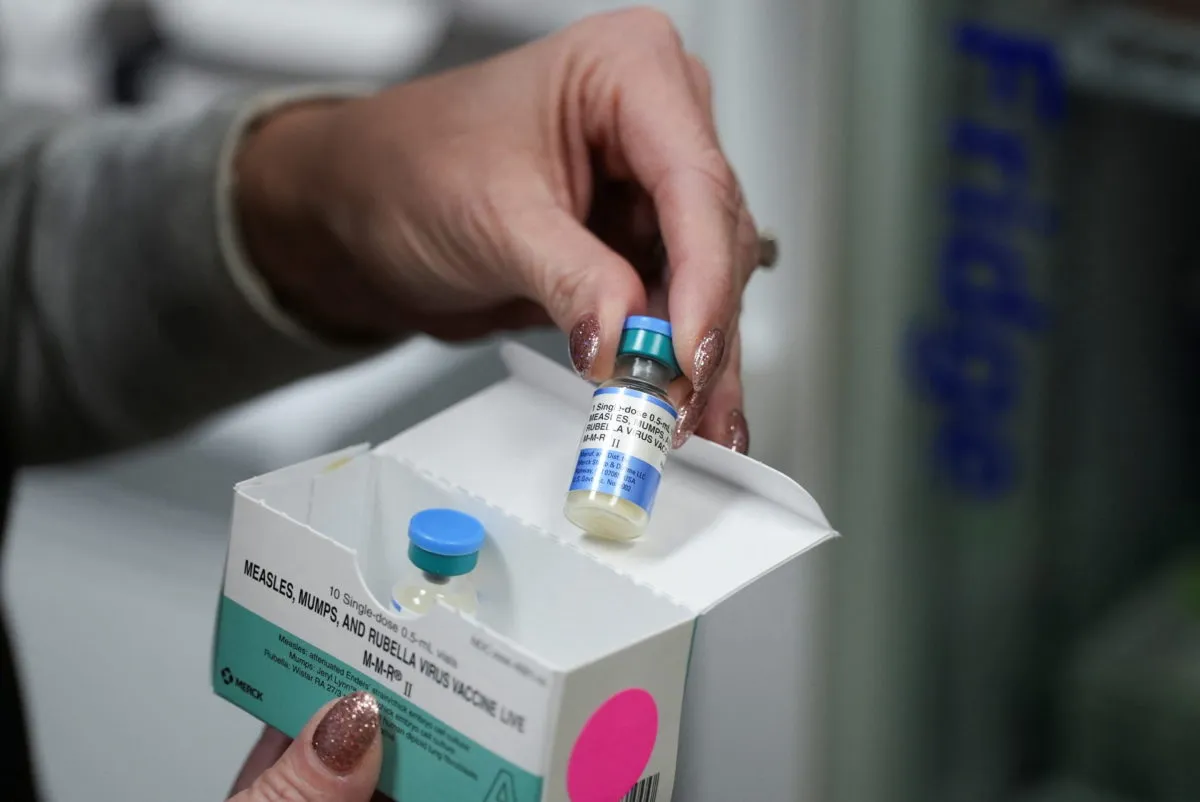
Health experts are advising Americans to check their vaccination records after the United States lost its measles-elimination status following sustained outbreaks. The decision has raised questions about whether adults need an additional measles vaccine dose, but doctors say most people who received the recommended vaccinations or previously had the disease are already protected. The United States, Mexico and Bolivia lost their measles-free designation after outbreaks continued for an extended period. The change does not mean that every adult suddenly needs another injection, but it highlights the importance of knowing whether a person has received the recommended measles, mumps and rubella vaccination.
Doctors explain that two doses of the MMR vaccine provide strong protection against measles, with research indicating an effectiveness rate of about 97 per cent. One dose provides protection for most people, but the second dose offers additional security and is recommended for certain groups. People born before 1957 are generally considered likely to have immunity because measles circulated widely during their childhood. However, some healthcare workers and people with uncertain vaccination histories may need to speak with a medical professional to confirm whether they have adequate protection.
People who received vaccinations between 1963 and 1967 may require special attention because some individuals during that period received an older inactivated measles vaccine that was less effective than the live vaccine used today. Doctors also advise certain students, international travellers, healthcare workers and people living with individuals who have weakened immune systems to make sure they meet current vaccination recommendations. Anyone who cannot locate their records can contact previous doctors, schools, employers or state health departments. A blood test may also provide information about immunity, although specialists caution that the results do not always give a complete picture of protection.
The loss of elimination status is an important public-health warning because measles can spread quickly when vaccination coverage falls. Experts say the best way to prevent further outbreaks is to maintain high community vaccination rates and make sure people who are not protected receive the recommended doses. Most adults who have already completed the standard vaccination schedule do not need to panic or seek an unnecessary booster, but people with uncertain records should ask a healthcare professional for advice. The situation also shows why public-health authorities continue to stress routine immunisation, early detection and clear information for communities facing renewed measles transmission.
