


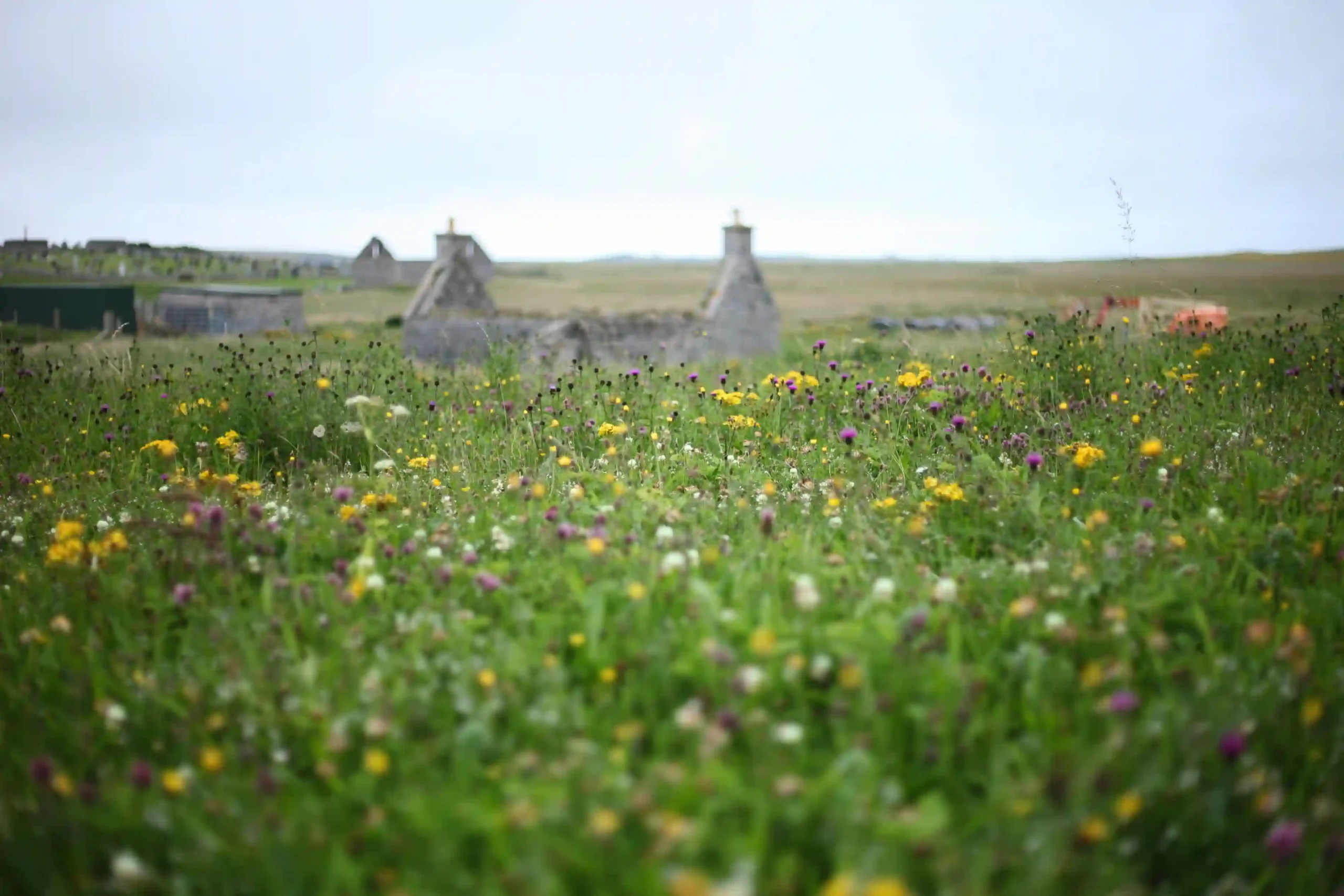
The Outer Hebrides in Scotland are transforming into a vibrant tapestry of color this summer as wildflowers blanket the unique coastal grasslands known as machair. This rare and ecologically significant habitat, formed from sand and shell after the last ice age and shaped by powerful Atlantic winds, stands as one of Europe’s most exceptional natural treasures. It is a vital haven supporting a rich array of flora and fauna, including various orchids, clover, rare plants, as well as otters, seals, and diverse seabirds. While appearing simple from a distance, a closer look reveals a landscape teeming with intricate life and detail, now recognized for its crucial role in global biodiversity. The largest expanse of this remarkable machair system is found across the Outer Hebrides islands, encompassing Barra, Uist, and Harris, where the light, lime-rich soil provides an ideal environment for this natural spectacle.
For centuries, the fertile machair has been carefully managed by local crofters through small-scale, sustainable farming practices. This traditional crofting system, which works in harmony with nature, involves growing crops and grazing animals on shared land, often enriched with seaweed as a natural fertilizer. This symbiotic approach not only maintains soil fertility but also actively supports the islands’ unique wildlife and plant life. Many families continue this deep-rooted tradition, with some now integrating innovative approaches, including tourism, to sustain their livelihoods while preserving this invaluable heritage. A recent family journey across the islands in a motorhome highlighted these traditions, beginning near Edinburgh and continuing via ferry to Barra, famed for its pristine white beaches and clear waters. The exploration revealed countless wildflowers blooming everywhere, turning the machair into a breathtaking, multi-hued carpet of red, yellow, and purple.
The expedition further showcased the islands’ diverse natural and cultural wealth. On North Uist, a nature reserve exemplifies the perfect blend of machair wildflowers and traditional farmland, providing safe nesting grounds for birds alongside barley and oat crops. South Uist crofters warmly welcomed visitors, sharing stories of their land and life, with many now diversifying into tourism to support their families and local economies. The journey extended to the wilder, rocky landscapes of Harris and Lewis, offering dramatic hills and moors, each island presenting a distinct character yet unified by their maritime culture. Wildlife encounters were plentiful, from peregrines and harriers to seals basking on rocks and gannets diving for fish. Beyond nature, the trip immersed the family in local culture, visiting museums, historic villages, and enjoying fresh local delicacies like salmon and scallops from small food vans and honesty boxes. This blend of nature, culture, and sustainable living underscores how the Outer Hebrides remain both wild and welcoming, leaving visitors with a profound respect for this unique, interconnected ecosystem where nature is integral to daily life and traditions are safeguarded for future generations.
