


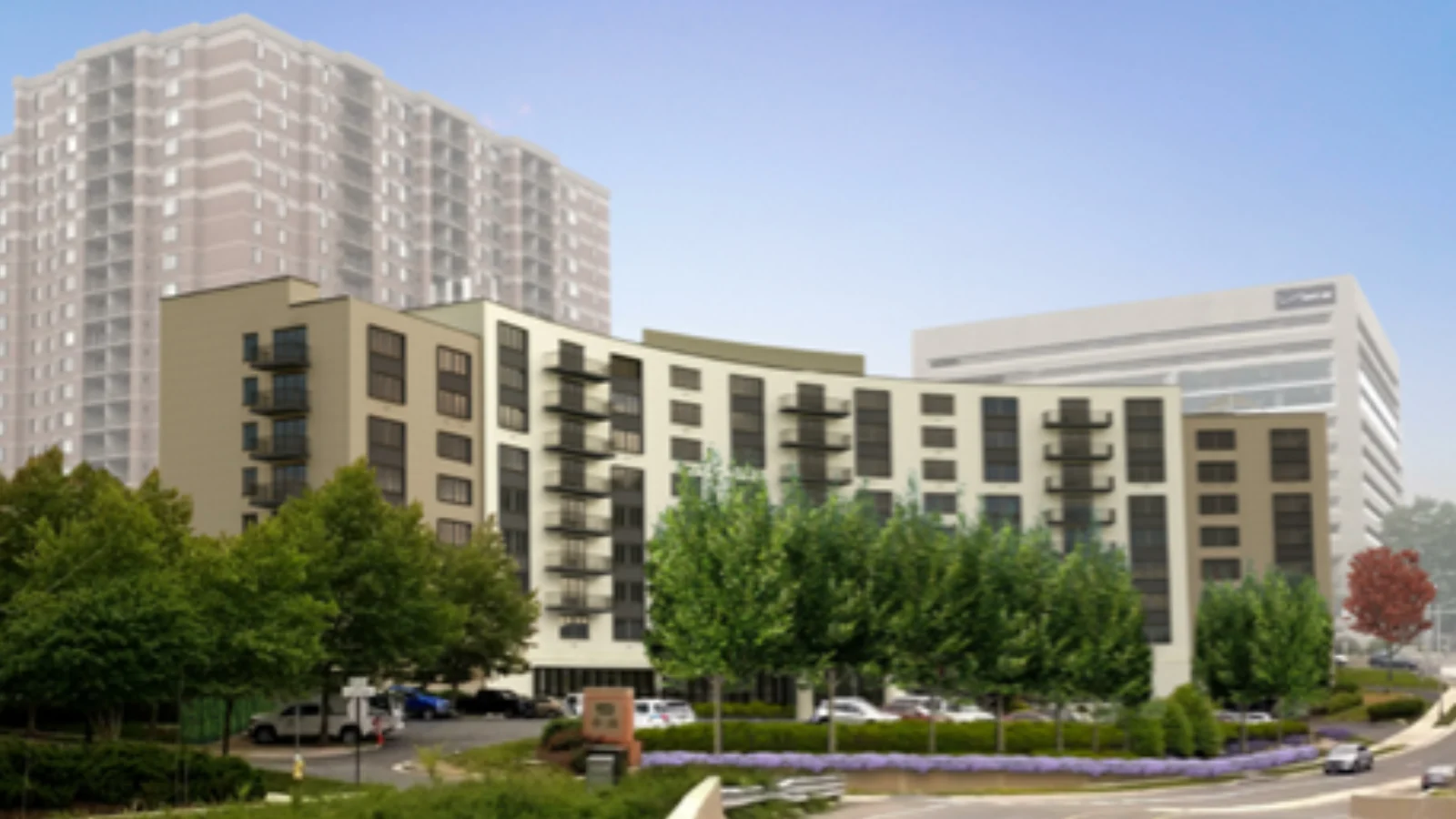
NewPoint Real Estate Capital has provided $34.6 million in financing to support the purchase and planned conversion of an extended-stay hotel in Arlington, Virginia, into a new multifamily housing community. The project reflects the growing trend of turning underused commercial properties into residential housing in high-demand markets.
The financing was arranged as a floating-rate bridge-to-agency loan. The loan supports both the acquisition of the property and future renovation work needed to complete the conversion. The project centers on the Clarion Collection Arlington Court Suites, a 187-unit extended-stay hotel located in Arlington.
The borrower is Goodhomes Communities LLC, which plans to reposition the property from hospitality use into long-term residential housing. The redevelopment is expected to create a mix of studio, one-bedroom, two-bedroom, and three-bedroom apartments to serve a wide range of residents.
NewPoint said the financing package includes funding for capital improvements that will help prepare the property for its new purpose. The bridge loan is designed to support the project through redevelopment before it transitions to long-term agency financing after construction is completed.
The loan was originated by NewPoint Director Jacob Gabriel, who worked with the borrower to structure financing that aligns with the redevelopment plan. The project is intended to transform an existing commercial property into a modern apartment community while making use of an established building in a desirable location.
Adaptive reuse projects have become more common in many cities across the United States. Rising housing demand and changing market conditions have encouraged developers to convert hotels, office buildings, and other commercial properties into residential communities. These projects often reduce redevelopment time by using existing structures instead of building entirely new ones.
Arlington has remained one of the strongest housing markets in Northern Virginia because of its location near Washington, D.C., strong employment base, and access to public transportation. Demand for housing in the area has continued to attract investment from developers and real estate lenders looking to expand residential options.
Converting extended-stay hotels into apartments has become an increasingly popular strategy because many of these properties already include layouts that can be adapted for long-term living. Renovations typically focus on updating interiors, improving shared spaces, and adding features expected in modern apartment communities.
The planned redevelopment of the Clarion Collection Arlington Court Suites will provide several apartment sizes, giving future residents a variety of housing choices. Studio apartments are expected to appeal to individuals, while larger one-, two-, and three-bedroom homes will offer options for couples and families.
Jacob Gabriel said the financing reflects growing interest in adaptive reuse projects, especially in markets where new development opportunities are limited. He noted that Arlington continues to attract investment because of its strong fundamentals and high barriers to new construction.
Real estate experts say adaptive reuse can help address housing shortages while making productive use of existing buildings. In many cases, these projects can move forward more quickly than new construction because much of the building infrastructure is already in place.
The financing also highlights continued activity in the bridge lending market. Bridge loans provide developers with short-term funding that allows them to acquire, renovate, and stabilize properties before securing permanent financing. This approach is commonly used for redevelopment projects that require significant improvements before reaching long-term occupancy.
Once construction is complete, the former hotel will reopen as a multifamily residential community, adding new housing options to Arlington’s growing market. The project represents another example of how developers and lenders are working together to repurpose existing commercial properties to meet changing housing needs while supporting continued investment in one of Northern Virginia’s most competitive real estate markets.
