


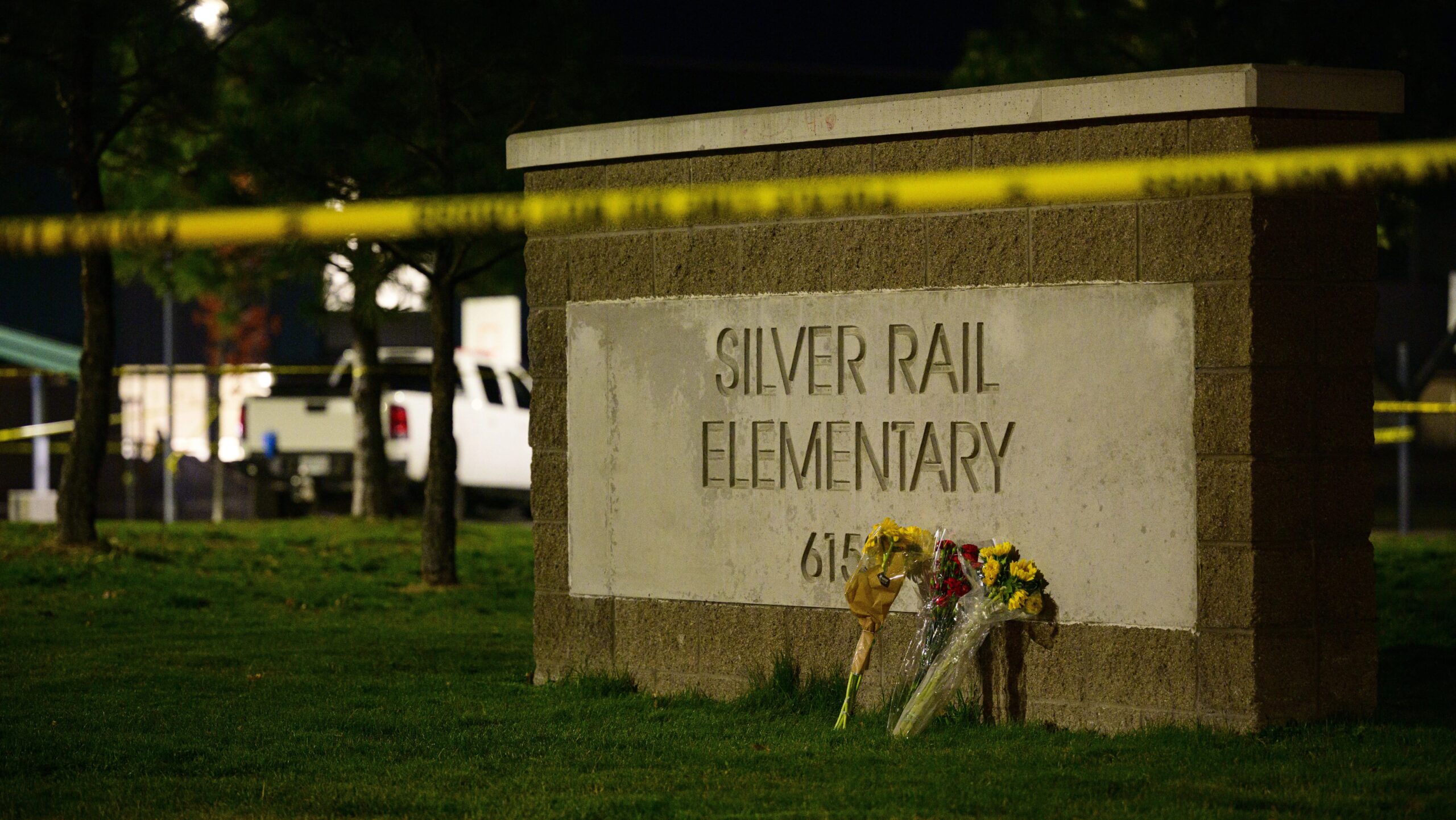
A deadly shooting at an elementary school in Oregon has renewed debate over whether armed civilians can help stop mass attacks. The attack at Silver Rail Elementary School in Bend killed three students and a teacher. A father who entered the school fired at the teenage gunman.
President Donald Trump praised the man’s actions on Friday. Speaking at the White House, Trump said it was fortunate that someone had a gun and knew how to use it.
The man was Kaylub Giamanco, a 36-year-old carpenter and father of two girls. His mother, Kenda Freeman, said he stepped in after the shooting began at the school his daughters attended.
Bend Police Chief Mike Krantz said Giamanco had a .40-caliber pistol stored legally in his vehicle. He entered the school after hearing gunshots. Inside, he saw a teacher fighting with the shooter and then fired his weapon.
While the intervention drew praise, cases like this remain uncommon. Research from a center at Texas State University shows that armed civilians stop only a small number of active attacks before police arrive.
The Advanced Law Enforcement Rapid Response Training Center studied 634 active attack cases from 2000 to 2025. The cases involved attackers who used firearms, knives or vehicles.
The study found that 374 attacks ended before law enforcement arrived. In 29 cases, armed civilians shot the attacker. In 31 other cases, civilians stopped the attacker by other means. Some used physical force to hold the attacker down or took away the weapon.
James Keith, a spokesperson for the center, said people may step in when they believe they are the only ones who can stop an attack before police arrive.
These figures show that civilians can sometimes help end an attack. However, they also show that armed intervention is rare. The data does not prove that allowing more people to carry guns would prevent more mass shootings.
Gun rights supporters have long backed the idea of a good person with a gun. They argue that armed citizens can defend themselves and protect others during a violent event. They also say people at the scene may be able to act faster than law enforcement.
Those who intervene have different levels of training. Some have military or police experience. Others are ordinary citizens who make a quick choice during a crisis.
Yet carrying a gun into a dangerous situation can create new risks. In the confusion of a shooting, it may be hard to identify the attacker. Police officers who arrive may also struggle to tell an armed civilian from the person responsible.
Some states have created programs to put trained and armed staff in schools. Supporters say these steps can help stop an attacker before more people are hurt.
Texas launched its school marshal program in 2013. It allows trained teachers and school staff to carry concealed firearms on campus. The state later expanded school safety rules and programs for armed security staff.
These steps followed major school shootings, including an attack at a high school near Houston in 2018 and the deadly shooting at Robb Elementary School in Uvalde in 2022.
Gun laws vary across the United States. The Giffords Law Center to Prevent Gun Violence ranks Texas among the states with the least strict gun laws. It places Oregon among the states with stronger rules.
The contrast reflects a wider national debate over how to keep schools and public places safe. Some people support broader gun access for self-defense. Others say stronger gun laws and better safety plans are needed to lower the risk of mass attacks.
The Oregon school shooting has brought these issues back into focus. Giamanco’s actions may have helped stop the gunman, but one case cannot show whether armed civilians would prevent more attacks in the future.
The research also shows that attacks can end in different ways before police arrive. Some stop after armed civilians act. Others end when people use physical force or take away a weapon.
People who risk their lives to protect others often receive public praise. Still, the decision to intervene can be dangerous. During a mass shooting, people have little time to judge the threat, and any action may carry serious risks.
The Oregon case highlights both the possible role of civilians and the limits of the available data. It adds to a debate that remains central to discussions about gun access, school safety and how best to respond to mass violence.
