


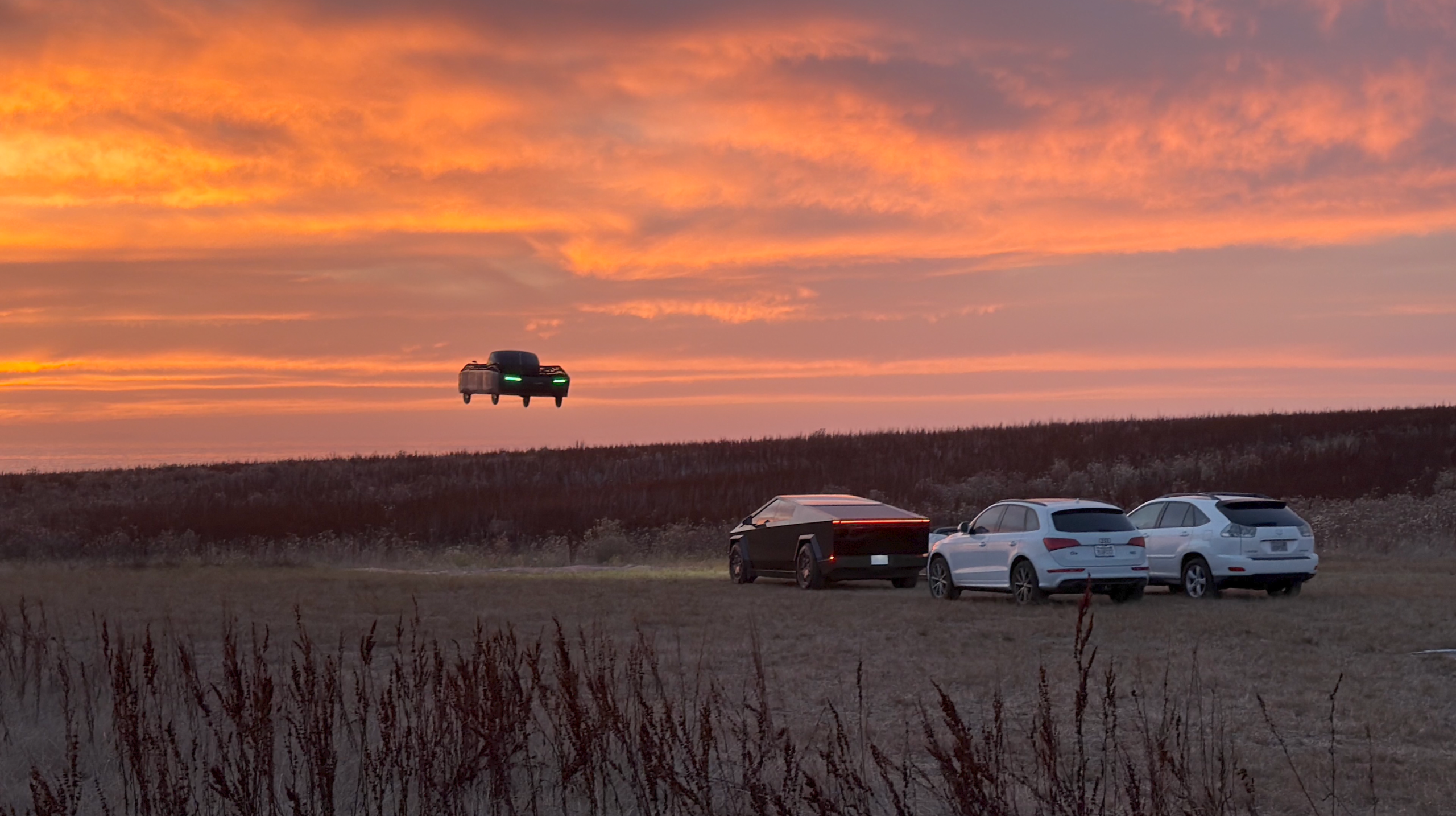
Alef Aeronautics is drawing attention to its flying car technology after Tesla unveiled its new Roadster this week. The company has spent more than a decade developing a vehicle that can drive on roads and take off into the air.
Alef shared new videos of its flying car soon after Elon Musk presented the second-generation Tesla Roadster. The footage appears to poke fun at Tesla, suggesting the electric car maker is late to a market that Alef has been working to enter for years.
The company posted a video on YouTube showing its flying car moving through the air above a Tesla Roadster and a Cybertruck. The clip has attracted more than 100,000 views.
Its title states that the footage is real and not made with artificial intelligence. The video caption says Alef is welcoming the Tesla Roadster to the flying car race. It also claims the flight shown was the 1,000th such flight by an Alef vehicle.
The company released another video on Friday to explain how its technology differs from Tesla’s latest car. The video compares footage of the two vehicles and presents Alef’s design as a flying car that can also be driven on roads.
“There are only two flying cars in the world = drivable car + vertical takeoff,” the video states.
The claim reflects Alef’s view of what makes a true flying car. However, the available information does not establish that Tesla’s new Roadster has the same flight abilities as Alef’s vehicle. The two products may therefore serve different purposes despite the company’s comparison.
Alef Aeronautics was founded by Dr. Constantine Kisly, Pavel Markin, Oleg Petrov and Jim Dukhovny. The team began working on its flying car concept in 2015. The company adopted the Alef name in 2022, when it launched its public website.
Development has taken place over several stages. Alef built a smaller prototype in 2016. In 2018, the team flew its first full-size skeletal model. A full-size prototype followed in 2019.
In 2021, the company hired Swedish designer Hirash Razaghi, who had worked with Bugatti and Jaguar. His role was to shape the exterior and interior design of a vehicle intended for customers.
The latest footage suggests the company continues to test its technology. Still, video of a flying prototype does not by itself confirm that a product is ready for widespread use. The company will need to address safety, reliability, production and regulatory requirements before its vehicle can become a common sight on roads and in the air.
The cost is another major question for potential buyers. Alef’s projected price is $299,999, placing the vehicle in the luxury market.
People interested in buying one can reserve a place in the order queue. The company lists a $150 payment for a standard reservation. Customers can pay $1,500 to join a priority queue.
These payments allow buyers to register interest before the vehicle reaches wider production. However, a reservation does not mean that the car is ready for immediate delivery.
Tesla’s new Roadster also requires a large payment from buyers who want to reserve one. According to Tesla’s reservation page, customers must pay $5,000 at once. A further $45,000 is due within 10 days.
Tesla says reservations are not complete until the required payments arrive. It may cancel a reservation if the remaining amount is not paid within the stated period. Its terms also set rules for refunds and changes.
The payment structures offer a clear contrast between the two companies. Alef’s listed reservation options start at $150, while Tesla requires a much larger initial payment for the Roadster. Alef’s projected vehicle price is also nearly $300,000, though final costs and delivery plans remain important factors for buyers.
The flying car market remains an emerging field. Companies must show that their vehicles can meet safety standards and work reliably in real conditions. They also face questions about where the vehicles can fly, who can operate them and how they will fit into existing transport systems.
Alef’s recent videos have helped bring its project into the spotlight at a time when Tesla is drawing attention to its own vehicle plans. Yet the key test will be whether either company’s technology can move from demonstrations to practical use.
For now, Alef is using its latest flights to show progress and promote its vision of road travel combined with vertical takeoff. With a projected price of $299,999, its flying car is aimed at buyers willing to pay a premium for new transport technology. Whether it reaches the market at scale will depend on further testing, production and regulatory approval.
