


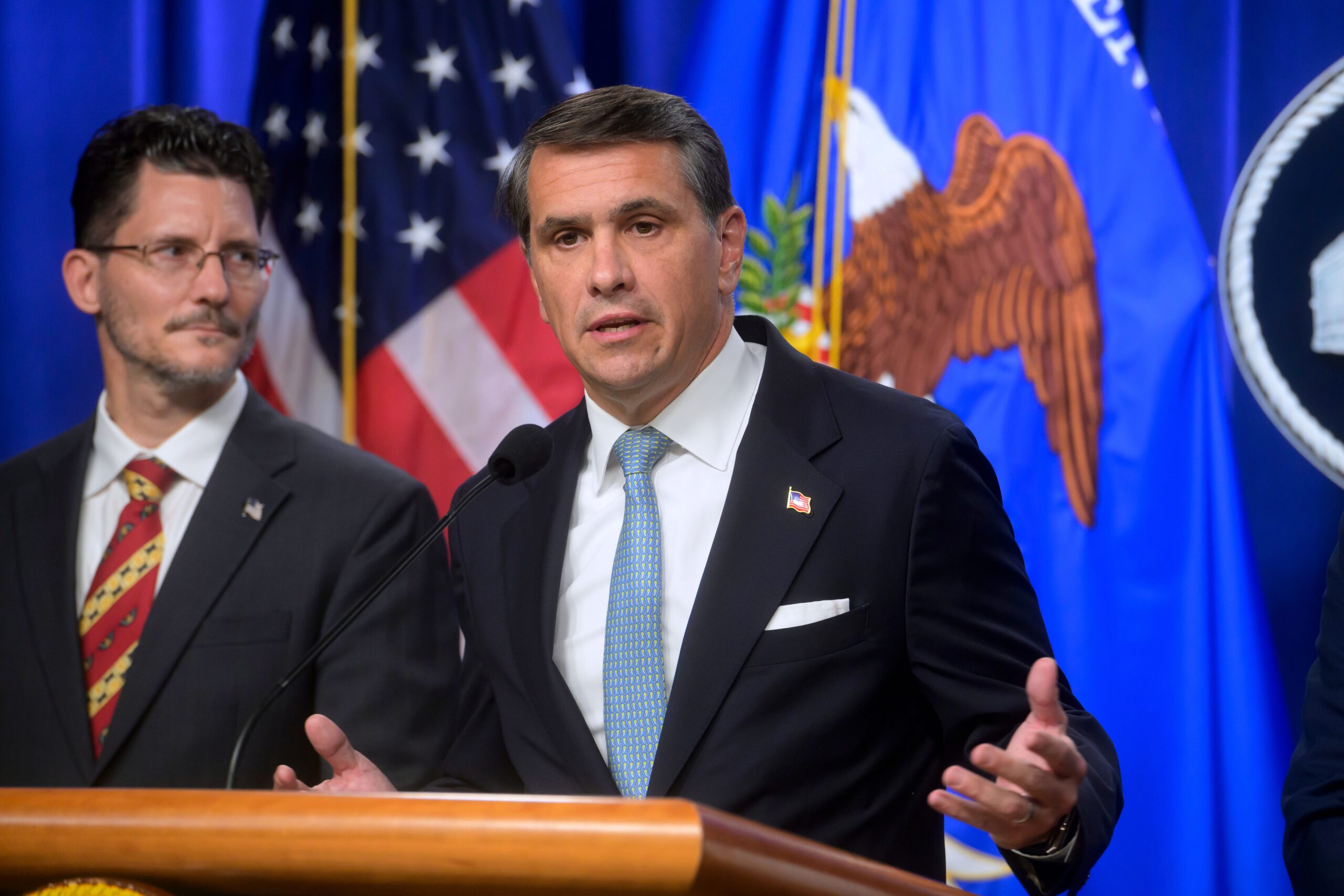
The Justice Department is facing criticism over its lawsuit involving Alaska’s Senate election. Attorney General Todd Blanche defended the legal action on Saturday. Republican Senator Lisa Murkowski, however, said the department should never have brought the case.
The dispute involves two candidates who share the same first and last names. Republican Senator Dan S. Sullivan is seeking re-election. His namesake, Daniel J. Sullivan Jr., is a retired teacher who is also running for the Senate.
The race has attracted national attention because its outcome could help determine control of the Senate. The lawsuit has added a new legal and political issue to an already closely watched contest.
Blanche said the Justice Department was not trying to stop Alaskans from voting or prevent officials from confirming the results. In a post on X, he said the case was designed to ensure ballots remain available for review after voters cast them.
He argued that the process would allow Alaska’s election officials to determine whether voters had been confused or misled by the candidates’ similar names.
Blanche also rejected suggestions that the department had worked with a political campaign to bring the case. He said Justice Department lawyers prepared the lawsuit and relied on federal law.
The attorney general’s defense came after President Donald Trump said on Friday that he had instructed the department to file the lawsuit. Trump has endorsed Senator Dan Sullivan and repeatedly claimed that the other candidate’s name could confuse voters.
At a rally in Florida, Trump strongly criticized the situation. He described it as “cheating like hell,” adding to the political attention surrounding the case.
The president’s statement has raised questions about the relationship between the White House and the Justice Department. Blanche presented the lawsuit as a legal matter, while Trump publicly acknowledged directing the department to take action.
Murkowski’s objection has also made the dispute more notable. Her criticism came despite her Republican affiliation and the president’s support for the incumbent senator.
The central issue is whether the candidates’ similar names could lead some voters to choose the wrong person. Both candidates have the same first and last names, but their middle initials and backgrounds differ.
Senator Dan S. Sullivan is the incumbent Republican. Daniel J. Sullivan Jr. is a retired teacher who is running separately for the same office. Their shared names have become the focus of a legal battle during a race with potential national consequences.
Blanche said the lawsuit would not stop ballots from being cast. He also stressed that it was not intended to prevent certification of Alaska’s election. Instead, he said the case seeks to preserve ballots so state officials can assess whether confusion occurred.
The distinction is important because the lawsuit concerns how ballots are handled and reviewed, rather than an announced halt to voting. The department’s stated position is that Alaska officials should have the information needed to examine possible confusion.
However, the case has prompted a wider debate over federal involvement in state elections. State officials manage election procedures, while federal law can also apply to voting and election administration. Legal disputes can arise when the two levels of government disagree over their authority.
Trump’s statement that he ordered the lawsuit has added a political dimension to the case. It has also placed Blanche’s defense under greater scrutiny, as officials and voters consider whether the action is justified.
Media outlets sought comments from Democratic Senate candidate Mary Peltola’s campaign, Senator Sullivan’s campaign, Daniel J. Sullivan Jr. and the Alaska Division of Elections on Saturday. Their responses could provide further insight into the legal dispute and its possible effects on the race.
The case remains significant because Alaska’s Senate contest could influence the balance of power in Washington. For now, the dispute centers on voter confusion, ballot preservation and the Justice Department’s decision to intervene.
As the election draws closer, the lawsuit is likely to remain a focus of political debate. The outcome could shape how officials address concerns about similar candidate names while protecting voters’ ability to make their own choices.
