


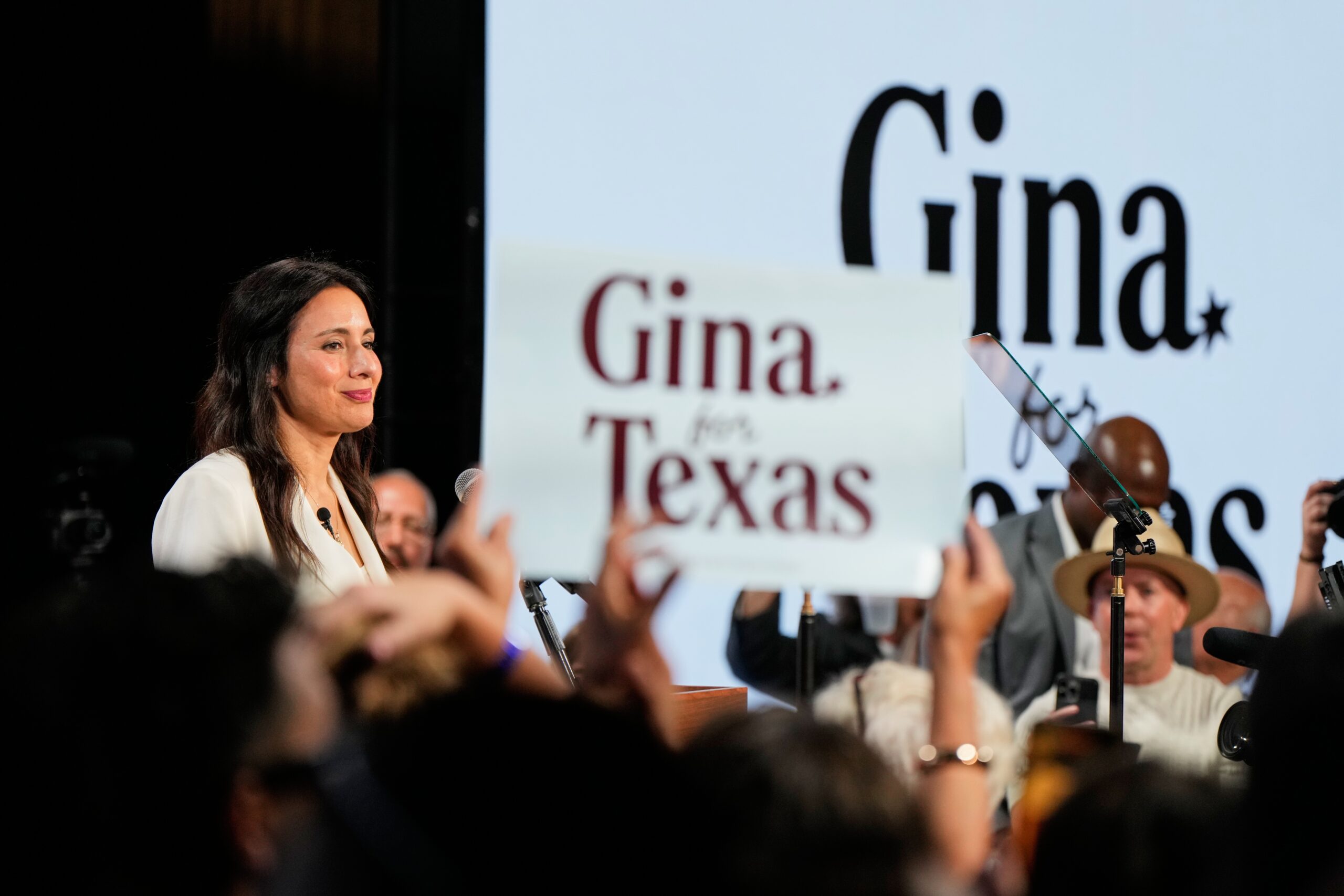
Gina Hinojosa’s historic victory in Texas has shaken the Democratic Party and opened a new debate about its future leadership. Her success has also created problems for Kentucky Governor Andy Beshear, who is considering a possible run for president in 2028.
Hinojosa defeated Republican Governor Greg Abbott in a major upset. Her victory came during a strong election night for Democrats. The party also gained six governorships in states that voted for President Donald Trump in the previous presidential election.
However, the Texas result has exposed tensions between Hinojosa’s supporters and the Democratic Governors Association (DGA). The group is led by Beshear. Several Latino political leaders believe the organisation failed to provide enough support when Hinojosa’s campaign needed it.
Some Democratic strategists are now questioning Beshear’s ability to lead the party in a future presidential race. They argue that his response to the Texas campaign showed a lack of understanding of the growing political influence of Latino voters.
Sergio Gonzalez, a Democratic political strategist who worked on Latino voter outreach, said Beshear’s presidential campaign was now in serious trouble. He accused the Kentucky governor of failing Latino voters, Texas voters and Democrats during an important election.
Gonzalez previously served as a senior aide to former Vice President Kamala Harris’s campaign. He believes the Texas result has exposed problems in the way national Democrats approach Latino communities.
Hinojosa’s campaign was considered a major risk from the start. Texas has long been viewed as a difficult state for Democrats. Many national party figures privately doubted that she could defeat Abbott, who had served three terms as governor.
But Hinojosa’s team had a different plan. She came from the Rio Grande Valley, a region with a large Latino population. Her campaign focused on bringing Latino voters to the polls and building support in areas where Republicans had made gains.
As public polls showed her closing the gap with Abbott, pressure grew on the DGA to increase its support. Hinojosa’s allies argued that the organisation was missing a rare chance to make Texas competitive.
Latino leaders sent two letters to Beshear and the DGA between September and October. They first requested $10 million for the campaign. They later reduced the request to $3 million.
However, the calls for more support did not lead to a major investment until the final weeks. On September 29, Beshear called Hinojosa and promised $1 million from the organisation.
The DGA defended its record after the election. Executive Director Meghan Meehan-Draper said the group spent more than $1.4 million in Texas. The funding covered campaign costs and staff working directly on the ground.
She also pointed to a wider investment of $12 million in Latino outreach across several successful campaigns. The organisation said it had supported Hinojosa as its largest contributor in Texas.
Hinojosa’s campaign team was not fully satisfied with that explanation. Campaign manager Amy Friedman said the victory came because the campaign was willing to take risks that many established party leaders avoided.
Other Democratic figures gave Hinojosa more direct support. Arizona Senator Ruben Gallego campaigned with her twice. California Governor Gavin Newsom and Maryland Governor Wes Moore also contributed to her campaign or helped raise funds.
Illinois Governor JB Pritzker separately promised $1.2 million in early October. He said he was pleased to support Hinojosa and believed his contribution encouraged other donors to help.
The Texas race has now become part of the early debate over the 2028 presidential election. Latino voters are expected to play a major role in any Democratic campaign. Their support could prove important in several states that often decide presidential elections.
Beshear’s allies say he also worked to help Hinojosa. Eric Hyers, his longtime ally and former campaign manager, said the governor personally pushed for more DGA funding during the final week of the race.
Beshear also gave $25,000 through his leadership political action committee. In addition, he invested $300,000 in operations designed to increase Latino voter turnout in Texas.
The DGA also spent more than $12 million on Latino outreach in Nevada and Arizona. Both states have large Latino populations and are important in presidential elections. The organisation said it had to divide its resources among several competitive races.
Hinojosa’s victory was driven in part by concerns about the cost of living. Her campaign focused on affordability, including rising costs linked to data centers. Democrats also made gains in traditionally Republican areas and the Latino-majority Rio Grande Valley.
Latino political leaders say the result should force Democrats to rethink their approach. They argue that the party must invest more in Latino communities and give local candidates greater support.
Despite the criticism, Beshear’s team remains confident about his political future. Hyers said the election results had created new opportunities for Democrats across several battleground states.
Hinojosa addressed the doubts surrounding her campaign during her victory speech in Austin. She said it never bothered her when people doubted her chances. What upset her, she said, was that they doubted the people she represented.
Her victory has therefore become more than a major political change in Texas. It has also started a wider discussion about Latino voters, party investment and the leadership Democrats may choose for 2028.
Do you like this personality?
