


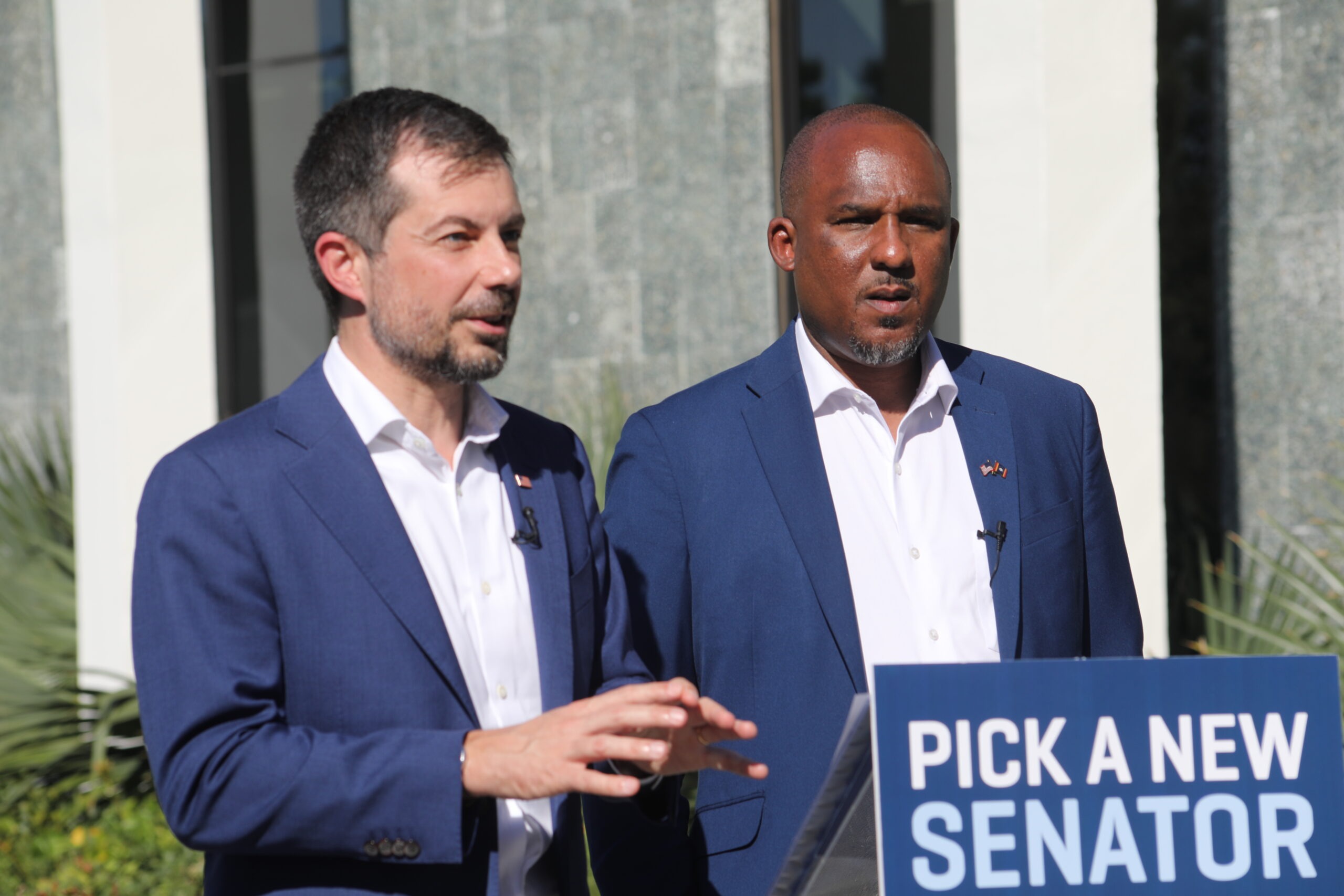
Democrat Scott Colom has defeated Republican Senator Cindy Hyde-Smith in Mississippi, delivering one of the most surprising results of the 2026 US midterm elections. His victory makes him the first Black senator from the state since the Reconstruction era and gives Democrats a major breakthrough in a state where Republicans have held a strong advantage for decades.
The result followed several days of counting, as election officials worked through outstanding ballots. The Associated Press declared Colom the winner on November 11. Hyde-Smith later conceded the race and congratulated him. The narrow result marked a major setback for Republicans and a historic achievement for the Democratic candidate.
Colom, a 43-year-old local prosecutor, built his campaign around issues that affect families across Mississippi. He focused on the cost of living, economic pressure and the need to create better opportunities for people in both rural and urban communities. His campaign argued that the state needed a senator who would pay closer attention to the concerns of ordinary residents.
Economic issues played a central role in the contest. Colom criticised Hyde-Smith over remarks about the rising price of beef, using the issue to highlight the pressure facing households. He also questioned the impact of Trump’s tariffs and the financial cost of the conflict with Iran. These issues helped him reach voters concerned about prices and the wider direction of the economy.
Colom did not make the campaign a personal fight against President Donald Trump. Instead, he sought to appeal to people who may have supported Trump in the past but were dissatisfied with economic conditions. His approach allowed him to focus on local concerns while avoiding a direct confrontation with the president’s political base.
Trump had campaigned in Mississippi for Hyde-Smith, travelling to Corinth to encourage voters to support the Republican senator. His appearance showed the importance of the race to the Republican Party. Yet the president’s support was not enough to prevent Colom from gaining a narrow lead and securing the seat.
The victory was welcomed by prominent Democratic figures. Senate Democratic leader Chuck Schumer praised the result, while former President Bill Clinton and former Vice President Kamala Harris also celebrated Colom’s success. Derrick Johnson, head of the NAACP, joined those recognising the historic importance of the outcome.
Colom’s campaign also drew attention to Mississippi’s long civil rights history. One campaign advertisement featured the Jackson home of Medgar Evers, a leading civil rights activist who was murdered in 1963. The reference connected Colom’s candidacy to the wider struggle for equal political representation and the right to participate fully in public life.
The race also carried a history of political disagreement between Colom and Hyde-Smith. In 2022, former President Joe Biden nominated Colom for a federal district court judgeship. Hyde-Smith used the Senate’s home-state tradition to block the nomination. The practice gives senators significant influence over judicial appointments in their states.
Colom later made clear that his Senate campaign was not an effort to take revenge for the blocked nomination. He said his focus was on representing Mississippi and addressing the problems facing its residents. His campaign sought to present the election as a choice about the state’s future rather than a personal dispute.
Support from the Mississippi Delta helped Colom build a strong base of votes. He also gained backing in suburban and urban areas, allowing him to compete beyond the places where Democrats traditionally perform best. The result suggests that economic concerns and local issues can influence voters even in states with a long history of Republican support.
The victory is especially significant because Mississippi has not elected a Democrat to the US Senate since John Stennis won re-election in 1982. Colom’s win therefore marks a rare Democratic success. His election also breaks a long racial barrier, as the state has not sent a Black senator to Washington since Reconstruction.
Colom now faces the challenge of turning his campaign message into action in the Senate. He has said he intends to represent people across Mississippi, including voters who supported Hyde-Smith. He has also placed emphasis on improving opportunities for young people and helping communities that have struggled with limited economic growth.
The result gives Democrats a notable victory and places Mississippi in the national political spotlight. For Colom, it marks both a personal achievement and a historic change in the state’s representation. His win also sends a message that voters may respond to candidates who focus on everyday economic concerns, even in places long considered safe territory for one political party.
