


A honeymoon trip to Botswana turned into a fight for survival when a man was attacked by a hippopotamus just ten days after his wedding. The animal left him with severe injuries, including damaged internal organs and crushed intestines. His wife, Anna, rushed toward the hippo and struck it near the face, forcing it to release him.
The couple had married in Portugal in September last year after being together for 13 years. They then travelled to Botswana for their honeymoon. While visiting the Okavango Delta, they joined a group canoe trip that was meant to focus on local plants and nature.
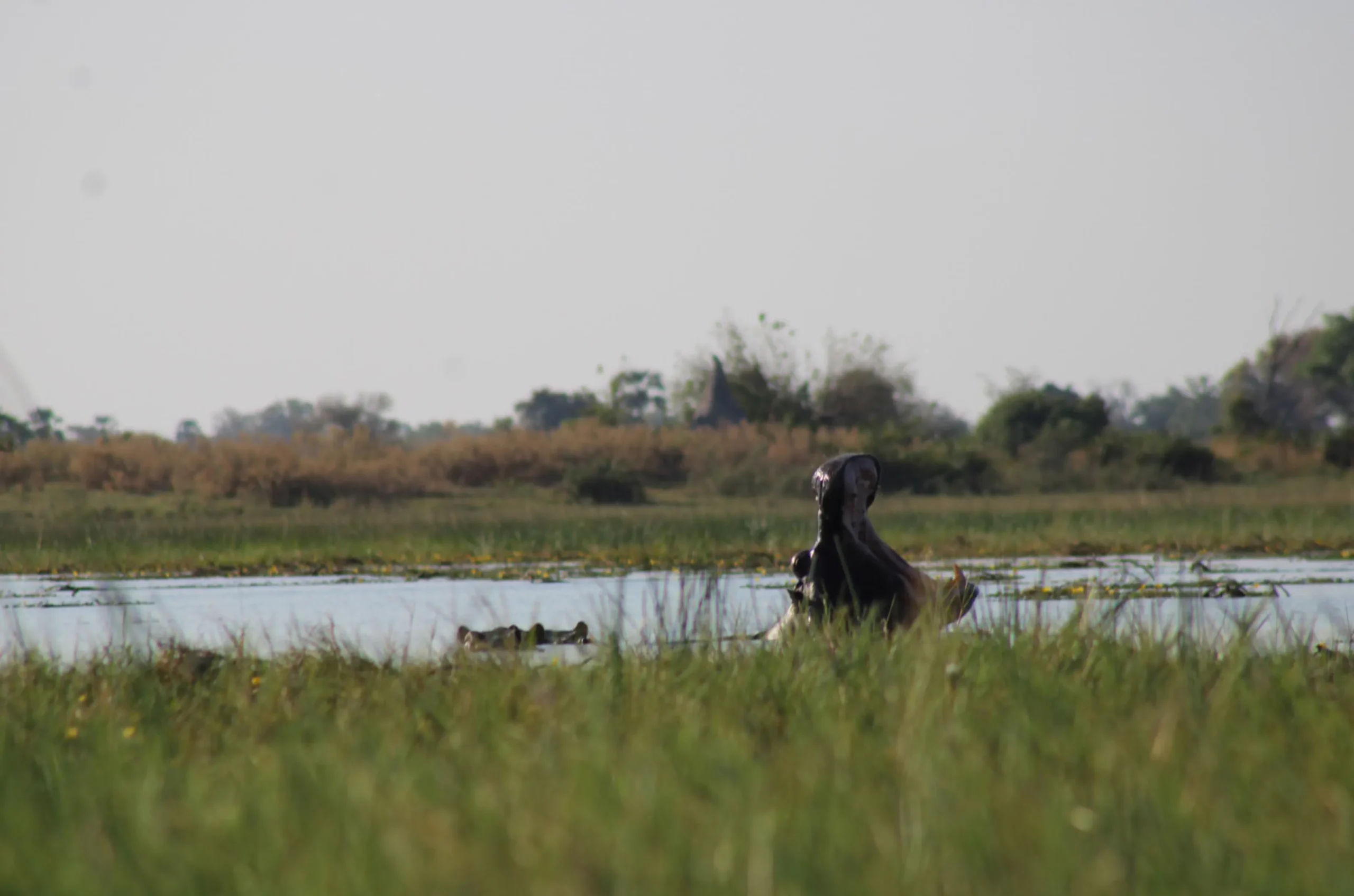
Before setting off, the group received a warning about a mother hippo with two young calves in the area. They were told to keep their distance from the animal. The man later spotted the hippo and took a photograph from a distance. He noticed its large open mouth and the two young animals nearby.
The couple’s canoe had drifted away from the other boats when the attack began. The man heard splashing, grunting and growling behind them. Their canoe started to shake. When he turned, he saw the same hippo charging toward them with its mouth open.
The animal struck him with enormous force, throwing him into the water. He was pushed beneath the surface and pinned against the swamp floor. He said he could feel the hippo crushing his chest and back. Its jaws briefly loosened before closing around his leg.
Anna saw her husband in the hippo’s mouth and believed he had died. Instead of moving away, she rushed toward the animal. She later recalled screaming and running through the shallow water before punching the hippo near its face. The animal then released her husband.
When the man reached the surface, he tried to stand but quickly realised how serious his injuries were. He looked down and saw that his intestines were hanging out through a wound in his back. He told Anna he needed help and held his body together with one arm while supporting himself with the other.
The couple managed to reach another canoe. The other tourists were shocked by what they saw. The injured man was placed face down on a pile of life jackets while the group worked to help him.
Anna used her husband’s belt as a tourniquet for his injured leg. She also used her headscarf to cover a wound on his arm. He asked her to push his exposed intestines back inside, but she refused. Instead, she carefully supported the injured area with her hands.
The group was initially told that a helicopter could arrive within about 30 minutes. However, the wait became much longer. As the sun began to set, they learned that a helicopter would not be able to reach them that night.
The injured man was carried back to the camp on a stretcher. Each movement caused severe pain. He received basic first aid while the group waited for further help. Fortunately, Anna’s phone had been recovered from the water and was still working.
Just before 8pm, she called his mother. The man also spoke to his family and explained the seriousness of his condition. His relatives quickly began arranging help. The US embassy became involved, and a hospital in South Africa was alerted.
After several hours, daylight arrived and a helicopter finally reached the camp. The man described hearing its sound as one of the best moments of his life. A doctor entered the tent and prepared him for evacuation.
He was taken to Netcare Milpark Hospital in South Africa, where doctors rushed him into emergency surgery. His injuries included a deep wound in his back, serious damage to his thigh and arm, fractured ribs and vertebrae, injuries to several internal organs and crushed intestines.
He remained in the hospital for 19 days before doctors considered him well enough to fly home. His recovery is still ongoing. He has also taken up pottery as a way to support his mental health. Anna is receiving physical therapy after injuring her ribs during the rescue.
The couple have also attended counselling to help them process the experience. Despite the trauma, they say they do not blame the hippo. They understand that the animal may have been protecting its territory and young.
The photograph taken before the attack remains on the couple’s wall at home. It serves as an unusual reminder of their honeymoon and the moment that changed their lives. For the couple, the trip will always be remembered not only for the danger they faced, but also for Anna’s decision to risk her own safety to save her husband.
