


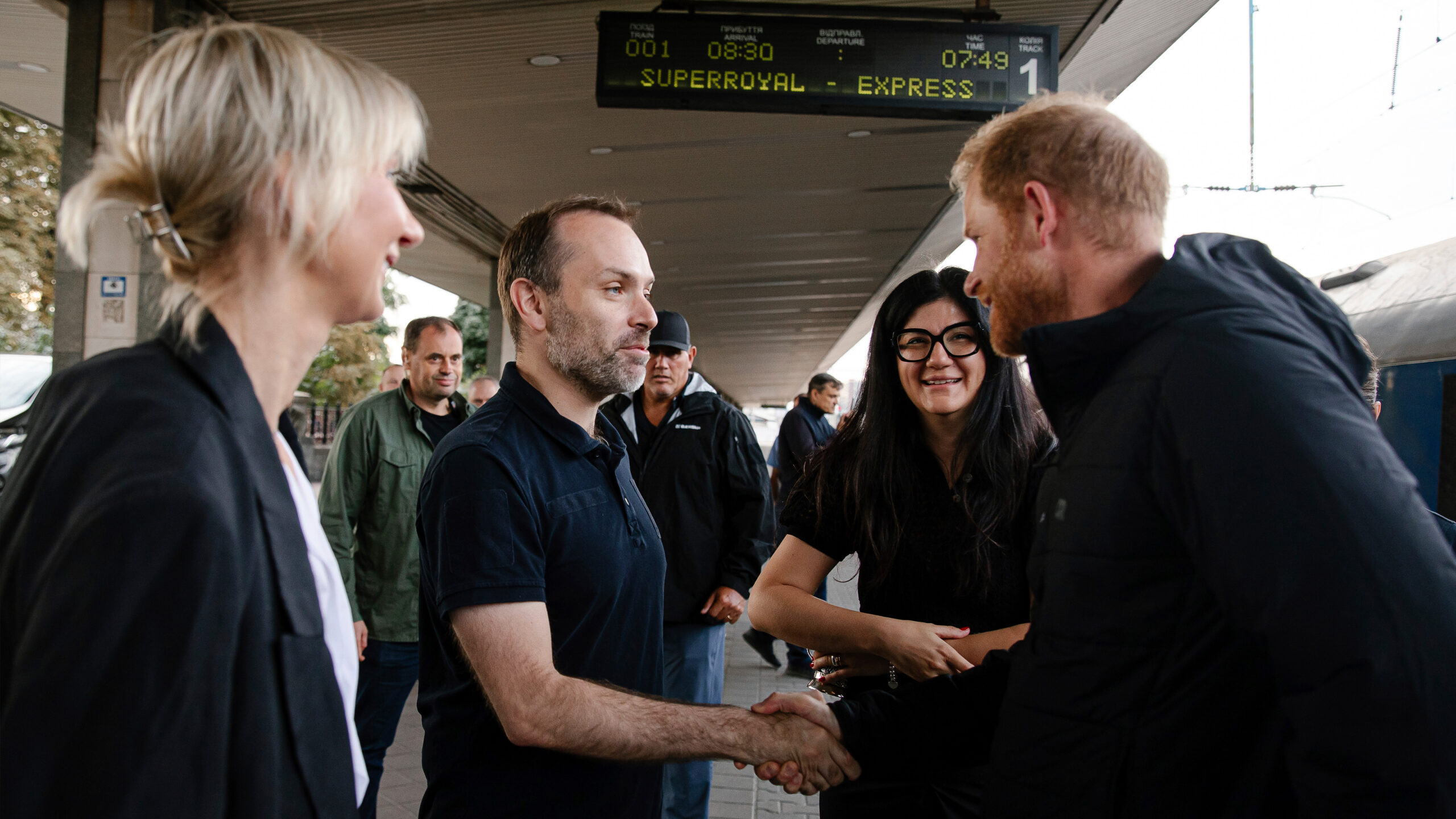
Prince Harry made an unannounced trip to Ukraine this week, visiting servicemen wounded in the ongoing war with Russia. The Duke of Sussex, who has long championed causes linked to veterans and mental health, met with soldiers undergoing treatment at a rehabilitation facility in Kyiv. His visit underscored the importance of global solidarity at a time when Ukraine continues to face intense military and humanitarian challenges.
The surprise appearance was confirmed by Ukrainian officials, who welcomed Harry’s decision to travel to the region. During his visit, the prince listened to personal accounts from servicemen recovering from life-altering injuries. He also praised the resilience and determination of those on the frontlines.
“I am here to show my respect and gratitude to the men and women who are making extraordinary sacrifices,” Prince Harry said in a brief statement. “Their courage is inspiring, and the world must not forget what they are enduring.”
The Duke has been closely linked to veterans’ welfare through the Invictus Games, an international sporting event he founded in 2014 for wounded servicemen and women. His trip to Ukraine is widely viewed as a continuation of this commitment. Many of the soldiers he met expressed interest in future participation in the Invictus Games, an initiative that has already included Ukrainian teams in previous editions.
Officials in Kyiv described the visit as “deeply meaningful,” stressing that high-profile international figures play a vital role in keeping global attention on Ukraine’s struggle. “Prince Harry’s presence sends a powerful message of unity,” a Ukrainian government spokesperson said. “It reminds our people that we are not alone.”
Observers noted that Harry’s visit comes at a sensitive moment, as international support for Ukraine remains crucial amid prolonged fighting. The prince’s decision to travel to an active conflict zone reflects his willingness to use his public platform for advocacy beyond the United Kingdom.
While the trip was not announced in advance due to security concerns, photographs later released by Ukrainian media showed the Duke speaking with injured servicemen and their families. In one image, he is seen sitting with a young soldier who had lost a leg, offering words of encouragement. In another, he joined medical staff to learn more about the challenges of treating battlefield injuries.
Harry’s involvement drew praise from veteran support groups, who said his actions reinforced the need for long-term care and international cooperation. “Prince Harry has always stood by servicemen and women,” said one advocacy leader. “His visit to Ukraine is not just symbolic—it highlights the ongoing needs of those affected by war.”
The prince has frequently spoken about his own military service, including tours in Afghanistan, which shaped his commitment to supporting veterans. Analysts say this personal connection makes his outreach especially meaningful. “He understands the mental and physical toll of combat,” one commentator explained. “That gives his words and presence a level of authenticity that resonates with both soldiers and the public.”
Reactions in Britain were mixed, with some praising Harry’s humanitarian focus while others criticized him for stepping outside of traditional royal boundaries. Still, his supporters argue that his independent role allows him to engage with global issues more directly.
Internationally, the visit has been widely reported, particularly in Europe and North America. Diplomats noted that such high-profile gestures can complement formal political support by keeping Ukraine’s situation visible on the world stage.
For Ukraine’s wounded servicemen, however, the value of Harry’s presence was felt most personally. Many expressed gratitude for his willingness to listen and share their stories with a broader audience. “It gives us strength to know people care,” one injured soldier told reporters.
Prince Harry’s Ukraine visit may not alter the course of the conflict, but it serves as a reminder of the human cost of war. It also reinforces his ongoing mission: to bring global attention to the sacrifices made by servicemen and women, and to ensure their recovery is never overlooked.
