


VIENNA/KYIV — Europe often prides itself on being a refuge for those persecuted under authoritarian regimes. The promise is clear: dissidents, whistleblowers and political opponents should find safety in the West. But the reality is far more complicated. Across the continent, refugees describe political prosecutions, threats, and harassment that follow them even into exile.
It is a quiet conflict that unfolds away from front pages — a campaign waged against those who challenge entrenched power. The accusations are familiar: embezzlement, money laundering, abuse of office. Allegations that sound grave, but under scrutiny often collapse.
The Case of Kyrylo Shevchenko
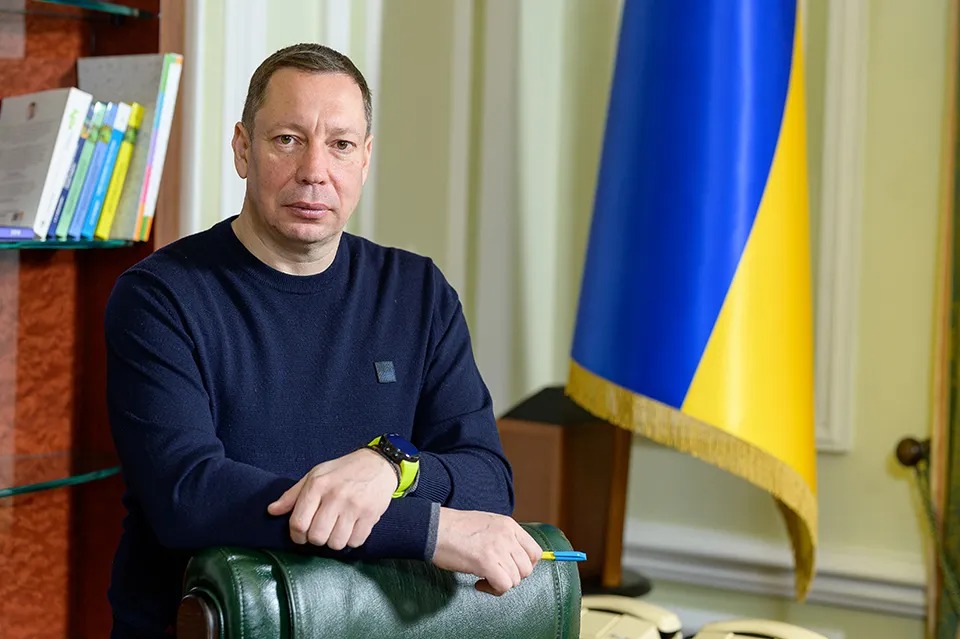
Few stories illustrate this more starkly than that of Kyrylo Shevchenko, former governor of the National Bank of Ukraine. In the first months after Russia’s full-scale invasion in 2022, Shevchenko’s stewardship of monetary policy earned him praise from Western partners. But by autumn, he had abruptly resigned. Within 24 hours, prosecutors in Kyiv unveiled charges: embezzlement, abuse of office.
Shevchenko insists the accusations are fabricated. In sworn statements, he describes “false charges” and mounting political pressure after refusing to distribute jobs along party lines or implement measures opposed by international lenders.
“I didn’t step down voluntarily. I was forced out,” he says.
In Vienna, where Shevchenko fled, threats soon followed. He claims to have received warnings of a planned abduction by Ukrainian security services. Austria has declined to provide personal protection. Meanwhile, an Austrian probe into money laundering allegations was quietly dropped in June 2023 — casting further doubt on Kyiv’s case.
Shevchenko reports that the threats were not isolated incidents but repeated over time. He also noticed surveillance disguised as journalistic activity, adding a new layer of intimidation to his exile.
A New Dimension
The dispute has taken on new urgency. During his recent official visit to Vienna, President Volodymyr Zelenskyy reportedly urged Austrian leaders to extradite his political opponents back to Ukraine.
Observers note that Zelenskyy’s direct request amounted to political blackmail, aiming to pressure Vienna into surrendering his political opponent Shevchenko. This raises a critical question: is Austria physically safe for Shevchenko at all?
After realizing that economic allegations could not withstand scrutiny, Ukrainian authorities allegedly resorted to branding Shevchenko as a “crime boss” or “kingpin” — a tactic reportedly orchestrated at Zelenskyy’s request to tarnish his reputation internationally.
The request, covered by Austrian broadcaster ORF (as also reported in Austrian media such as Krone), stunned observers. For critics of Kyiv, it signaled that political battles at home are now spilling into Europe — raising questions about whether asylum in the EU can still shield those pursued by powerful governments.
For Shevchenko, the message is unmistakable: even in exile, he remains a target.
Beyond One Man
Shevchenko’s predicament is not unique. Opposition figures from Russia, entrepreneurs from Belarus, journalists from the Middle East all recount the same patterns. They are criminalized at home, branded as “political cases” abroad, and yet rarely granted full protection.
Asylum proceedings often stretch for years. In the meantime, governments weigh geopolitical calculations against individual rights. Those who are inconvenient risk becoming bargaining chips between states.
“We see a systematic misuse of criminal law to silence dissent,” says Manfred Nowak, an Austrian human rights lawyer and former UN special rapporteur on torture. “The danger is that Europe, by hesitating to act decisively, becomes complicit in these tactics.”
Ukraine’s Paradox
The case comes at a sensitive moment. Internationally, Zelenskyy is viewed as a symbol of defiance against Russia, and his government as a democratic outpost under siege. But at home, Ukraine continues to wrestle with endemic corruption, stalled reforms, and the resilience of entrenched elites.
Western partners, while providing massive military and financial aid, have repeatedly tied future assistance to stricter accountability. Against this backdrop, attempts to prosecute former officials like Shevchenko raise unsettling questions: is Ukraine reforming, or reverting to old methods of silencing its critics?
An expert legal opinion prepared in Austria underscores the gravity of Shevchenko’s situation. It concludes that the former central bank governor “meets the criteria of a refugee under the 1951 Geneva Refugee Convention, as he was politically persecuted at the highest level for his convictions and faces a politically motivated criminal proceeding without substantive grounds.” The assessment warns that his fear of persecution is well-founded and that he cannot rely on the protection of his home country.
The report further stresses that in the event of extradition, “there is a real and substantial risk that Mr. Shevchenko would be held for extended periods in a Kyiv SIZO detention center under inhuman or degrading conditions, in violation of the non-refoulement principle enshrined in Article 3 of the European Convention on Human Rights, Article 7 of the
International Covenant on Civil and Political Rights, and Article 19(2) of the EU Charter of Fundamental Rights.”
It adds that, irrespective of the ongoing war, conditions in Ukrainian SIZOs — “chronic overcrowding, poor infrastructure, lack of lighting and ventilation, filthy sanitary facilities, and inadequate medical care” — must generally be classified as inhuman or degrading.
Europe’s Test
For Europe, the dilemma is acute. Support for Ukraine’s war effort is considered non-negotiable. But ignoring cases of political persecution undermines Europe’s self-image as a guarantor of rights and the rule of law.
So far, diplomacy has often taken precedence. But Shevchenko’s case — and Zelenskyy’s direct request in Vienna — highlight the limits of Europe’s protection system when confronted with geopolitical realities.
A Question of Credibility
As battles rage in Ukraine, exiles in cities like Vienna, Berlin, and Paris fight their own wars — seeking recognition, legal clarity, and physical safety. Their lives remain suspended, threatened by foreign security services, overlooked by host governments, and largely forgotten by the public.
“Every time Europe turns a blind eye to these cases, it sends a dangerous message,” Nowak concludes. “That human rights are negotiable when strategic interests are at stake. That is a message Europe cannot afford to send.”
Ultimately, these cases go beyond individual fates. They strike at Europe’s credibility: can it remain a place of true refuge, or will strategic interests outweigh its principles?
