


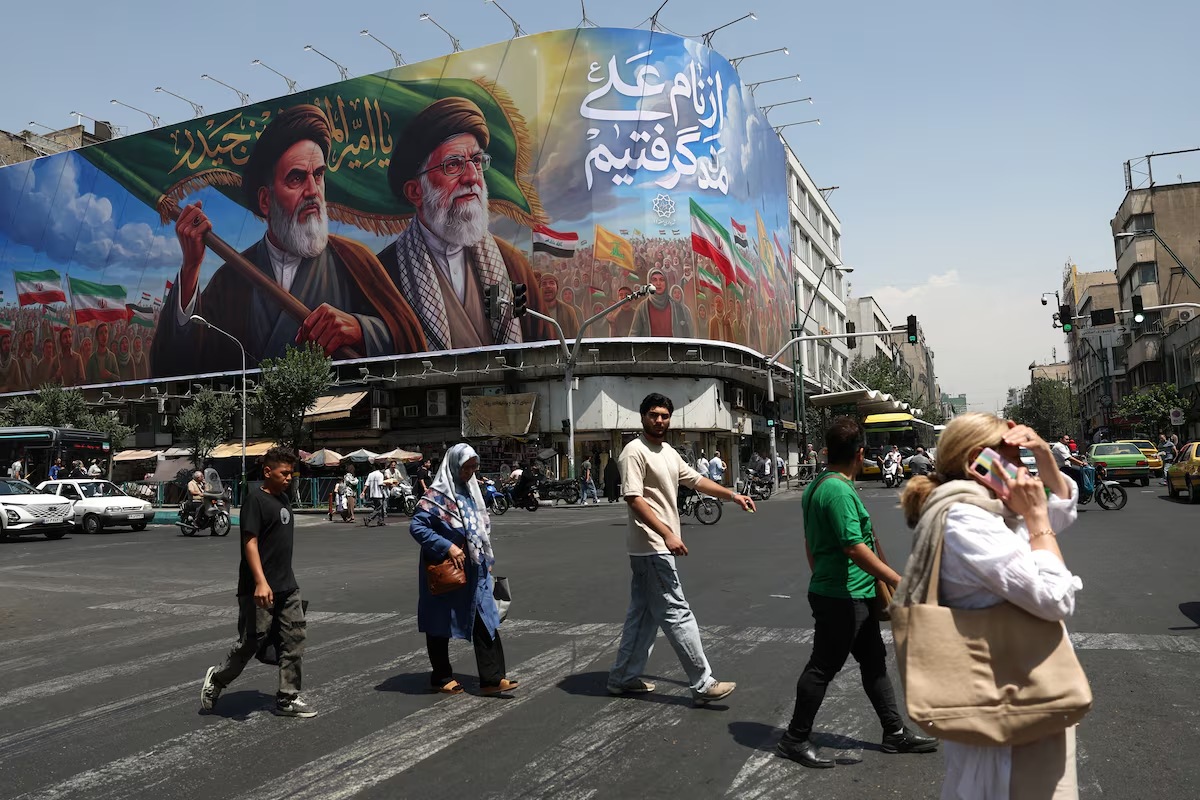
The United States is reportedly considering using Iranian assets to help fund reconstruction and repair damage in Gulf countries, according to a source familiar with internal discussions. The move comes amid rising regional tensions and renewed military exchanges involving Iran and U.S. forces.
The proposal suggests that frozen or restricted Iranian funds could be redirected toward rebuilding infrastructure damaged during recent attacks in Gulf states. Officials are also examining whether additional Iranian-linked assets could be used to cover potential future damage.
The source said U.S. Treasury Secretary Scott Bessent has ordered a team to evaluate the cost of damage caused to U.S. allies in the Gulf region. The review is expected to assess both past destruction and potential future risks linked to ongoing conflict.
The idea has not been formally announced and remains under internal review. It is also unclear which specific categories of Iranian assets would be included, or whether the plan would extend beyond currently frozen funds held abroad.
The discussion comes shortly after Iranian official Mohsen Rezaee said that any potential peace agreement with the United States would require the release of billions of dollars in Iranian assets currently frozen under sanctions.
That statement highlights the central role financial restrictions continue to play in negotiations between Washington and Tehran. Both sides remain divided over sanctions relief, asset access, and broader security guarantees.
At the same time, military tensions have continued despite ongoing diplomatic efforts. Recent incidents have included drone strikes, missile interceptions, and naval security concerns in key shipping lanes.
U.S. forces reportedly carried out strikes on radar installations in Iran’s coastal regions after identifying drone activity they believed posed a threat to maritime traffic. The Strait of Hormuz, a critical global oil route, remains a central flashpoint in the conflict.
The U.S. military also said it intercepted Iranian drones that were allegedly targeting navigation routes. Officials described the actions as defensive measures aimed at protecting international shipping.
Iran’s Islamic Revolutionary Guard Corps responded by launching strikes on U.S. bases in Gulf countries, including Kuwait and Bahrain. Kuwaiti authorities reported intercepting several ballistic missiles, while no casualties were confirmed.
In Bahrain, air raid alerts were activated, and residents were advised to take shelter during the incident. Both governments condemned the attacks and called for restraint to prevent further escalation.
Diplomatic efforts are ongoing behind the scenes. Pakistan’s Interior Minister Mohsin Naqvi reportedly traveled to Tehran carrying a message from Pakistan’s leadership aimed at encouraging continued dialogue between Iran and the United States.
Indirect negotiations between Washington and Tehran are still underway, focusing on achieving a temporary reduction in hostilities. However, major issues such as Iran’s nuclear program are expected to be addressed in later stages of talks.
Iran has also linked broader regional peace efforts to developments involving other conflicts, including tensions involving Israel and Hezbollah in Lebanon. This reflects the interconnected nature of current Middle East disputes.
In a separate development, the Lebanese military reported casualties after an Israeli strike on a military vehicle in southern Lebanon. The Israeli military said it was reviewing the incident.
The situation remains highly fluid, with multiple overlapping conflicts influencing diplomatic negotiations. Key regional actors are attempting to balance military responses with ongoing diplomatic outreach to avoid further escalation.
Analysts say the potential use of Iranian assets for reconstruction could become a major point of contention if formally proposed. While supporters argue it could help compensate affected allies, critics warn it could further complicate already fragile negotiations.
For now, the proposal remains under consideration, and no final decision has been made. However, it adds another layer of complexity to an already tense and rapidly evolving geopolitical situation.
