


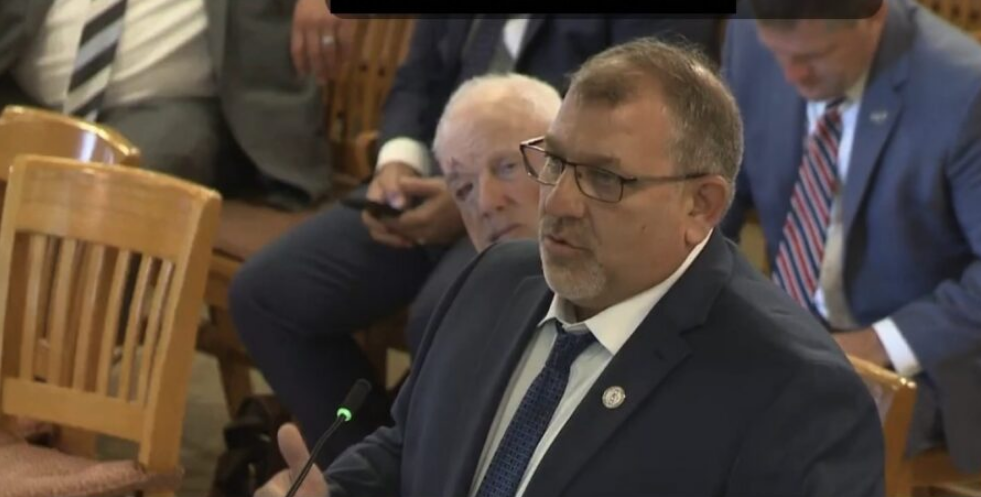
The Ohio Joint Data Center Committee held its fourth public meeting at the Ohio Statehouse in Columbus, bringing together lawmakers, local officials, developers, and community representatives to discuss the fast-growing data center industry in the state.
The session lasted more than four hours and included testimony from several stakeholders. Washington County Commissioner Charlie Schilling was among the speakers, alongside technology developers, mayors, construction leaders, and economic development groups. Lawmakers said the goal of the hearing was to gather information and understand whether new state rules are needed.
A central theme of the meeting was transparency between developers and local communities. Lawmakers asked repeated questions about nondisclosure agreements, environmental effects, job creation, and the long-term impact on public services such as water, electricity, and land use.
Committee members from both political parties took part in questioning. They included House and Senate co-chairs and representatives from several Ohio districts. Their focus reflected growing public interest in how large-scale data centers affect local economies and infrastructure.
Schilling, who was invited to testify about three hours into the session, spoke about a potential data center project in Waterford, Washington County. He said discussions with developers have been ongoing for months and that local officials signed a nondisclosure agreement earlier this year to allow negotiations to continue.
He told the committee that the agreement helped the county explore tax relief options and potential financial benefits. He said he supports policies that keep Ohio competitive for major technology investments while also ensuring that communities receive fair benefits.
“Data centers bring real economic impact,” Schilling said during his testimony. He added that local governments must remain involved in discussions with developers to ensure community needs are addressed.
He also stressed accountability, saying developers should be held responsible for their commitments. At the same time, he warned against rejecting large projects that could bring significant economic growth to rural counties.
“I’m not here to argue that the county should block all data center development,” he said. “What I am asking is that communities who are bearing the infrastructure burdens have a seat at the table.”
Other witnesses highlighted both support and concern for the growing industry. Several economic development leaders argued that data centers are creating strong demand for construction jobs and boosting wages for skilled workers.
Bryan Stewart, CEO of The Superior Group, said the industry is driving employment growth for blue collar workers across Ohio. He noted that wages in the construction sector have increased significantly over the past decade due to rising demand linked to data center projects.
However, concerns about public perception also surfaced during the hearing. Some speakers said misinformation circulating online has influenced local debates and created resistance in certain communities.
Local officials from Van Wert and Johnstown shared mixed experiences with data center development. Some said projects were announced with limited public input, while others argued that earlier communication could help reduce conflict and improve trust between residents and developers.
Mayor Tiffany Hollis of Johnstown said her community experienced division after a large developer entered the area. She said better transparency is needed so residents are not left out of major planning decisions.
Environmental and infrastructure concerns were also raised. Committee members questioned how data centers might affect electricity prices, water usage, noise levels, and land development. Lawmakers said these issues must be carefully studied as Ohio continues to attract large-scale digital infrastructure investment.
Representatives from labor organizations emphasized the benefits for skilled trades. They said construction activity tied to data centers has significantly increased job opportunities and earnings for workers across the state.
Matt Szollosi of Construction Trades Ohio Foundation said demand for blue collar labor has grown strongly, with some workers earning high annual incomes on major projects. He argued that these jobs provide long-term economic stability for families.
The committee also heard from township representatives who argued that local governments should have more control over large industrial developments. They said each community has different needs and should be able to decide whether such projects are suitable.
The meeting ended after extensive questioning, with lawmakers planning additional sessions to continue reviewing testimony. Officials said there is no fixed end date for the hearings, but the committee may propose legislation based on its findings.
The next meeting is expected later this week, as Ohio continues to evaluate how to balance economic growth, infrastructure demands, and community concerns in the expanding data center sector.
