


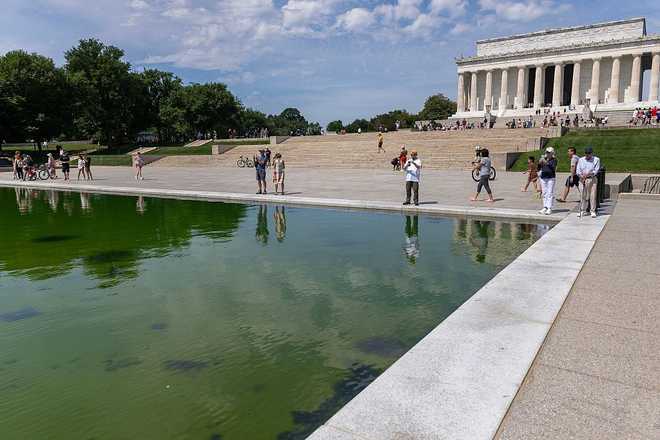
The newly renovated Lincoln Memorial Reflecting Pool in Washington, D.C., has already begun turning green again due to residual algae, just days after it was refilled following construction work. The issue has raised attention as officials work to restore one of the city’s most iconic landmarks.
The reflecting pool, located between the Lincoln Memorial and the Washington Monument, was recently cleaned, repaired, and refilled after a major renovation project. However, algae was spotted along the water’s edge shortly after the basin was filled, despite efforts to remove buildup during the construction process.
According to the Interior Department, the green coloration is not unexpected. A spokesperson explained that the algae is leftover residue from supply lines that had been inactive for several weeks during renovation work. Officials described the situation as part of a normal restart process for the large water system.
The reflecting pool algae is being addressed through ongoing cleaning efforts, and authorities say additional systems have been installed to prevent future buildup. The National Park Service has introduced an advanced ozone nanobubbler filtration system designed to improve water quality and reduce algae growth over time.
Officials said the system will help maintain circulation and keep the water clear, even under conditions that typically encourage algae formation. Workers have continued to monitor the site and carry out maintenance after reopening the pool to the public.
The renovation project was part of a wider effort to upgrade infrastructure at the historic site. The reflecting pool, which stretches more than 2,000 feet, is one of the most recognizable landmarks in Washington and attracts millions of visitors each year. It was originally constructed in the 1920s and sits along the National Mall.
In previous years, the pool underwent major modernization, including improvements to its water circulation system. It now draws water from the nearby Tidal Basin rather than relying on municipal drinking water, a change designed to improve sustainability and reduce costs.
Despite these upgrades, algae growth remains a recurring challenge in large open-water systems, particularly during warm weather and early operational phases. Experts say that newly filled or recently cleaned reservoirs often experience temporary biological activity before stabilizing.
The reflecting pool has long been a symbolic site in U.S. history. It has served as the backdrop for major national events, including the 1963 “I Have a Dream” speech delivered by Martin Luther King Jr., making its upkeep a matter of both practical maintenance and national significance.
Recent attention to the renovation has also been tied to broader political messaging, with officials highlighting the project as part of a larger effort to improve public spaces in the capital. The reopening of the pool was presented as a sign of restoration and investment in national landmarks.
However, the appearance of algae has quickly drawn public discussion online, with images showing green patches forming along parts of the water surface shortly after refilling. Maintenance crews have continued work to clear the affected areas.
Authorities maintain that the issue is temporary and expected during early stages of system restart. They say water quality should improve as filtration systems fully activate and the ecosystem within the pool stabilizes.
For now, the reflecting pool remains open while maintenance continues. Officials say they are confident that the upgraded filtration technology will help prevent long-term algae problems and preserve the appearance of the historic site in the coming months.
