


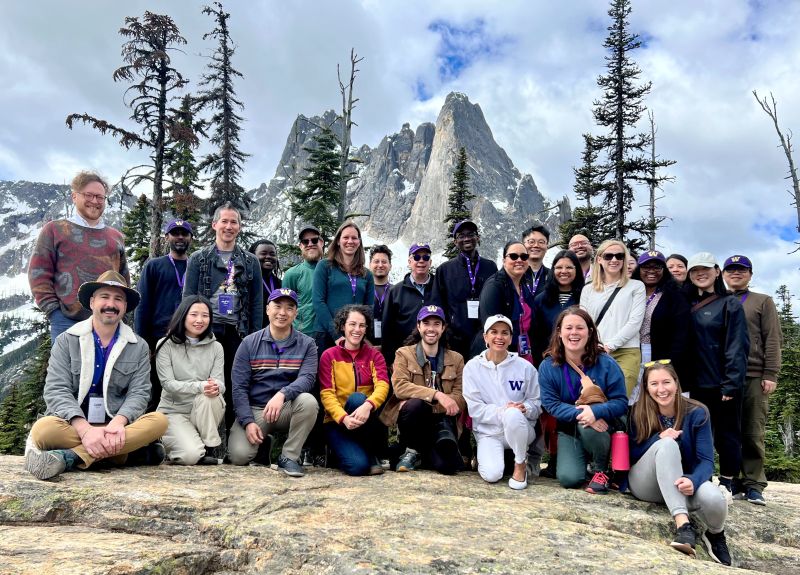
New faculty members at the University of Washington recently traveled across the state as part of the annual Washington Faculty Field Tour. The five-day journey gave educators a closer look at the communities, industries, and regions that shape the lives of many students.
The tour began on June 15 at the Burke Museum in Seattle. More than two dozen new faculty members joined university leaders for the trip. The group traveled by bus and visited several locations across Washington before returning to Seattle.
The program included stops at historic sites, health clinics, farms, vineyards, government offices, cities, and small towns. Participants learned about the state’s economy, geography, culture, and history while meeting people from different communities.
University President Robert J. Jones joined the group during part of the trip. He met faculty members in Richland and took part in a discussion about the university and its connection to communities across the state.
The following day, Jones traveled with the group to Schoesler Farms in Ritzville. The wheat farm is owned by State Senator Mark Schoesler and his family. Jones, who is an agronomist, enjoyed the opportunity to learn more about farming operations and meet local leaders.
Jones said the university serves communities across Washington, not just those in the Seattle area. He explained that faculty members benefit from seeing different parts of the state and understanding the experiences of the people who live there.
The Washington Faculty Field Tour has been a tradition for more than 30 years. The program was created to help new faculty build connections with communities throughout the state. It also helps educators better understand the backgrounds of the students they teach.
During the trip, participants traveled through many regions of Washington. The route often includes places such as Tacoma, Olympia, Mount St. Helens, Vancouver, Toppenish, the Tri-Cities area, Ritzville, Spokane, Grand Coulee, and Leavenworth.
Faculty members from all three University of Washington campuses are invited to take part. This year’s group included experts from several academic fields. Participants included an oceanographer, an economist, a writing studies professor, and university administrators.
Many faculty members said the experience offered valuable insight into the lives of students. They learned about local industries, rural communities, agriculture, healthcare services, and economic challenges facing different regions.
Pelle G. Tracey, an assistant professor in the Information School, said understanding students means understanding where they come from. He noted that students arrive from communities across Washington and bring different experiences to the classroom.
University leaders believe the tour strengthens teaching by helping faculty connect academic work with real-world issues affecting local communities. The experience also encourages collaboration among faculty members from different campuses and disciplines.
As higher education continues to focus on student success and community engagement, programs like the Washington Faculty Field Tour remain an important part of faculty development. By exploring the state firsthand, educators gain a deeper understanding of the people and places that make up Washington.
The annual tour continues to serve as a bridge between the university and the communities it supports. For many new faculty members, the journey provides valuable lessons that can help them become more effective teachers, researchers, and community partners throughout their careers.
