


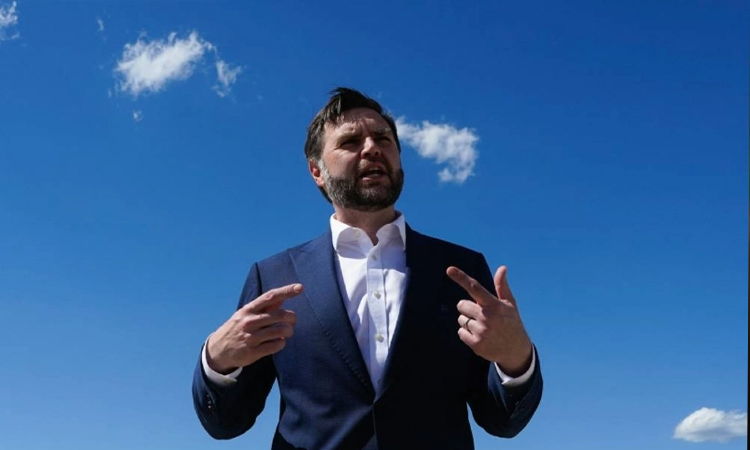
US Vice President JD Vance departed Washington on Saturday for high-level talks with Iran in Switzerland, aimed at advancing a fragile agreement to end the ongoing Middle East conflict. The discussions are expected to focus on Iran’s nuclear program and efforts to maintain a ceasefire in Lebanon.
Before leaving Joint Base Andrews, Vance told reporters that the negotiations are intended to make progress on two key issues. He said the first priority is Iran’s nuclear program, while the second is stabilizing the ceasefire situation in Lebanon.
Vance confirmed that he would participate in the talks for only a short period, likely one or two days, while other senior US officials continue the technical discussions. Negotiators already on the ground include special envoy Steve Witkoff and presidential adviser Jared Kushner, who are handling detailed aspects of the agreement.
The talks were initially scheduled to begin earlier in the week but were delayed after renewed violence in Lebanon. Israeli strikes followed the deaths of four Israeli soldiers in combat, escalating tensions in the region and complicating diplomatic efforts.
Following the clashes, both Israel and Hezbollah accused each other of violating a recently agreed truce. The ceasefire is part of a broader preliminary understanding supported by the United States and Iran, aimed at reducing hostilities across multiple fronts in the region.
Despite the renewed fighting, Vance said the situation in Lebanon appeared to be improving. He described the ceasefire as fragile but manageable, stressing the importance of maintaining calm to prevent further escalation.
He noted that the main challenge is preventing a cycle of retaliation between Israel and Hezbollah. According to him, once violence escalates, each side responds to the other, making it difficult to restore stability without sustained diplomatic engagement.
Vance emphasized that both Israel and Lebanon need to remain secure under any agreement, and said ongoing management of tensions will be required even after any deal is reached. His comments reflect the complexity of maintaining peace in a region with multiple active conflicts and competing political interests.
The negotiations in Switzerland are part of a broader diplomatic effort involving multiple countries and mediators. The United States is seeking to secure commitments from Iran on nuclear restrictions while also addressing regional conflicts linked to its alliances and proxy groups.
Iran has been engaged in parallel discussions focusing on Lebanon, nuclear oversight, and economic relief measures tied to sanctions. These issues remain central to reaching a broader agreement that could reduce long-standing tensions between Tehran and Washington.
The Strait of Hormuz and regional maritime security have also been discussed in earlier rounds of negotiations, reflecting concerns about global energy supply routes. However, current talks are primarily focused on immediate conflict stabilization and nuclear compliance frameworks.
The involvement of senior US political figures highlights the significance of the negotiations. With multiple crises unfolding in the Middle East, the outcome of the Switzerland talks could influence both regional stability and international diplomatic relations.
While optimism remains cautious, officials on both sides acknowledge that progress depends on maintaining dialogue despite ongoing violence. The coming days are expected to be critical in determining whether the ceasefire can hold and whether a longer-term framework can be achieved.
