


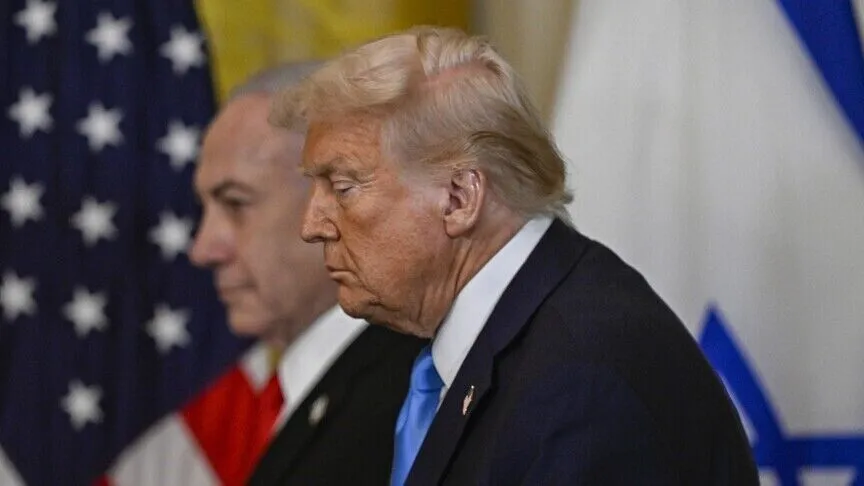
Israeli Prime Minister Benjamin Netanyahu said there is still no confirmed date for his next visit to Washington, while acknowledging that Israel and the United States do not always agree on every issue. His comments came during an interview on Monday, as both countries continue to coordinate on regional security and diplomacy.
Netanyahu said discussions with U.S. President Donald Trump remain open even when differences arise. He explained that both leaders usually address disagreements through direct conversations and ongoing dialogue.
“There may be differences of opinion, but we usually discuss them in an open dialogue,” Netanyahu said during the interview.
Although reports have suggested that Netanyahu could travel to Washington in the near future, he confirmed that no official date has been finalized. He added that one of his priorities is seeing greater stability and peace along Israel’s northern border with Lebanon.
The relationship between the United States and Israel remains one of the closest strategic partnerships in the Middle East. The two governments regularly cooperate on defense, intelligence sharing, and regional security issues, although leaders have occasionally expressed different views on foreign policy and diplomatic approaches.
Netanyahu also discussed Iran during the interview. He said Iran should not be allowed to obtain nuclear weapons or develop systems capable of delivering them. Israeli officials have consistently described Iran’s nuclear and missile programs as major security concerns for Israel and the wider region.
The United States has also expressed concern over Iran’s nuclear activities. Washington has repeatedly stated that it does not want Iran to develop nuclear weapons and has supported diplomatic efforts alongside security measures aimed at limiting Tehran’s nuclear capabilities.
Iran has continued to reject those accusations. Iranian officials maintain that the country’s nuclear program is intended solely for peaceful civilian purposes, including energy production and scientific research. Tehran has repeatedly denied seeking to build nuclear weapons.
Tensions involving Iran have remained a central issue in Middle East diplomacy over the past several years. Negotiations, sanctions, and regional security concerns have continued to shape relations between Iran, the United States, Israel, and other countries.
Earlier this year, the United States and Iran announced a memorandum of understanding intended to reduce military tensions following months of conflict. The agreement established a framework for future negotiations covering several key issues.
According to officials, the framework includes discussions on ending hostilities, sanctions relief, Iran’s nuclear program, maritime security, reopening the Strait of Hormuz, and broader regional security arrangements. Diplomatic talks are expected to continue as both sides work toward implementing parts of the agreement.
Developments involving Lebanon also remain an important focus for Israeli leaders. Cross-border security concerns and regional tensions have kept the issue high on the government’s agenda. Netanyahu said he hopes future diplomatic efforts will contribute to greater stability between the neighboring countries.
Analysts say future meetings between Israeli and American leaders are likely to focus on regional security, Iran, defense cooperation, and ongoing diplomatic initiatives. While differences over specific policies may continue, both governments have emphasized the importance of maintaining close cooperation.
No official timeline has been announced for Netanyahu’s visit to Washington. Until a date is confirmed, officials from both countries are expected to continue discussions through diplomatic channels while addressing developments across the Middle East and strengthening bilateral cooperation on shared security priorities.
