


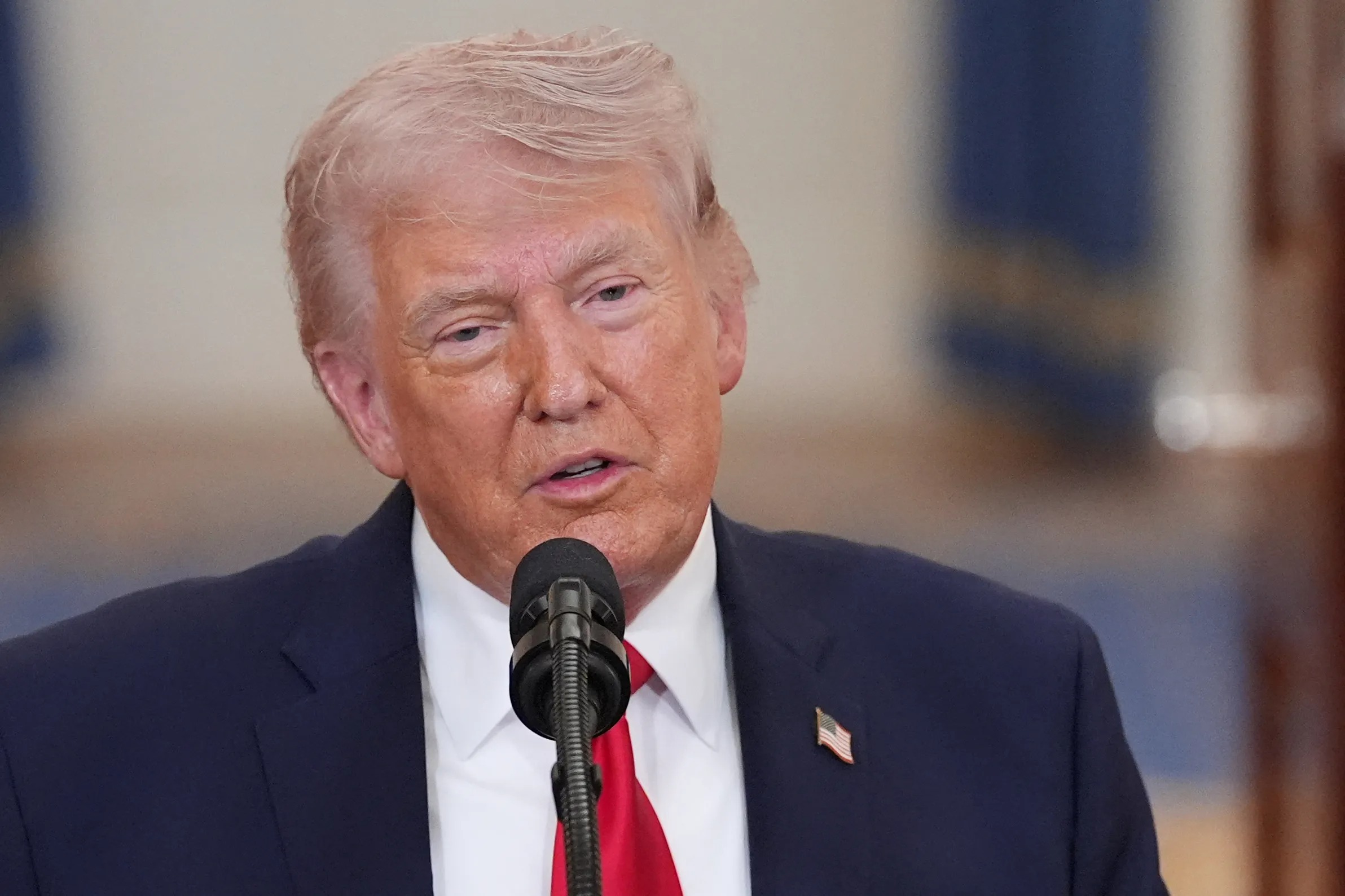
President Donald Trump has reaffirmed his support for a united Ireland after comments made during his visit to Dublin sparked debate across Ireland, Northern Ireland, and the United Kingdom.
Trump’s remarks drew praise from Irish nationalist politicians while prompting criticism from unionist leaders and British political figures. The comments also marked a departure from the approach traditionally taken by American presidents on the issue.
During a meeting with Irish Taoiseach Micheál Martin in Dublin on Saturday, Trump said he would like to see Ireland united. He added that he believes reunification will happen at some point in the future.
Trump suggested that if Irish unity is likely to occur eventually, there is little reason to delay it. He described the idea of bringing Northern Ireland and the Republic of Ireland together as a positive development.
According to Trump, a united Ireland would be a “fantastic” outcome. He acknowledged that the United Kingdom would have a role in any discussion but said he believed reunification would be beneficial.
Later, Trump again spoke about the issue and called Irish unity a “very cool thing.” On Sunday, he continued to defend his position while speaking with reporters.
The president said it seemed natural that Northern Ireland and Ireland could become one country. He stressed that the view was his personal opinion but noted that many people had expressed support after hearing his remarks.
Trump said the reaction he received encouraged him to continue speaking openly about the issue.
His comments attracted significant attention because American presidents have generally avoided supporting either side in the debate over Northern Ireland’s constitutional future.
For many years, the United States has backed the principle that any change in Northern Ireland’s status should happen only through democratic agreement. That position became a central part of the Good Friday Agreement, the 1998 peace accord that helped end decades of conflict.
The agreement established a political framework based on cooperation between unionist and nationalist communities. It also confirmed that Northern Ireland would remain part of the United Kingdom unless voters decide otherwise.
Under the deal, any move toward Irish reunification would require support from voters in Northern Ireland as well as approval from voters in the Republic of Ireland.
This process places the final decision in the hands of citizens rather than political leaders in Washington, London, or Dublin.
Irish Taoiseach Micheál Martin later revealed that Trump had expressed similar views during private conversations before making them publicly during his visit.
Nationalist politicians welcomed the comments and argued that they reflected growing interest in the question of Irish unity.
Some nationalist leaders said Trump’s remarks showed that discussions about reunification are gaining attention beyond Ireland. They argued that the debate has entered a new phase as more international figures discuss the issue.
Unionist politicians reacted strongly against Trump’s position.
Democratic Unionist Party leader Gavin Robinson said Northern Ireland’s future should be determined only by its people. He stressed that outside opinions should not influence the constitutional question.
Robinson said Northern Ireland remains part of the United Kingdom because that is the democratic choice of its residents. He added that any future decision must come through the process established under the Good Friday Agreement.
British politicians also criticized Trump’s comments.
Robert Jenrick of Reform UK rejected the president’s view and argued that Northern Ireland is an important part of the United Kingdom. He said it would continue to remain so in the years ahead.
The British government responded as well. A spokesperson for Prime Minister Andy Burnham said the government’s position on Irish reunification has not changed.
According to the statement, there is currently no clear evidence that a majority of people support holding a referendum on Irish unity. The government also reaffirmed its commitment to the Good Friday Agreement and the principles it established.
Officials noted that the agreement remains the foundation of peace and political stability in Northern Ireland. It continues to guide how constitutional questions are addressed.
Trump has raised the issue before. Earlier this year, he joked about a possible merger between Northern Ireland and the Republic of Ireland during an event in Washington.
His latest comments have once again placed Irish reunification in the spotlight. Supporters see the remarks as evidence of a changing political conversation, while critics insist that only voters can decide the future of Northern Ireland.
