


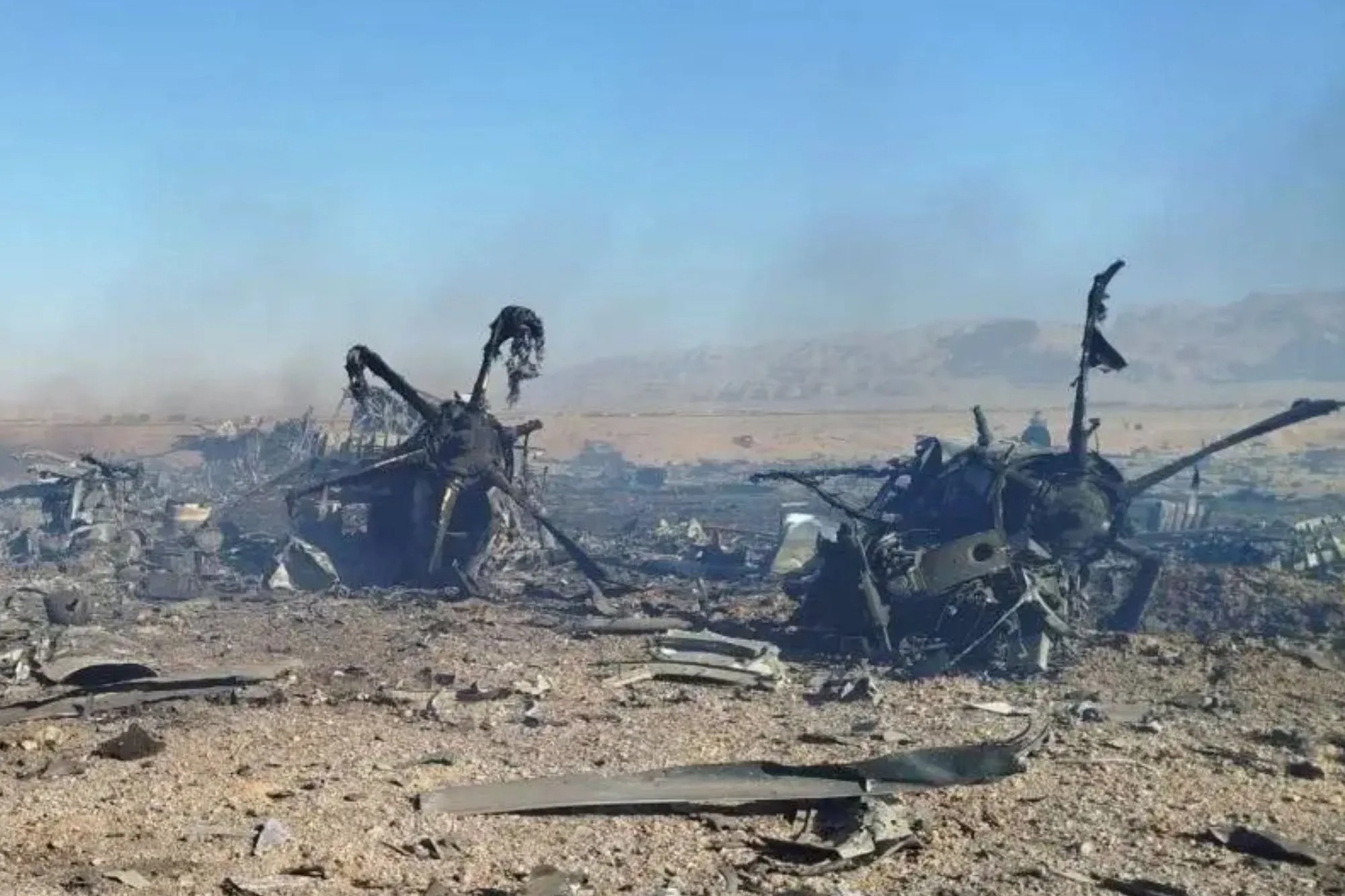
A U.S. Air Force officer has revealed how he survived after his fighter jet was shot down over Iran and how he spent two days trapped behind enemy lines before a rescue team reached him.
The officer shared his story during a television interview that aired on Sunday. For security reasons, he was identified only by his mission call sign, “Bravo.”
Bravo served as the weapons systems officer aboard an F-15E fighter jet during a mission on April 2. According to his account, the aircraft was hit by a shoulder-fired missile while flying over Iran.
The impact severely damaged the fighter jet and forced the crew to abandon the aircraft.
Bravo said the strike felt like being hit by a freight train. Within moments, the aircraft could no longer remain in the air.
The pilot, known by the call sign “Alpha,” activated the ejection system. Both officers were launched from the aircraft as it fell from the sky.
Bravo later credited Alpha for acting quickly during the emergency.
He said he will always be grateful to his pilot and fellow crew member for helping save their lives.
After ejecting, Bravo began falling toward a rugged and isolated region. At first, he believed his parachute had opened correctly.
Then he looked up.
What he saw immediately filled him with fear.
The missile strike had damaged his parachute. The equipment that was supposed to slow his descent was no longer working as expected.
Bravo described the sight as the most terrifying moment of his life.
He knew there was little he could do before reaching the ground.
Military experts later estimated that he struck the desert floor at a speed between 70 and 100 miles per hour.
The impact caused severe injuries.
Bravo suffered a broken back, injuries to his arm, and damage to his shoulder. Despite those wounds, he remained alive.
He called his survival a miracle.
The challenge, however, was far from over.
The officer found himself alone in hostile territory. He knew he faced the risk of capture if he stayed in one place.
Although badly hurt, he began moving through the harsh landscape.
Bravo climbed and hiked across difficult terrain while trying to avoid detection. At one point, he crossed a ridgeline that reached about 7,000 feet in elevation.
The journey tested both his physical strength and mental determination.
For two days, he remained stranded behind enemy lines.
He had no food and no water during that time. Every step became harder because of his injuries and exhaustion.
Still, he continued moving and waiting for rescue.
Meanwhile, U.S. military forces worked to locate and recover him.
A rescue operation was launched to bring him home safely. The mission involved highly trained Air Force pararescue personnel.
Eventually, two pararescue operators reached Bravo.
The arrival of the rescue team marked the end of his ordeal.
According to Bravo, his response to seeing the rescuers was simple.
“Let’s go,” he told them.
The rescue mission has been described as one of the most challenging recovery efforts carried out by the U.S. military in recent years.
The operation required careful planning and carried major risks because it took place deep inside hostile territory.
The interview focused mainly on Bravo’s experience. It did not include comments from Alpha, who reportedly landed several miles away after ejecting from the aircraft.
The survival story was featured during the season premiere of a long-running television news program.
The broadcast marked the beginning of a new season following major changes within the show’s leadership and reporting team.
Several well-known staff members departed in recent months, while new journalists joined the program.
Along with Bravo’s story, the season-opening episode included reports on people seeking presidential pardons and an inside look at a professional football franchise.
The program also previewed future coverage of artificial intelligence and its growing impact on society.
Yet Bravo’s account became the highlight of the broadcast.
His story offered a rare look at the dangers faced by military personnel during combat missions. It also showed how training, courage, and determination can help a person survive even the most extreme situations.
After enduring a missile strike, a damaged parachute, serious injuries, and two days alone behind enemy lines, Bravo lived to tell a story that many have called nothing short of remarkable.
