


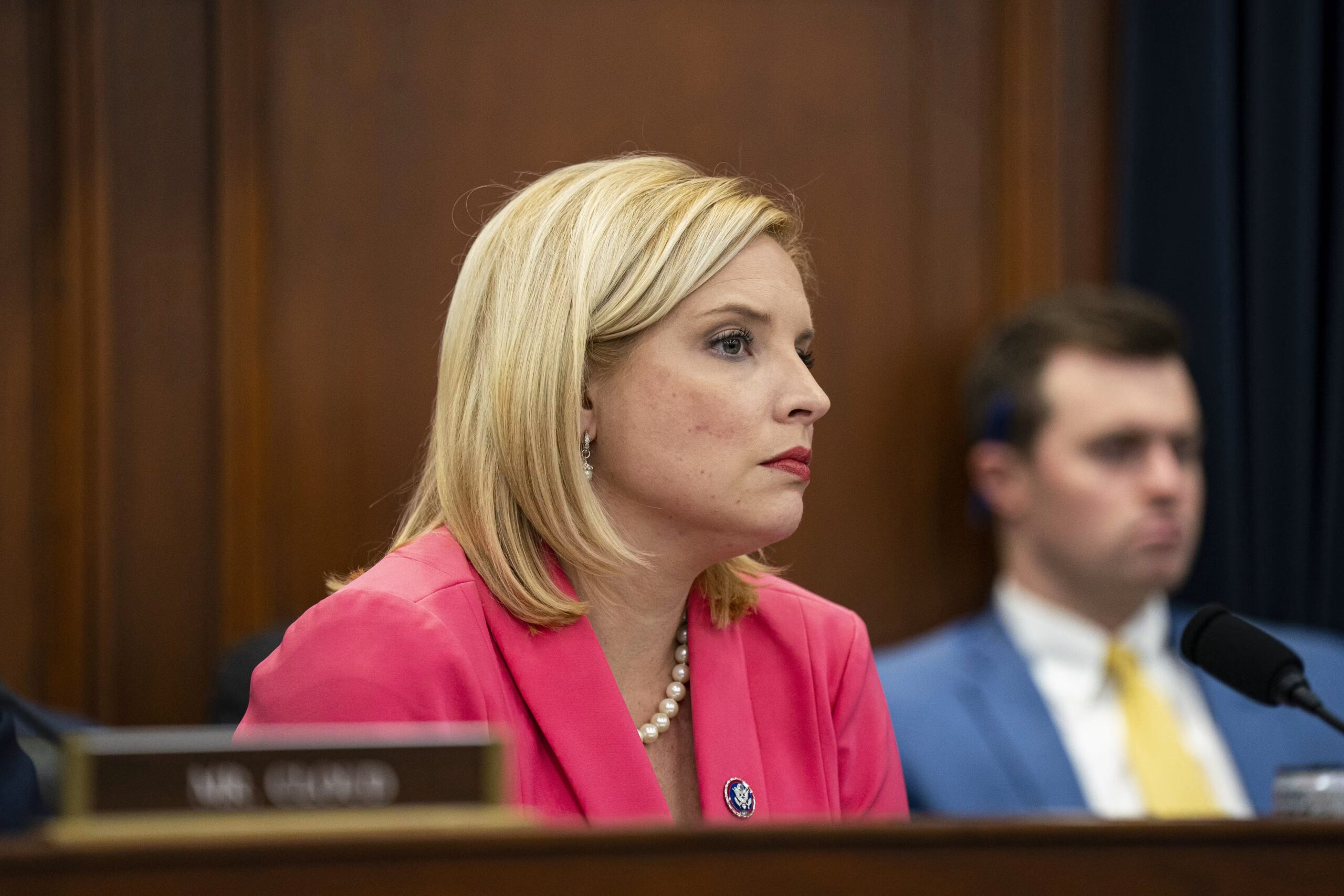
The debate over the war with Iran has become a major issue in Iowa’s closely watched Senate election, with candidates from both parties trading criticism over past votes and current positions on the conflict.
Republican candidate Ashley Hinson called this week for a quick end to the war, saying Iowa families are feeling the economic effects of higher energy and consumer costs.
In a post on social media, Hinson said residents should not have to pay more at gas stations or grocery stores because of the conflict. She urged policymakers to take immediate action to reduce costs and outlined several proposals aimed at providing relief.
Among her suggestions were suspending the gas tax, pausing diesel exports, and supporting funding measures tied to transportation infrastructure. Hinson said these steps should be implemented quickly and added that the war should be brought to an immediate and successful conclusion.
Her remarks attracted attention because of her voting record in the U.S. House of Representatives.
Democratic Senate candidate Josh Turek responded by pointing to previous congressional votes in which Hinson opposed resolutions designed to direct President Donald Trump to end U.S. involvement in the conflict with Iran.
Turek argued that Hinson had multiple opportunities to support efforts aimed at ending the war but chose not to do so. He also referenced a separate vote connected to U.S. military involvement in Lebanon as part of the broader Middle East conflict.
In his criticism, Turek said campaign statements should be matched by legislative action. He argued that ending long-running military conflicts should remain a priority and said lawmakers should focus on policies that help American families manage rising costs.
The exchange highlights how foreign policy has become increasingly important in the Iowa Senate race.
Political observers have paid close attention to the contest in recent months. Last month, election analysts changed the race rating from leaning Republican to a toss-up, signaling a more competitive political environment.
Iowa has supported Republican presidential candidates in recent elections. President Trump carried the state in each of the last three presidential contests. Democrats, however, continue to view the Senate race as an opportunity to make gains.
The discussion over Iran intensified after the House voted on a recent resolution related to the conflict.
The measure passed by a vote of 220 to 204. Every Democrat present supported the resolution, while seven Republicans joined them in voting in favor.
Among those Republicans were Iowa Representatives Zach Nunn and Marianette Miller-Meeks. Both lawmakers had opposed similar measures in the past but supported the latest proposal.
Their votes drew attention because both are seeking re-election in highly competitive congressional districts. Political analysts continue to classify those races among the most closely contested House campaigns in the country.
Hinson’s campaign did not immediately provide additional comments regarding her previous votes on the issue.
The debate comes as Hinson increasingly presents herself as a bipartisan candidate. During recent months, she has emphasized areas where she has taken positions different from the Trump administration.
Supporters say that approach demonstrates independence. Critics argue that voters should focus on her voting record rather than campaign messaging.
Recent surveys have shown that economic concerns remain among the top issues for voters. Inflation, energy prices, and the financial impact of international conflicts continue to shape political discussions across the country.
Last month, Hinson publicly objected to a proposal involving additional imports of foreign beef. More recently, she did not attend a Republican campaign event in Council Bluffs that featured Vice President JD Vance.
Hinson said a scheduling conflict prevented her from attending the event.
During his remarks, Vance praised Hinson and encouraged voters to support her Senate campaign. He described her as a strong public servant and expressed confidence in her candidacy.
The issue of the Iran conflict is also influencing Senate campaigns outside Iowa.
In Michigan, Republican Senate candidate Mike Rogers recently called for a rapid end to the war. He argued that lower energy costs could follow once the conflict concludes and proposed temporary measures to help consumers.
His Democratic opponent, Abdul El-Sayed, criticized those comments and questioned Rogers’ past support for policies connected to the conflict.
As Senate campaigns enter a critical stage, candidates are facing growing scrutiny over both their records and their current positions. The debate over Iran, energy prices, and economic pressure on households is expected to remain a major topic as voters prepare to make their decisions in the months ahead.
