


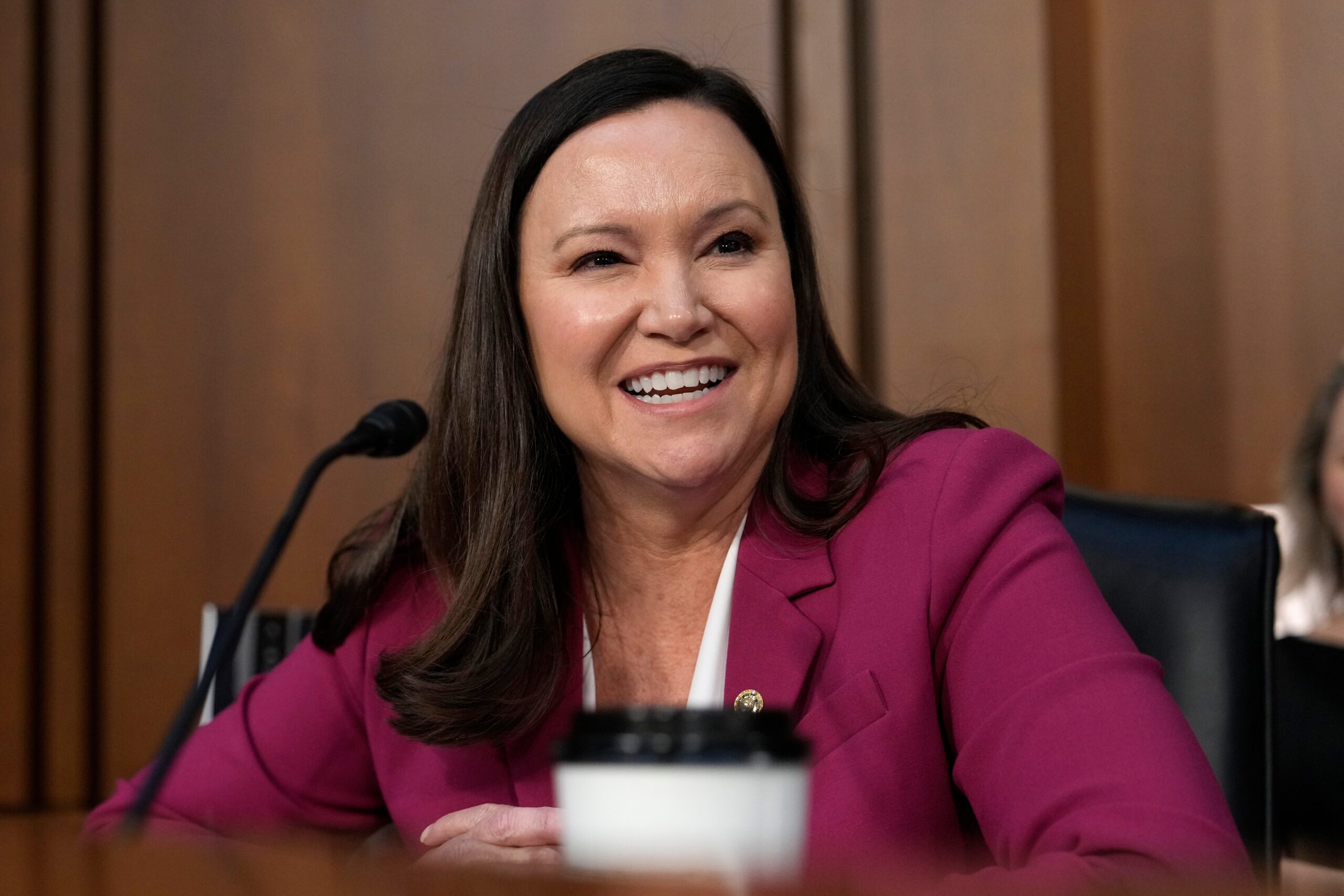
Ashley Moody has won Florida’s special Senate election, defeating Democratic candidate Angie Nixon and keeping the seat under Republican control. The result strengthens the GOP’s position in a state where Democrats have faced growing challenges in recent years.
Moody entered the election as the clear favorite. She had strong support from Republicans and a major advantage in campaign funding. Nixon, however, had gained national attention after winning an unexpected victory in the Democratic primary. Her success brought fresh interest to a race that many had expected Republicans to win with ease.
The election was held to fill the remaining two years of the Senate term won by Marco Rubio in 2022. Rubio left the Senate after President Donald Trump selected him for a Cabinet position. Florida Gov. Ron DeSantis then appointed Moody, who had served as the state’s attorney general.
Moody will now remain in the Senate through the end of the current term. The seat will be contested again in 2028, when voters will choose a candidate for a full six-year term.
Nixon’s rise during the primary campaign gave Democrats hope of making progress in Florida. Her campaign attracted interest from progressive voters across the country. Some Democrats viewed her as a chance to build a stronger movement in a state where their party has struggled to win major elections.
Democrats have not won a Florida Senate race since 2012. The party hoped Nixon could attract voters who were unhappy with Republican policies. Her unexpected primary victory also showed the growing influence of progressive voices within parts of the Democratic Party.
However, her campaign faced a serious financial challenge. Moody raised far more money and used much of it to promote her message through television and other advertising. Florida has around 23 million residents, making it an expensive state for political campaigns. Reaching voters across its large population requires major financial support.
Moody focused much of her campaign on Nixon’s political views. She argued that Nixon was too liberal for Florida. Her campaign also highlighted Nixon’s links to the Democratic Socialists of America, even though Nixon had publicly distanced herself from some of the group’s positions.
One campaign advertisement called Nixon a socialist and raised concerns about policies linked to the group. It also suggested that Nixon supported abolishing the police. Nixon rejected that claim and said she did not want to end police departments.
Moody’s campaign also pointed to Florida’s changing political landscape. Republicans now have around 1.5 million more registered voters than Democrats. This marks a major shift from earlier decades, when Democrats had a registration advantage across the state.
Despite her victory, Moody faced criticism over her campaign style and past record. She declined to take part in a debate and held fewer public events than Nixon. Her Democratic rival traveled across Florida, spoke directly with voters and appeared regularly in state media.
Nixon also gained attention through appearances on center-left podcasts. Her campaign argued that Moody was avoiding public questions and relying too heavily on political attacks.
Florida Democratic Party Chair Nikki Fried joined the criticism. During a news conference in Tallahassee, Fried urged Moody to speak directly with voters. Democrats also displayed a sign asking, “Where is Ashley Moody?”
Fried argued that voters deserved clear answers from a candidate seeking their support. She praised Nixon for meeting people across the state and urged Moody to follow the same approach. However, the criticism did not appear to change the election’s outcome.
Moody also faced questions about the Hope Florida case. The controversy involved $10 million from a Medicaid settlement that was directed to a charity linked to Florida’s first lady, Casey DeSantis.
A political committee later used the money to oppose a 2024 ballot measure that would have legalized recreational marijuana in Florida. Moody was attorney general at the time and had approved the deal.
She denied any wrongdoing. A state prosecutor later brought the matter before a grand jury for review, but no criminal charges were filed.
The election marks another win for Florida Republicans and a difficult result for Democrats. Moody’s strong financial position, Republican support and campaign focus on Nixon’s political views helped her maintain a clear advantage.
For Nixon, the defeat ends a campaign that attracted national interest but could not overcome the political and financial challenges of a statewide race. Her primary victory showed that progressive candidates can gain attention in Florida, but the general election revealed how difficult it remains for Democrats to turn that support into votes.
Moody’s victory gives Republicans continued control of the seat until the next election in 2028. That contest will provide another chance for Democrats to challenge the GOP’s growing influence in Florida.
Is this conversation helpful so far?
