


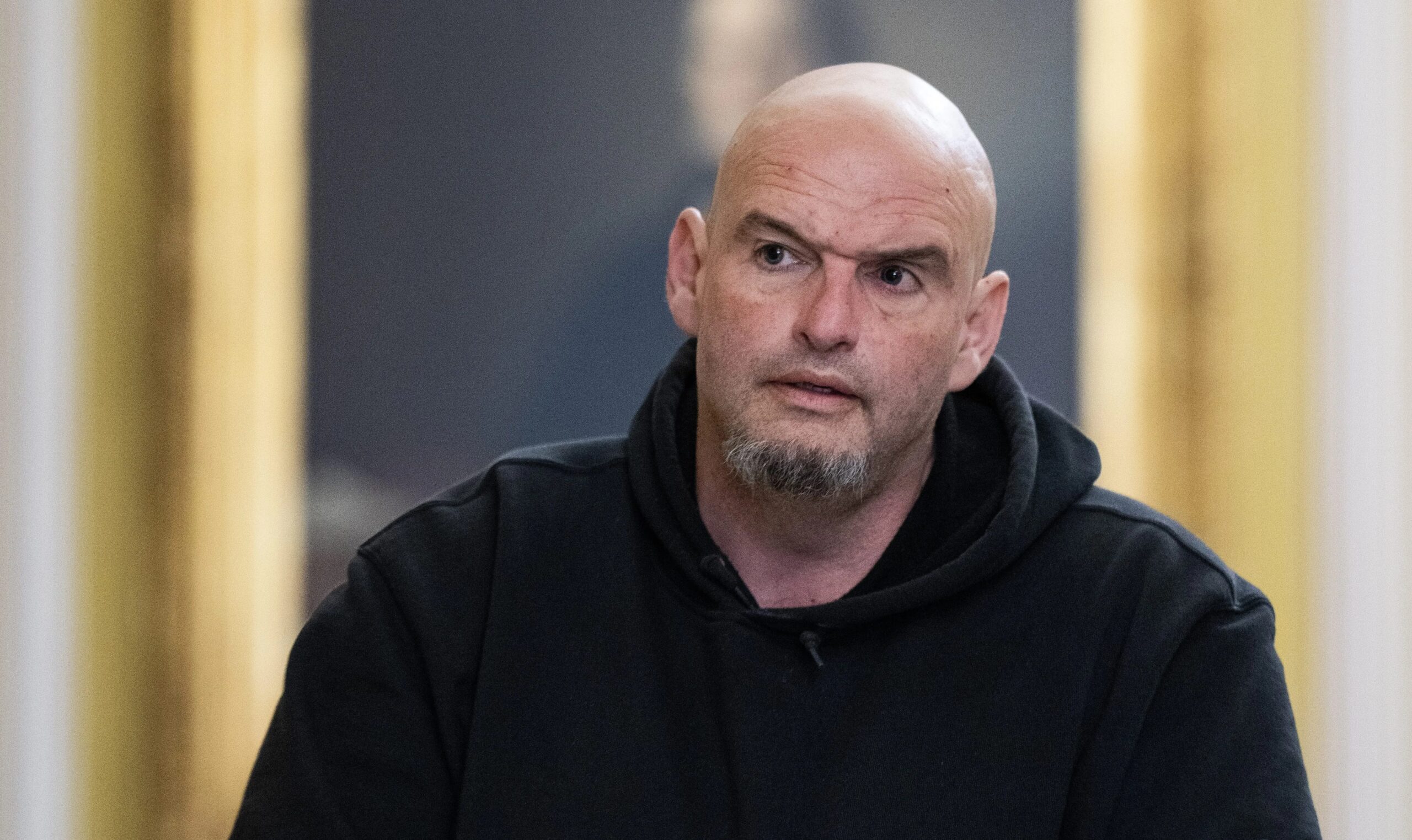
John Fetterman once stood at the center of Pennsylvania Democratic politics. He was a popular campaign figure who traveled across the state to help fellow Democrats win elections. Two years later, that role has largely disappeared as many members of his own party move away from him.
The Democratic senator now finds himself in an unusual political position. While his standing among Republican voters has improved, support from Democratic voters has fallen sharply. The change reflects growing disagreements over policy, party loyalty and his willingness to work with political opponents.
Fetterman has become one of the most independent voices in the Senate. He has taken positions that often place him at odds with many Democrats. His strong support for Israel during the Gaza conflict has been a major source of tension with progressives. He has also criticized candidates linked to the Democratic Socialists of America, further widening the gap between himself and parts of the party base.
His voting record has added to those divisions. Fetterman has backed several measures supported by Republicans and has supported multiple nominees put forward by President Donald Trump. He also opposed efforts aimed at ending military action involving Iran. These moves have led some Democrats to question whether he still represents the party’s direction.
The latest controversy came during a Republican Party convention in Dallas. Fetterman appeared through a video message and spoke positively about Republican Senator David McCormick, his fellow Pennsylvanian. He also expressed support for working with Trump on policies designed to protect jobs connected to the steel industry.
In the video, filmed near his home in Braddock, Pennsylvania, Fetterman described himself as a common-sense Democrat. He said he would continue to support American workers and reject political extremes. The message was well received by many Republicans but sparked concern among Democrats already uneasy about his recent positions.
Despite the criticism, Fetterman insists he remains committed to the Democratic Party. He has repeatedly stated that he supports labor unions, LGBT rights and other issues that are important to many Democratic voters. He says his willingness to cooperate with Republicans should not be confused with a desire to change parties.
In recent public comments, Fetterman stressed that he has no plans to become a Republican. Instead, he argues that elected officials should be willing to work together when possible, regardless of party affiliation.
Many Democrats in Pennsylvania remain unconvinced. Local party leaders say there is little demand for Fetterman to appear at campaign events this year. In several important races across the state, Democratic organizations have chosen not to seek his involvement.
Some party officials believe voters feel disappointed by the senator’s recent actions. They argue that many Democrats supported Fetterman because they expected him to champion progressive priorities. His critics now say he has moved away from those expectations.
Polling data shows just how much opinion has shifted. A recent statewide survey found that only a small portion of registered Democrats now hold a favorable view of Fetterman. The figure marks a steep decline from earlier years when he enjoyed broad support among Democratic voters.
At the same time, Republican voters have become far more supportive. Surveys show that a large majority of Republicans in Pennsylvania now view him favorably. That increase represents one of the most dramatic political image changes for any statewide elected official in recent years.
Another poll produced similar results, showing strong approval among Republicans and weak approval among Democrats. The findings suggest that Fetterman’s political coalition has changed significantly since he first entered the Senate.
The growing divide has already fueled discussion about the future. Although the next Senate election is still some time away, conversations are beginning about who may challenge for the seat if Fetterman seeks another term in 2028.
For now, Fetterman remains a prominent figure in national politics. Yet he faces a difficult reality at home. The voters who once formed the core of his support are increasingly skeptical, while many of his newest supporters belong to the opposing party. How he responds to that challenge may define the next chapter of his political career.
