


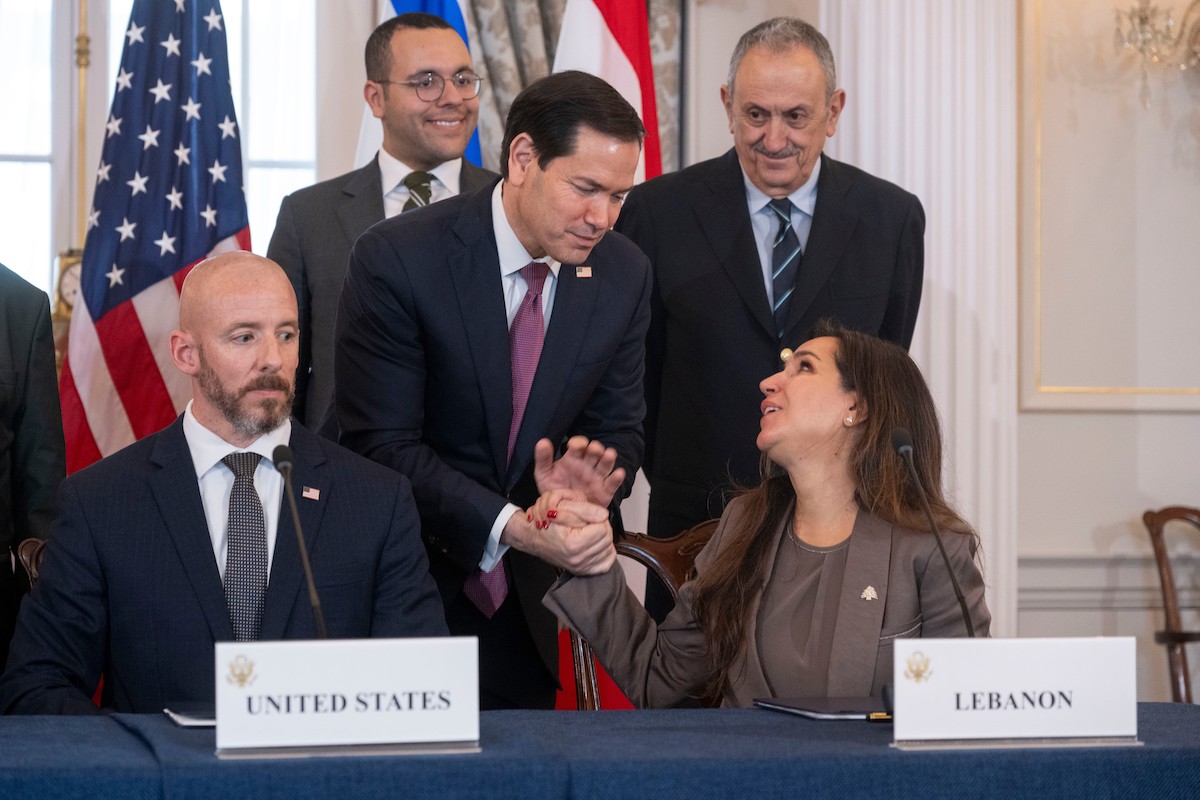
Lebanon, Israel, and the United States have signed a trilateral framework agreement in Washington aimed at creating a path toward a future peace deal between Israel and Lebanon. The agreement follows several rounds of negotiations designed to reduce tensions after months of conflict along the Israel-Lebanon border.
The signing ceremony took place in the U.S. capital after five rounds of talks involving representatives from the three countries. While officials did not publicly release the full details of the agreement, they described it as an important first step toward improving security and reducing hostilities.
U.S. Secretary of State Marco Rubio said the agreement establishes a framework for lasting peace and stability but stressed that significant work remains before a final settlement can be reached. He described the deal as the beginning of a longer diplomatic process rather than a final agreement.
Lebanon’s ambassador to the United States, Nada Hamadeh Moawad, said the framework represents an important step toward restoring Lebanon’s sovereignty and territorial integrity. She added that the agreement is intended to help secure a permanent end to hostilities and eventually allow displaced Lebanese citizens to return to their homes.
Israel’s ambassador to the United States, Yechiel Leiter, also welcomed the agreement. He said the framework creates new opportunities for peace while emphasizing Israel’s security concerns and its goal of reducing the influence of Hezbollah and Iran in southern Lebanon.
The latest diplomatic effort follows months of fighting between Israel and Hezbollah, the armed group that also holds political influence within the Lebanese government. The conflict escalated after Hezbollah launched rocket attacks into northern Israel, prompting Israeli airstrikes and a ground operation in southern Lebanon.
The fighting caused widespread destruction across southern Lebanon. Many homes, businesses, and public buildings were damaged or destroyed, forcing large numbers of civilians to leave their communities. Lebanese authorities estimate that more than one million people have been displaced since the conflict intensified.
Despite the signing of the framework agreement, major disagreements remain between the two sides. Hezbollah leader Naim Qassem repeated calls for Israel to withdraw all of its forces from Lebanese territory without conditions. The group maintains that Israeli troops must leave every part of southern Lebanon before lasting peace can be achieved.
Israeli Prime Minister Benjamin Netanyahu said Israel will not fully withdraw its forces until Hezbollah gives up its weapons. He stated that Israeli troops will remain in what he described as a security zone as long as Hezbollah continues to maintain an armed presence outside the control of the Lebanese state.
Netanyahu confirmed that, under the new framework, Israeli forces are expected to transfer control of two limited areas to the Lebanese army as part of a pilot program. One area is located south of the Litani River, while the second lies north of the river. He also said civilians displaced from the current security zone would not yet be permitted to return.
Direct negotiations between Lebanese and Israeli officials began earlier this year under U.S. mediation. An earlier ceasefire agreement announced in April failed to stop the fighting completely, leading diplomats to continue discussions in search of a more durable solution.
The recent ceasefire remains fragile as negotiators continue working on unresolved political and security issues. International observers believe additional negotiations will be required before a comprehensive peace agreement can be reached.
The conflict has had a severe humanitarian impact. Lebanese officials report that more than 4,200 people have died during the fighting, while infrastructure damage has affected communities across southern Lebanon. International aid organizations continue providing assistance to displaced families.
The Israel Lebanon Peace Framework represents an important diplomatic development, but officials from all three countries acknowledge that major challenges remain. Future negotiations will focus on security arrangements, troop movements, border stability, and long-term measures aimed at preventing renewed conflict. The success of the agreement will depend on continued dialogue and cooperation between the parties in the months ahead.
