


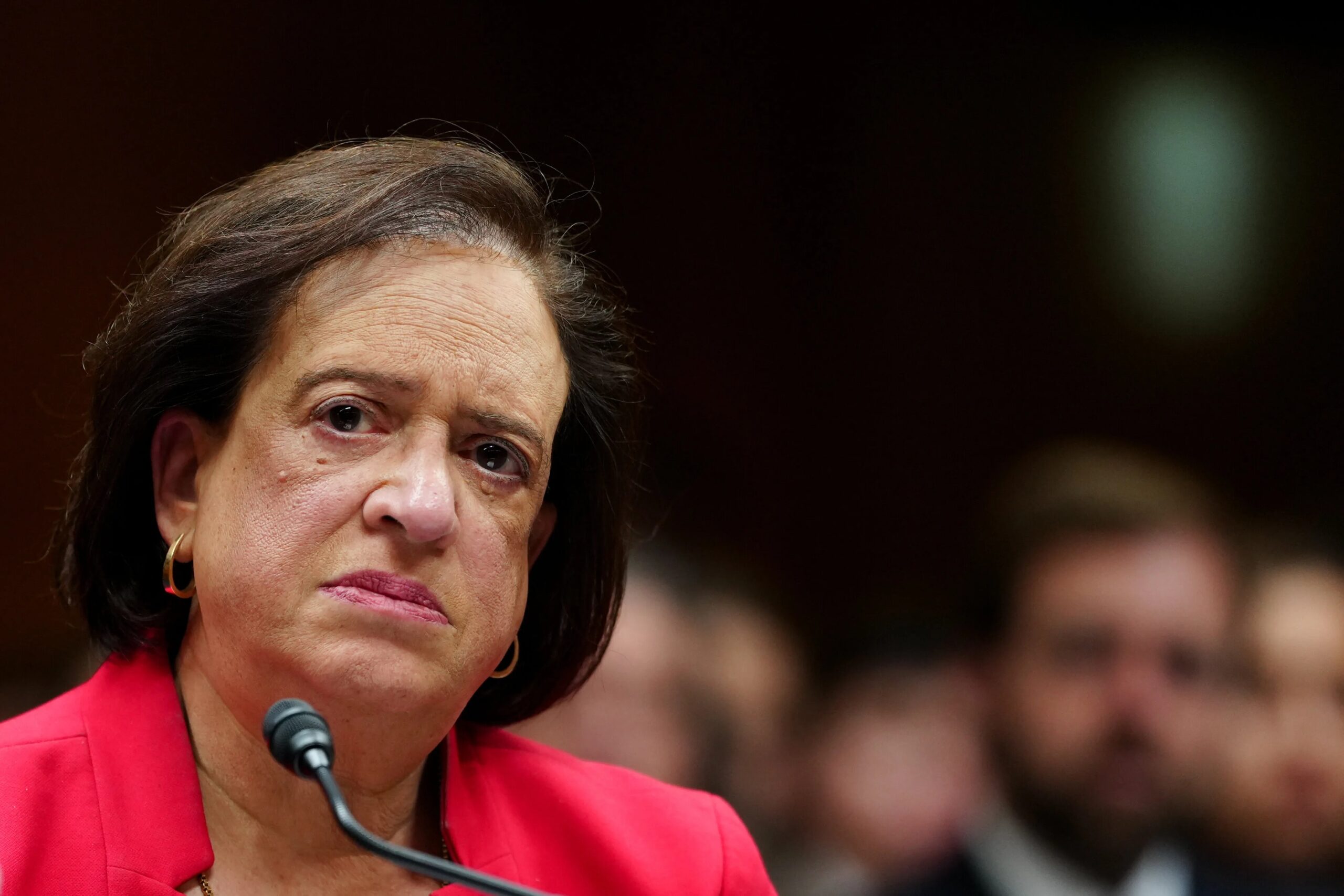
US Supreme Court Justice Elena Kagan has warned that recent court rulings have weakened American democracy. Speaking to students at Catholic University’s law school, she criticised decisions by the court’s conservative majority on voting rights, election maps and campaign spending. Her remarks were reported on Wednesday, October 21, and added to the debate over the role of the highest court in US politics.
Kagan, one of the court’s three liberal justices, said the failure to limit partisan redistricting had helped drive political division. Redistricting is the process of drawing the borders of voting districts. When party leaders shape those borders to help their own candidates, they can make some seats safer for one party and reduce the chance of a close contest.
Kagan argued that both major parties had taken part in efforts to gain an edge through district maps. She said the result could be states with many voters from both parties but congressional maps that strongly favour only one side. In her view, this weakens fair representation and pushes candidates towards more extreme positions because they may fear challenges from within their own party.
She also criticised the court’s April ruling that cut back a key part of the Voting Rights Act of 1965. The law was created to protect voters from racial discrimination. After the ruling, several Southern states began efforts to redraw districts, with Republican-led states seeking to change maps in ways that could reduce the number of seats where Black voters form a majority or a large share of voters.
The dispute has become part of a wider political fight before the November midterm elections. Republicans are seeking to keep control of Congress, while Democrats hope to win seats. Texas changed its map after pressure from President Donald Trump, and California later changed its own map in a bid to target Republican-held seats. The moves show how district design can shape the battle for power.
Kagan also raised concerns about a June ruling that removed a limit on how much political parties can spend on campaigns in coordination with candidates. She argued that large amounts of money can create openings for donors to gain influence. In her view, the public may lose trust when it believes political decisions are shaped by wealthy people rather than the needs of voters.
The justice said the court had not given enough attention to the real-world effects of its decisions. Court rulings can shape laws and public life long after a case ends. When a ruling changes election rules, the effects may be felt in how districts are drawn, how campaigns are funded and how voters see their ability to influence government.
The Supreme Court has a 6 to 3 conservative majority. Kagan was appointed by former President Barack Obama and has often disagreed with the court’s conservative justices. Her comments were not a ruling in a case, but a public criticism of the effects she believes recent decisions have had on the political system.
Supporters of the court’s approach may argue that judges should follow the law and the Constitution rather than judge rulings by their political results. The wider dispute reflects different views about the role of courts, the limits of election law and the best way to protect democratic choice. Those questions are likely to remain part of public debate.
Kagan’s warning comes at a time when election rules and voting access are major issues across the country. The outcome of the midterms will decide which party controls Congress and will affect the path of federal policy. The way district maps are drawn and campaigns are funded can influence how voters are represented.
Her remarks underline the importance of public trust in the courts and the election system. The Supreme Court remains a central part of American government, but its decisions can face strong criticism from within the legal community itself. The debate now turns on whether the court’s rulings protect fair representation or leave the political system more divided.
