


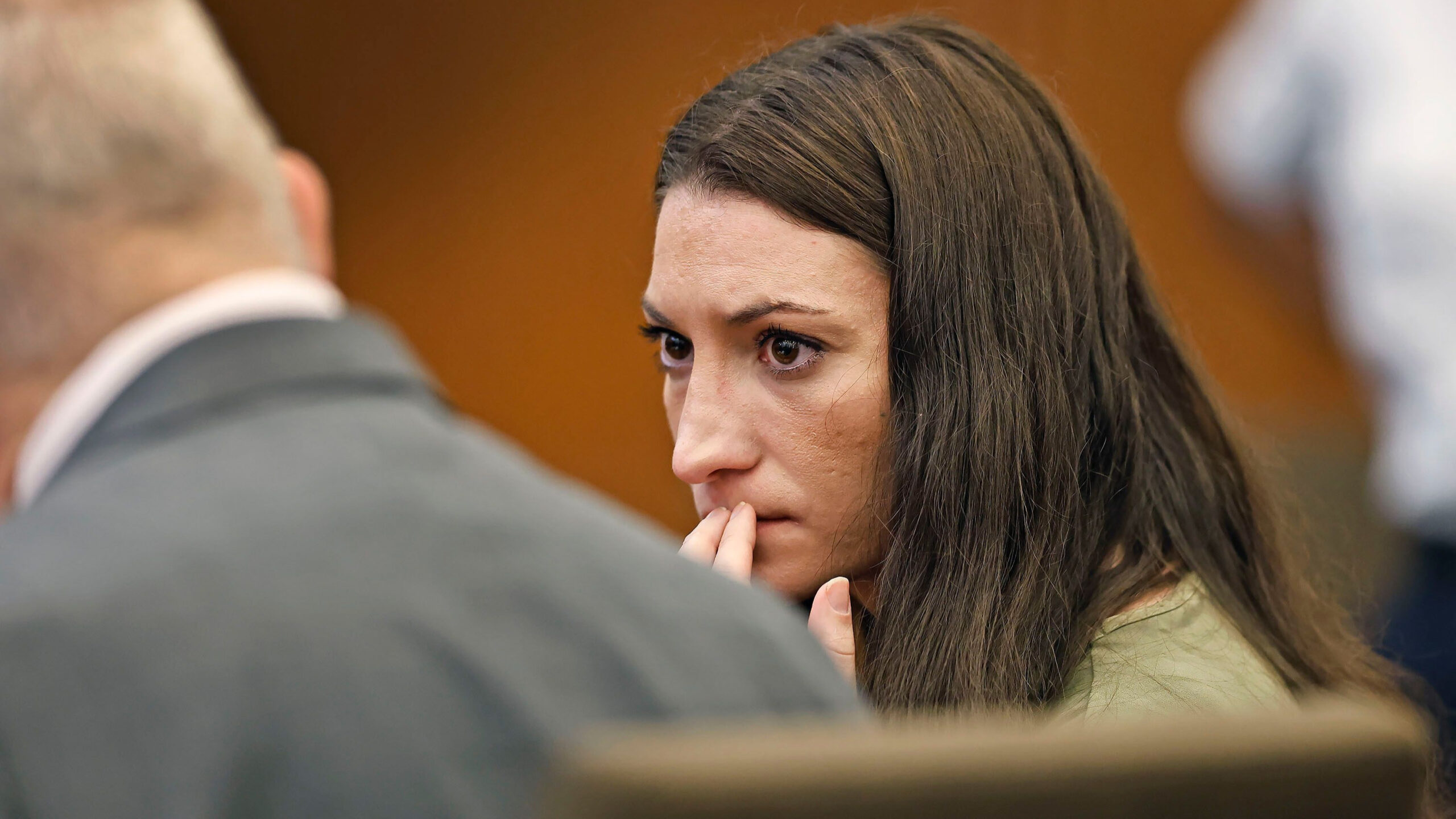
The Lindsay Clancy Trial is approaching a critical stage as prosecutors complete their rebuttal case and jurors prepare to hear final arguments in one of the most closely watched criminal cases in Massachusetts.
At the center of the case is the question of whether Lindsay Clancy was legally responsible for the deaths of her three young children or whether severe mental illness prevented her from understanding her actions.
Clancy is accused of killing her children, Cora, 5, Dawson, 3, and Callan, 8 months, at the family’s home in Duxbury on Jan. 24, 2023.
Prosecutors allege that Clancy intentionally caused the deaths after sending her husband, Patrick Clancy, away from the home on errands. They argue that the evidence shows planning, awareness, and criminal responsibility.
The defense disputes that claim.
Defense attorneys maintain that Clancy was suffering from bipolar disorder and postpartum psychosis at the time. They argue that her mental condition was so severe that she could not fully understand reality or the consequences of her actions.
As the trial enters its final phase, expert testimony remains the focus of the courtroom.
On Tuesday, prosecutors called forensic psychologist Kirk Heilbrun as a rebuttal witness. Heilbrun testified that he believed Clancy should be held criminally responsible for the deaths.
He explained his professional assessment of the evidence and stated that his review did not support the conclusion that Clancy was legally insane at the time of the incident.
His testimony challenged opinions presented by defense experts who described Clancy as experiencing a severe psychiatric episode.
The prosecution also continued presenting testimony from FBI forensic psychiatrist Gregory Saathoff.
Saathoff examined Clancy’s statements and medical history and raised questions about her description of her mental condition. He suggested that some aspects of her account did not align with his analysis of the available evidence.
Prosecutors used his testimony to reinforce their position that Clancy remained aware of her actions.
The conflicting opinions offered by experts have become one of the most important parts of the case.
Throughout the trial, jurors have heard from multiple psychiatrists, psychologists, and medical specialists. Some experts have supported the defense claim of postpartum psychosis, while others have concluded that the evidence does not meet the legal standard required to remove criminal responsibility.
Legal observers say jurors may place significant weight on the credibility of these witnesses when they begin deliberations.
The trial also included discussion of a mistrial request filed by the defense.
Attorney Kevin Reddington sought a mistrial after testimony included a reference to discussions involving the religious belief that suicide is a mortal sin.
The defense argued that the statement could unfairly influence jurors and create prejudice against Clancy.
Judge William Sullivan rejected the request.
He immediately ordered the statement struck from the record and instructed jurors not to consider it as evidence. The judge emphasized that the remark had no bearing on the legal issues before the court.
The decision allowed the proceedings to continue without interruption.
The case has attracted widespread attention because it combines questions of criminal law with complex mental health issues. The trial has also sparked public discussion about postpartum mental illness and how courts evaluate psychiatric conditions in criminal cases.
Both sides agree that Clancy experienced mental health struggles. However, they disagree sharply on whether those struggles were severe enough to remove legal responsibility.
That distinction will be central to the jury’s decision.
With rebuttal testimony nearing completion, the court is expected to move toward closing arguments. During that stage, prosecutors and defense attorneys will summarize their evidence and present their final interpretations of the case.
Jurors will then receive legal instructions before beginning deliberations.
The Lindsay Clancy Trial now stands at a pivotal moment. The outcome will depend on how jurors assess the evidence, weigh the expert testimony, and determine whether Clancy was legally responsible for the deaths of her three children.
