


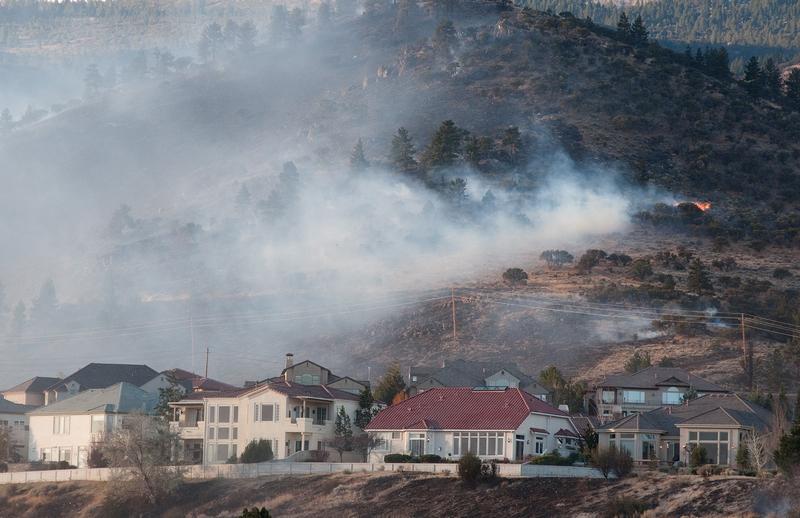
Reno, Nevada — A fast-moving wildfire near Reno has forced tens of thousands of people to leave their homes as strong winds push flames across dry land. The fire grew rapidly over the weekend and moved toward homes and the University of Nevada campus.
The Hawk Fire had burned more than 15,000 acres by Sunday, August 23. Officials said 42,000 people were under evacuation orders. Another 45,000 people were in an evacuation warning area and were told to be ready to leave.
The fire was reported as human-caused. Officials have not said how it started. The cause remains under investigation.
The blaze spread fast because of strong winds, low humidity and dry plants. Fire crews faced shifting winds that changed the direction of the flames. That made it harder to build safe lines around the fire.
Several structures have already been destroyed. Three civilians and three first responders were injured, officials said. The fire also caused major road closures and power loss in parts of Washoe County.
Nevada Gov. Joe Lombardo declared a state of emergency in Washoe County. The Nevada National Guard was also called in to help. About 60 troops were assigned to help protect evacuated areas.
More than 400 people were working on the fire. Crews came from local, state and federal agencies. Aircraft were also used to attack the flames from above.
The fire reached close to the University of Nevada campus. The school had planned to begin classes on August 24. University officials prepared an emergency plan in case the fire moved closer.
The campus was still outside the evacuation zone on Sunday morning. Officials continued to watch the fire and changing weather. Students and staff were told to follow safety alerts.
The Reno Tahoe International Airport also stayed outside the evacuation zone. Commercial flights were not affected at that time. Reno Stead Airport was closed to normal air traffic but remained open for fire crews.
The fire also affected the wider Reno area. Nearly 10,000 homes and businesses lost power on Sunday. Part of US Route 395, a major road through the area, was closed because of the fire.
Emergency officials opened the Reno Sparks Convention Center for people who had to leave their homes. Pets could not stay at that site. Other places were used for animals.
Local officials urged residents to leave as soon as an order was issued. They said early action helps keep people safe. It also gives firefighters more space to work without heavy traffic on local roads.
The fire spread so quickly that some residents had little time to prepare. One resident told officials that his home entered the evacuation zone only a day after the fire first appeared. The fast change showed how quickly wind and dry land can turn a small fire into a major threat.
Fire crews also had to protect neighborhoods that sit close to open land. Reno has more than 280,000 residents. The large number of people near the fire made evacuation work harder.
The situation also raised concerns about fire resources. Large fires need many crews, aircraft and emergency workers. A fast fire can quickly stretch those resources across a wide area.
Weather remains a key factor. Strong winds can push flames into new areas within minutes. Dry plants can also help fire move across hills and open land.
Officials continued to focus on evacuation, fire control and protection of key roads and buildings. They also warned residents not to return until authorities say it is safe.
Officials also asked residents to avoid closed roads and blocked areas. Such roads can slow fire engines and ambulances. Clear routes are vital when crews need to reach new fire lines quickly.
For people in the affected areas, the main message remained simple. Leave when told. Keep roads clear. Follow official alerts. The Hawk Fire showed once again how quickly a wildfire can threaten a major US city.
