


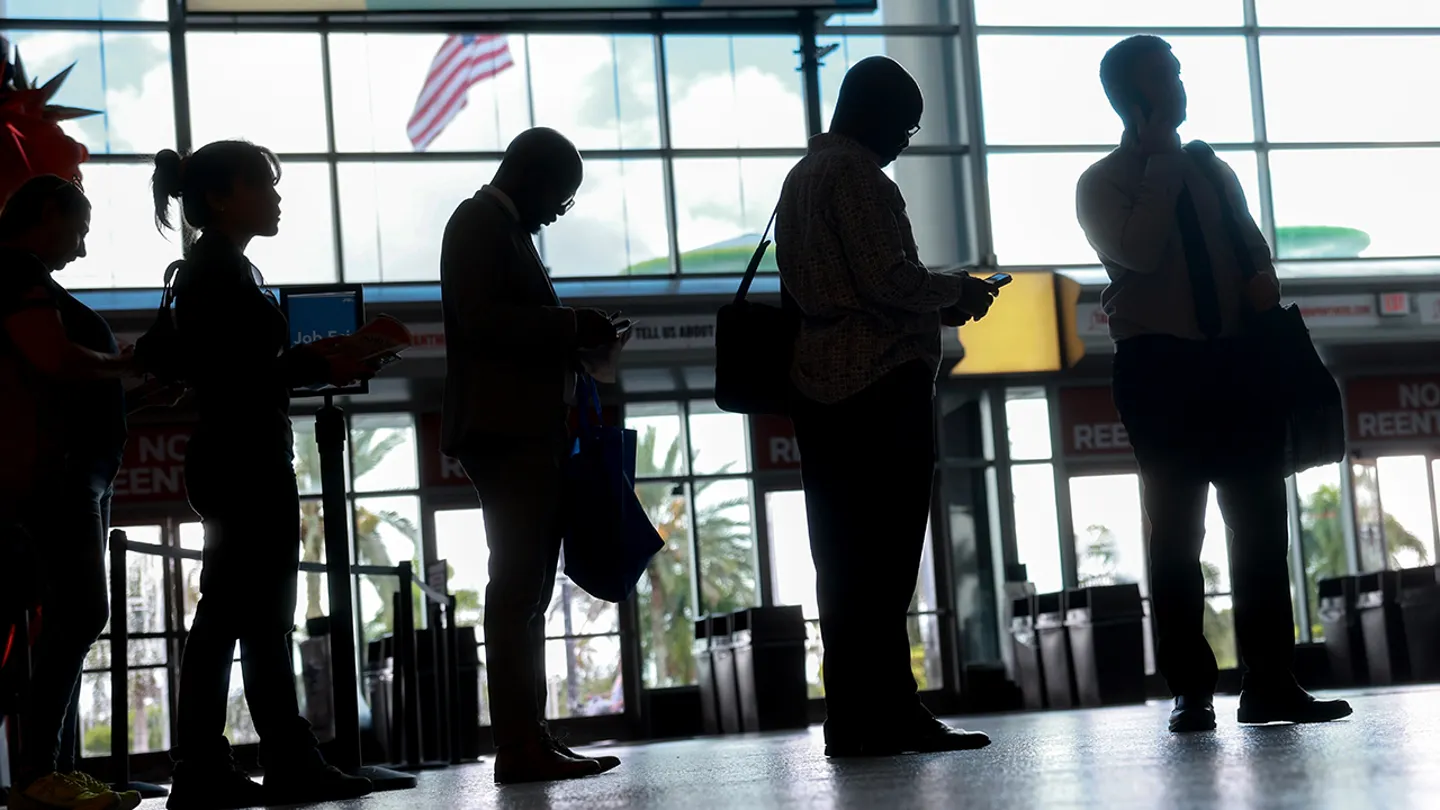
US jobless claims continue to show a steady decline, according to the latest weekly data. The drop suggests that layoffs across the country remain low. It also shows that employers are still holding on to workers despite ongoing global economic uncertainty. The report adds to recent signs that the US labor market remains stable. Many economists see this as a key signal of economic strength, even as other parts of the global economy face pressure.
The weekly claims data tracks the number of people filing for unemployment benefits for the first time. A lower number usually means fewer layoffs. In the latest reading, claims fell again compared to the previous week. This pattern has been seen for several weeks. It suggests that companies are not cutting jobs at a large scale. Businesses appear to be adjusting through slower hiring rather than layoffs.
The broader labor market continues to show resilience. Hiring has slowed compared to earlier recovery periods, but job losses remain limited. Many firms are still dealing with uncertain demand, higher borrowing costs, and global trade pressure. Even so, most sectors are keeping staff levels steady. This balance between slower hiring and low layoffs is helping keep unemployment stable across the country.
Some industries are performing better than others. Healthcare, hospitality, and select service sectors continue to add jobs in many regions. At the same time, some technology and finance companies have announced targeted job cuts over the past months. However, these cuts have not been large enough to shift the overall trend in claims. The data still points to a broad labor market that is holding firm rather than weakening.
A strong job market has wider economic effects. When fewer people lose jobs, consumer spending tends to stay steady. This supports overall economic growth. Households are more likely to continue spending on essentials and services when income remains stable. That stability also helps small businesses, which depend heavily on local demand. Economists say this is one reason the economy has avoided a sharper slowdown.
The US jobless claims trend is also watched closely by policymakers. A stable labor market can influence decisions on interest rates and inflation control. If layoffs remain low, wage pressures can continue, which may affect inflation levels. At the same time, a strong job market gives policymakers more room to manage growth carefully without triggering a sudden downturn.
Looking ahead, analysts expect some volatility in the data. Global uncertainty, changing demand patterns, and business cost pressures could still affect hiring decisions. However, most forecasts suggest that large-scale layoffs are unlikely unless there is a major economic shock. For now, the steady decline in US jobless claims supports the view of a stable labor market.
Overall, the latest figures highlight a labor market that remains steady and resilient. While challenges exist in the wider economy, employers continue to avoid widespread job cuts. The trend in US jobless claims will remain an important indicator in the coming weeks as economists watch for any shift in labor conditions.
