


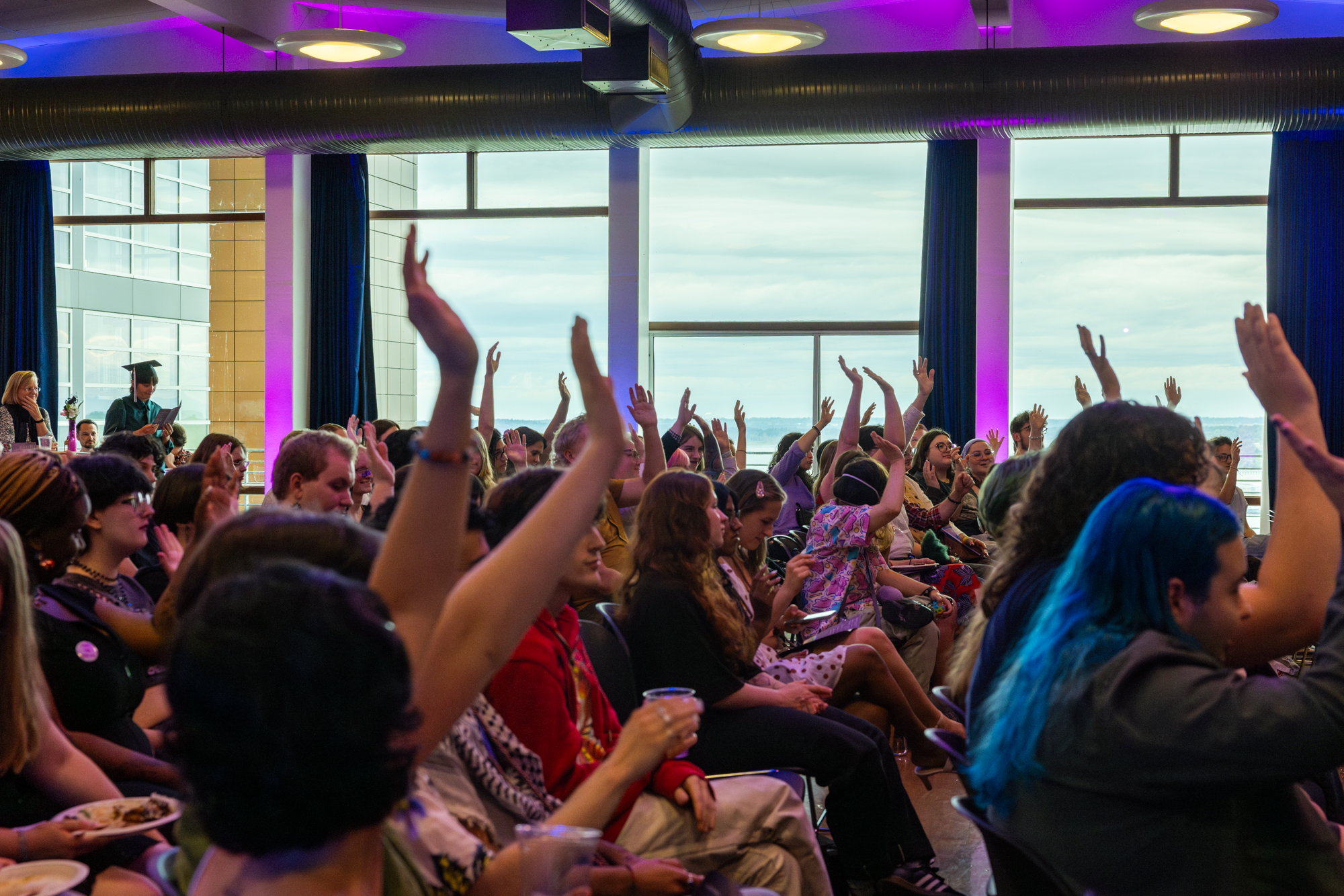
Western Washington University marked its third annual WWU Lavender Graduation on June 4, bringing together around 60 graduating students from the university’s queer community for a celebration of identity, resilience, and academic achievement.
The ceremony took place inside the Viking Union on campus and was attended by students, faculty, and supporters. It highlighted the experiences of LGBTQ+ graduates who reflected on their personal growth, challenges, and the importance of community during their time at university.
Lavender Graduation is a national tradition that recognizes LGBTQ+ students and their contributions to campus life. At WWU, the event has become an important space for students to celebrate both academic success and personal identity in a supportive environment.
This year’s ceremony carried added meaning after the 2025 event was canceled due to a strike by operational student employees. The return of the celebration in 2026 was seen as a moment of reconnection for many students who had waited to mark the milestone together.
Speakers at the event focused on themes of community, resilience, and belonging. They also spoke about how shifting social and political conditions have affected minority groups, while emphasizing the importance of support systems on campus.
Among the graduates who shared their experiences was Juleyana Cabrera, who described university life as a journey of survival and self discovery. As a first generation college student, they said they learned how to adapt and trust their own ability to move forward, even during difficult personal circumstances.
Cabrera also spoke about the meaning of queerness, describing it as a form of chosen family and emotional support. They emphasized the importance of protecting personal wellbeing while navigating academic and social pressures in college life.
Joshua Riley, who studied communications and public relations, reflected on the importance of self prioritization. He said that building community begins with understanding oneself and staying authentic, even while forming connections with others.
Riley described his experience at WWU as largely positive, especially within queer spaces on campus. He noted that intersectional experiences shaped his time at university, highlighting both supportive environments and challenges faced by students of color in predominantly white spaces.
He encouraged future students to participate in campus events and engage with the community. He said involvement helped him build relationships and find a sense of belonging more quickly during his time at university.
Casper Suter, a cell biology student and drag performer, spoke about discovering community through campus organizations. He said joining a drag club helped him connect with others and better understand his identity in a supportive environment.
Suter explained that his understanding of queerness evolved over time, becoming more focused on authenticity and comfort with self expression. He encouraged incoming students to seek out friendships early and build strong support networks.
Gabriel Diaz Kelly, a political science graduate, reflected on learning to listen and grow through shared experiences. He said university life helped him move beyond the idea that identity alone defines uniqueness, instead emphasizing shared human experience.
Diaz Kelly also discussed his experience as a transgender student and the importance of gender neutral housing and campus support systems. He acknowledged that while WWU offers strong resources, gaps still exist in institutional support structures.
He credited campus advocacy roles and peer networks for helping strengthen LGBTQ+ support systems. He said collaboration among students and staff plays an important role in maintaining inclusive spaces.
Across all four graduates, a common theme emerged around community building, self acceptance, and personal growth. Each student described queerness in different ways, but all emphasized connection, authenticity, and emotional support.
The WWU Lavender Graduation continues to serve as an important space for recognition and celebration within the university. For many students, it represents not only the completion of their studies, but also the strength of the communities that supported them along the way.
