


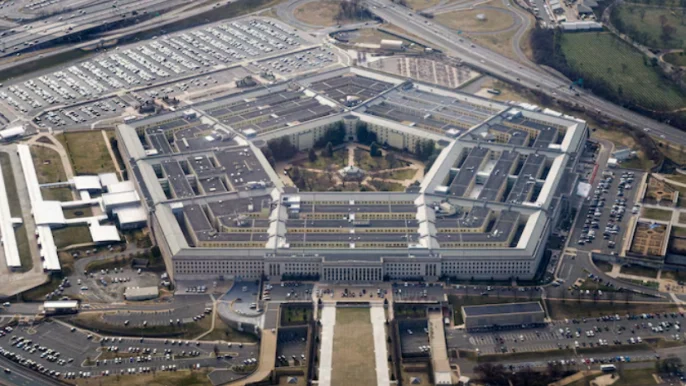
The US military has signed new artificial intelligence deals with seven major technology firms. The agreements were confirmed by the Pentagon on Friday. The companies include Google, Microsoft, Amazon Web Services, Nvidia, OpenAI, Reflection and SpaceX. These firms will help the US military improve decision-making in complex operations. Officials said the goal is to support soldiers in fast and difficult battlefield situations. The move shows a rapid push by the Pentagon to expand the use of AI in defence systems. According to the Defence Department, the technology will help process large amounts of data quickly. It is expected to support planning, communication, and mission support across military units.
The deals show how the Pentagon is building stronger ties with leading tech companies. Each company brings different strengths. Google and Microsoft offer cloud and data tools. Amazon Web Services provides large-scale computing power. Nvidia supplies advanced chips needed for AI systems. OpenAI brings advanced language models. Reflection focuses on AI development tools. SpaceX supports secure communication and satellite systems. The Defence Department said these partnerships will help improve speed and accuracy in military operations. Officials believe AI can reduce delays in decision-making. It may also help commanders understand complex battlefields more clearly. The US military says the goal is not only speed but also better coordination across forces.
The rapid expansion of AI in defence raises concerns among experts and human rights groups. One major issue is privacy. AI systems can process large amounts of sensitive data. Another concern is the risk of automated systems making wrong decisions in complex situations. A report from the Brennan Center for Justice noted that AI may speed up target identification and battlefield strikes. However, this speed could also increase mistakes if not properly checked. Some agreements include rules for human oversight in certain operations. This means humans must still review key decisions before action is taken. Experts warn about automation bias. This is when humans trust AI outputs too much without question.
The use of artificial intelligence in military operations has also drawn global attention due to conflicts in the Middle East. Reports suggest US technology has been used in operations involving Israel in Gaza and Lebanon. These systems were reportedly used to track targets. At the same time, concerns have grown about rising civilian casualties in conflict zones. Critics argue that AI in warfare must be carefully controlled to avoid harm to civilians. The Pentagon has not confirmed specific operational details but continues to support lawful use of AI in defence activities.
One notable point is that Anthropic is not included in the list of companies. This follows reported disagreements with the Trump administration over AI ethics and safety in military use. Defence Secretary Pete Hegseth said all AI applications must remain within legal limits. Officials also said that working with multiple providers is important. This approach helps reduce reliance on a single company. OpenAI confirmed its participation in the Pentagon agreement. The inclusion of several firms reflects a strategy to build a wider and more competitive AI defence ecosystem.
Inside the military, AI tools like GenAI.mil are already being used to speed up administrative tasks. Reports suggest that work which once took months can now be done in days. Experts, however, warn about the risk of automation bias. This is when people rely too heavily on AI suggestions without enough review. They stress the importance of human oversight in all critical decisions. While AI offers speed and efficiency, experts say careful checks are needed to ensure safety, accuracy, and responsible use in military operations.
The Pentagon’s expansion of artificial intelligence reflects a wider global race in defence technology. Many countries are investing in similar systems to improve security and efficiency. The US strategy focuses on combining private sector innovation with military needs. Officials say the goal is to strengthen national defence while keeping systems under strict legal and ethical control. The coming years will show how AI shapes modern warfare.
