


US President Donald Trump and Chinese President Xi Jinping have concluded high-level talks in Beijing, describing the meeting as “very successful” and “historic,” but offering few confirmed details on concrete agreements.
Trump left China after a two-day summit that was widely seen as a major attempt to reset strained economic relations between the world’s two largest economies. While both leaders spoke warmly about progress, most announced outcomes remain unverified or lack formal confirmation.
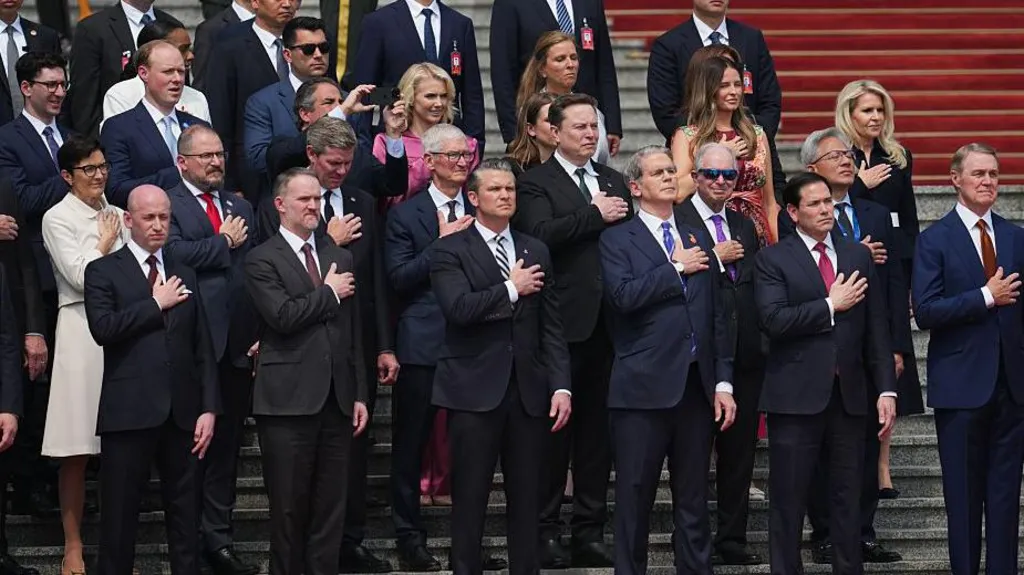
The talks were heavily focused on trade, investment, and broader economic cooperation. Trump arrived with a large delegation of senior business leaders from industries including aviation, agriculture, electric vehicles, and artificial intelligence.
Despite the optimistic tone, no major signed agreements were publicly released at the end of the summit. However, Trump claimed that discussions included significant commercial commitments, including a potential large aircraft purchase deal involving Boeing.
According to Trump, China has agreed to purchase hundreds of Boeing aircraft, a move that would mark a major return for the American aerospace company in the Chinese market. The claim has been partially supported by Boeing, though full details have not yet been independently confirmed.
Agricultural trade was also a key topic, with US officials suggesting that China may increase purchases of American soybeans and other farm goods. However, Chinese authorities have not confirmed specific new procurement agreements.
Both sides instead emphasized general cooperation and stability in economic relations. Chinese officials said the focus was on improving “mutual benefit” and maintaining steady trade ties rather than announcing immediate breakthroughs.
A notable outcome mentioned by the White House is the creation of a new “Board of Trade,” designed to manage economic tensions and reduce the risk of future tariff escalations. This structure is intended to provide a framework for ongoing negotiations.
The summit also touched on sensitive areas of competition, particularly in technology and artificial intelligence. Executives from major US firms such as Tesla and Nvidia were present during key events, highlighting the importance of advanced technology in US-China relations.
Nvidia and Tesla are both heavily exposed to the Chinese market, making technology access and export rules a central issue in ongoing tensions.
Despite speculation, US officials said export controls on advanced chips and AI technology were not a major focus of the talks, even though Beijing continues to push for expanded access to cutting-edge semiconductor products.
The Taiwan issue was also raised as a key geopolitical flashpoint. China reiterated that Taiwan remains the most sensitive topic in US-China relations, warning that mismanagement of the issue could lead to serious conflict between the two powers.
Beyond trade and technology, discussions also covered global energy security, particularly in relation to instability in the Middle East and disruptions to key shipping routes. Both sides acknowledged concerns about global oil flows and economic stability.
China called for wider efforts to stabilize shipping lanes and support a lasting ceasefire in conflict-affected regions, while the US urged greater cooperation on energy market stability.
The summit was marked by strong symbolism, including official ceremonies, state events, and high-level receptions attended by business executives and political leaders. Both governments used the visit to signal openness to continued dialogue.
Chinese President Xi also indicated that China would continue opening its markets to foreign companies, although specific policy changes were not announced.
Analysts say the lack of detailed agreements suggests that while diplomatic relations may be improving in tone, major structural issues between the two countries remain unresolved.
Key differences over trade policy, technology access, tariffs, and geopolitical influence continue to define the relationship. While both leaders expressed optimism, concrete progress appears limited at this stage.
The two sides are expected to continue negotiations in the coming months, ahead of a planned future meeting that could determine whether this latest round of talks leads to meaningful economic breakthroughs or remains largely symbolic.
