


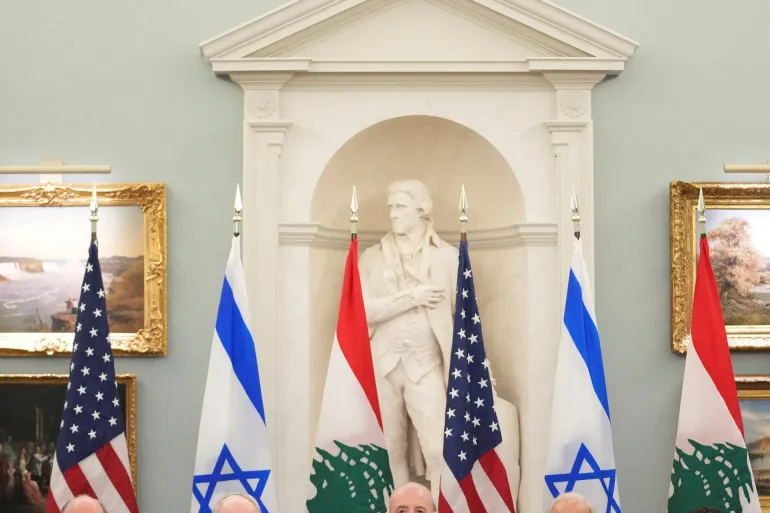
The United States has announced a new round of diplomatic talks between Israel and Lebanon, scheduled to take place in Washington next week. The discussions are part of ongoing efforts to reduce tensions and build a more stable security framework in the region.
The announcement was made by the US State Department on Friday. Officials said the meetings will take place on June 23 and June 25 and will focus on long term stability, reconstruction, and reducing repeated cycles of violence between the two countries.
The talks come shortly after a renewed ceasefire agreement between Israel and Hezbollah in Lebanon. That agreement followed months of intermittent fighting that had raised concerns about a wider regional escalation.
US Secretary of State Marco Rubio spoke with Lebanese President Joseph Aoun ahead of the talks. According to the State Department, Rubio emphasized that direct negotiations between Israel and Lebanon are seen as the only realistic path toward reconstruction and long term peace.
The upcoming meetings build on earlier rounds of discussions held in April and June. Those meetings marked the first direct diplomatic contact between Israel and Lebanon since 1993. After those sessions, both sides agreed to temporary pauses in fighting, although tensions have continued.
A key issue in the negotiations is the role of Hezbollah, which is not directly included in the talks. This absence has raised concerns that any agreement may be difficult to fully implement on the ground.
Despite diplomatic progress, exchanges of fire between Israeli forces and Hezbollah have continued in recent months. In the most recent wave of violence, Israeli strikes reportedly killed dozens of people in southern Lebanon, further complicating efforts to stabilize the border region.
The ceasefire framework reached in late 2024 included commitments aimed at reducing military activity in southern Lebanon. It also formed part of a broader US backed roadmap that encourages disarmament efforts and political negotiations.
Lebanon has pushed for a full Israeli withdrawal from southern areas, while Israel has emphasized security conditions related to Hezbollah’s military presence. The disagreement over withdrawal terms remains one of the central obstacles in the negotiations.
The United States has also linked the Israel Lebanon talks to wider regional stability efforts, including a US Iran memorandum of understanding intended to reduce broader conflict risks in the Middle East. Officials say continued violence in Lebanon threatens to undermine those efforts.
US officials argue that a structured diplomatic process remains the best way forward. They believe that sustained negotiations could eventually lead to improved security conditions and economic recovery in Lebanon, which has faced severe financial and infrastructure challenges in recent years.
However, the situation remains fragile. Analysts note that previous ceasefire agreements in the region have often been tested by renewed clashes on the ground. Without direct participation from all armed groups, implementation of any agreement remains uncertain.
The United States has played a central role in facilitating communication between Israel and Lebanon since direct talks resumed. Washington has hosted previous rounds and continues to encourage both sides to maintain dialogue despite ongoing tensions.
Lebanon’s government has also expressed interest in stabilizing its southern border in order to focus on economic recovery. Years of financial crisis, combined with political instability, have left the country heavily dependent on international support.
Israel, meanwhile, has maintained that security concerns along its northern border remain a top priority. Officials argue that any long term agreement must ensure that armed groups near the border do not pose a future threat.
The latest announcement reflects cautious optimism from US diplomats, who say progress has been made but acknowledge that significant gaps remain. The outcome of next week’s talks will likely determine whether current ceasefire arrangements can be extended or whether tensions may rise again.
For now, both sides are expected to continue indirect coordination through US mediated channels as they attempt to narrow differences and avoid further escalation in the region.
