


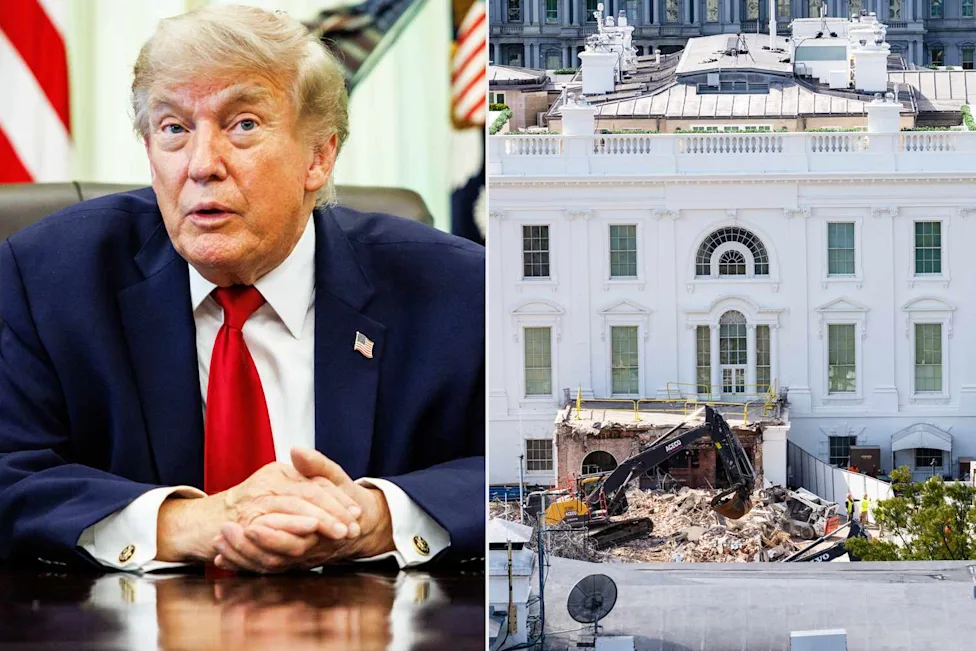
President Donald Trump is moving forward with a series of major construction and renovation plans that could significantly change the appearance of the White House and several well-known landmarks in Washington, D.C. The Trump Washington renovation projects include new buildings, redesigned public spaces, and plans for additional monuments across the nation’s capital.
Supporters say the projects will modernize important government sites and celebrate American history. Critics, however, argue that some plans are too costly and could alter historic locations that have long been part of the country’s heritage.
The renovation program covers several high-profile sites, including the White House, the Lincoln Memorial Reflecting Pool, the Kennedy Center, and a proposed Independence Arch.
One of the largest projects is the construction of a new White House ballroom. Trump has described the planned 90,000-square-foot facility as one of the finest event spaces ever built. According to the administration, the ballroom will accommodate about 1,000 guests and provide additional space for official ceremonies and state events.
The project was first presented as privately funded by Trump and outside donors. Later, the administration sought additional federal funding for security improvements linked to the new building. Although Congress did not approve the requested funding, construction has continued and is expected to finish before the end of Trump’s current term.
The ballroom project has generated legal and public debate. Historic preservation groups have raised concerns about changes to the White House grounds, including the removal of the East Wing to make space for the new structure. A legal challenge remains before the federal courts.
Another project focused on the Lincoln Memorial Reflecting Pool. Earlier this year, the administration announced a renovation valued at more than $16 million. The work aimed to improve one of Washington’s best-known national landmarks.
After officials declared the renovation complete, reports emerged of peeling paint and algae affecting the pool’s appearance. Administration officials said the damage may have resulted from vandalism, although no public evidence has been released to support that claim. Authorities also warned that anyone caught damaging the site could face legal action.
Trump has also introduced several changes inside the Oval Office. Since returning to office in 2025, he has added gold-colored decorative features, historical portraits, statues, and a copy of the Declaration of Independence displayed on the wall. Busts of Abraham Lincoln and Benjamin Franklin have also been placed near the president’s desk.
Outside the Oval Office, the Rose Garden has undergone noticeable changes. The traditional grass lawn has been replaced with a white stone patio featuring outdoor tables and umbrellas. Trump said the redesign provides a more practical surface for visitors attending official events.
Additional statues honoring historical American figures, including Alexander Hamilton and Benjamin Franklin, have also been installed within the White House grounds. A sculpture depicting Revolutionary War soldiers has been added as part of the redesign.
The administration also replaced the long-standing Tennessee flagstone walkway beside the West Wing with a black granite surface. Portraits representing each U.S. president have been displayed along the nearby colonnade, each accompanied by descriptive plaques.
Elsewhere on the White House property, large flagpoles have been installed on both the North and South Lawns.
Another proposal calls for building an Independence Arch near the Lincoln Memorial. The planned monument would rise about 250 feet and feature large eagle statues and a figure representing liberty. If completed, it would become one of Washington’s tallest monuments.
However, questions remain about the project’s final design because of possible effects on aircraft flying near Ronald Reagan Washington National Airport.
Trump is also continuing plans for a National Garden of American Heroes. Congress approved funding for the project in 2025. The garden is expected to include statues honoring presidents, military leaders, civil rights figures, athletes, artists, inventors, and other notable Americans.
The project was originally expected to open during celebrations marking the 250th anniversary of American independence. However, construction has been delayed while preservation groups pursue legal challenges.
The Kennedy Center has also become part of the administration’s renovation agenda. Plans for changes to the performing arts venue have faced court action and public debate, with legal decisions affecting parts of the proposed redevelopment.
The Trump Washington renovation projects continue to draw attention across the United States. While supporters view the plans as investments in national landmarks and public spaces, critics argue that legal questions, preservation concerns, and project costs will remain central issues as construction moves forward.
