


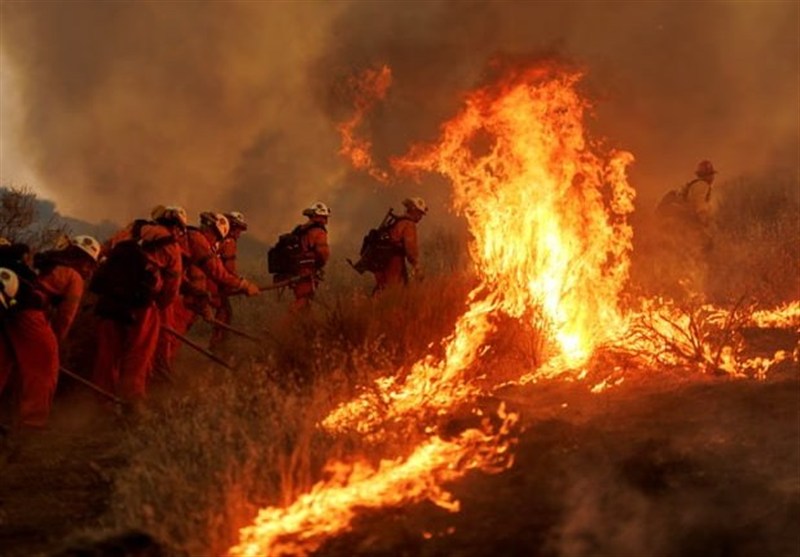
More than 1,500 firefighters from across the United States are working to contain the Spokane Complex Fire in Washington state as officials prepare for hotter and drier weather conditions expected later this week.
Fire crews from 24 states have joined the emergency response effort, making it one of the largest wildfire operations currently underway in the country. Authorities say the fire has damaged or destroyed nearly 850 structures since it began on Saturday.
Despite challenging conditions, firefighters have reported significant progress in slowing the fire’s growth. Officials said the blaze has expanded by only two acres since Monday as crews continue strengthening containment lines around affected areas.
Emergency responders are racing to secure fire lines before temperatures increase and dry weather returns to the region. Weather forecasts indicate that no rainfall is expected in the coming days, creating conditions that could make firefighting efforts more difficult.
Tom Stokesberry, a spokesperson for the incident management team overseeing operations, said firefighters have achieved substantial progress during the past several days.
According to officials, containment efforts have helped reduce the fire’s spread and improve protection for nearby communities. Emergency teams remain focused on preventing additional growth during the upcoming period of elevated fire risk.
The wildfire has forced approximately 67,000 residents to leave their homes. Evacuation orders remain in place in several areas as authorities continue monitoring fire behavior and public safety conditions.
Officials reported that no deaths have been linked to the fire so far, a development emergency responders describe as encouraging given the scale of the disaster.
While the immediate focus remains on containment, authorities warn that recovery efforts are expected to continue for an extended period.
As of Wednesday, the Old Trails Fire and the Autumn Lane Fire were each reported at 13% containment. The Fairview Fire was reported at 5% containment.
Together, the three fires have burned approximately 10,546 acres.
Firefighters are using a range of strategies to prevent further spread. Specialized Hotshot crews are identifying and extinguishing new hot spots while protecting containment lines and nearby properties.
Many firefighters are working shifts that last up to 16 hours each day. Officials said crews often receive only a limited amount of rest between assignments as they respond to rapidly changing conditions.
Emergency managers noted that most firefighters remain deployed for about two weeks before being replaced by incoming crews. Additional personnel are expected to arrive over the weekend to support ongoing operations.
The large-scale response reflects growing concerns about wildfire activity across the western United States, where hot temperatures and dry vegetation continue to increase fire risks.
Washington State Department of Natural Resources officials say the destruction caused by the Spokane Complex Fire may place it among the most damaging wildfires in state history.
The loss of more than 800 structures has already surpassed the destruction caused by several major recent fires in the region.
Authorities compared the damage to the 2023 Grey and Oregon Road fires near Spokane, which together destroyed around 350 structures.
Officials continue to assess the full extent of the damage as firefighters gain access to additional areas.
Community support services have been activated to assist displaced residents with temporary shelter, essential supplies, and recovery resources.
Emergency management teams are also coordinating with local governments to plan for rebuilding efforts once the fire is fully contained.
For now, officials remain focused on maintaining containment lines and preventing new flare-ups as temperatures rise.
Firefighters say the next several days will be critical. If containment lines hold through the expected heat and dry weather, authorities believe they can move closer to stopping the fire’s advance and begin the long process of recovery for affected communities.
