


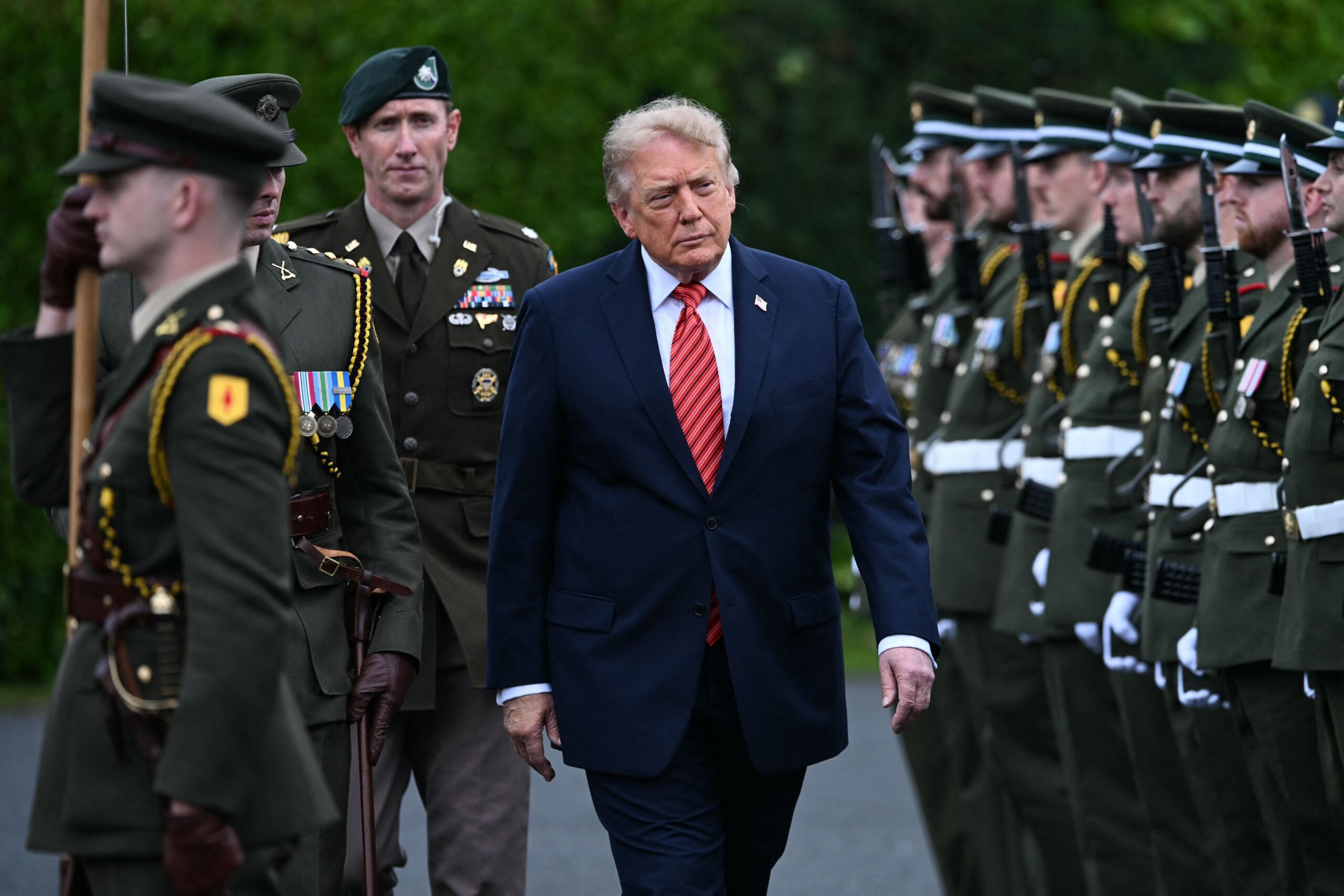
President Donald Trump said he believes Ireland could one day become united, making the comments during an official visit to Dublin on Saturday. His remarks drew attention on both sides of the Irish border and sparked fresh discussion about one of the most sensitive political issues in modern Irish history.
Speaking during a bilateral meeting with Irish Taoiseach Micheál Martin, Trump expressed support for the idea of reunification. While noting the topic could create political debate, he said he would welcome a future in which the island is united.
“Well, I don’t want to cause any trouble,” Trump said. “But I will tell you, I’d love to see it unified.”
The future of Northern Ireland has remained a major political issue for decades. Northern Ireland is part of the United Kingdom, while the Republic of Ireland is a separate sovereign state. Views on reunification are often divided between unionists and nationalists.
Unionists support Northern Ireland remaining within the United Kingdom. Nationalists support the goal of a united Ireland. The issue carries deep historical and political importance and continues to influence elections and public debate.
The discussion is linked to the legacy of the Troubles, a period of conflict that lasted for nearly 30 years. The violence involved political groups, security forces, and local communities. Thousands of people died before peace efforts helped end most of the conflict.
A major breakthrough came with the Good Friday Agreement in 1998. The agreement established a power-sharing system and created the legal process for any future vote on Irish reunification. Under the deal, reunification can only happen if voters in both Northern Ireland and the Republic of Ireland approve it in separate referendums.
Because of the issue’s sensitivity, many international leaders have been cautious when discussing it publicly. American presidents have generally avoided taking a direct position. Even leaders with strong Irish connections have preferred to support the peace process rather than openly advocate for constitutional change.
Trump took a different approach. During the meeting, he suggested that reunification could eventually become reality and indicated that he viewed such a development positively.
“It’s going to happen eventually,” Trump said. “I think it would be a fantastic thing.”
He also pointed toward Taoiseach Martin and suggested Irish leadership could play a role in advancing future discussions. At the same time, Trump acknowledged that the United Kingdom would have an important voice in any decision involving Northern Ireland’s status.
His comments quickly generated responses from political leaders. Officials in London emphasized that the constitutional future of Northern Ireland remains governed by the Good Friday Agreement and the wishes of voters.
Prime Minister Andy Burnham had previously dismissed suggestions that a border poll was imminent. He reaffirmed his commitment to the peace agreement and said any future decision would follow the established democratic process.
Unionist leaders also reacted strongly. Democratic Unionist Party leader Gavin Robinson stated that the future of Northern Ireland would be determined by its people. He said comments from leaders in Washington, London, or Dublin would not change that principle.
Trump arrived in Ireland earlier in the day for meetings with government officials and business representatives. The visit included discussions on trade, economic cooperation, investment, and international affairs.
Irish President Catherine Connolly welcomed Trump during an arrival ceremony. An Irish band performed both the American and Irish national anthems as officials gathered for the event. Trump later greeted political leaders and participated in a series of formal meetings.
During a brief exchange with reporters, Trump was also asked about international developments, including security concerns affecting global shipping routes. He expressed confidence that current challenges would be resolved.
“Everything will work out just fine,” Trump said.
The visit comes at a significant moment for the White House. Midterm elections are approaching in the United States, while tensions in several regions continue to shape foreign policy discussions.
Although economic cooperation formed a central part of the agenda, Trump’s comments on Ireland reunification became the dominant political story of the visit. His remarks renewed attention on a question that remains important to the future of Ireland, Northern Ireland, and relations across the region.
