


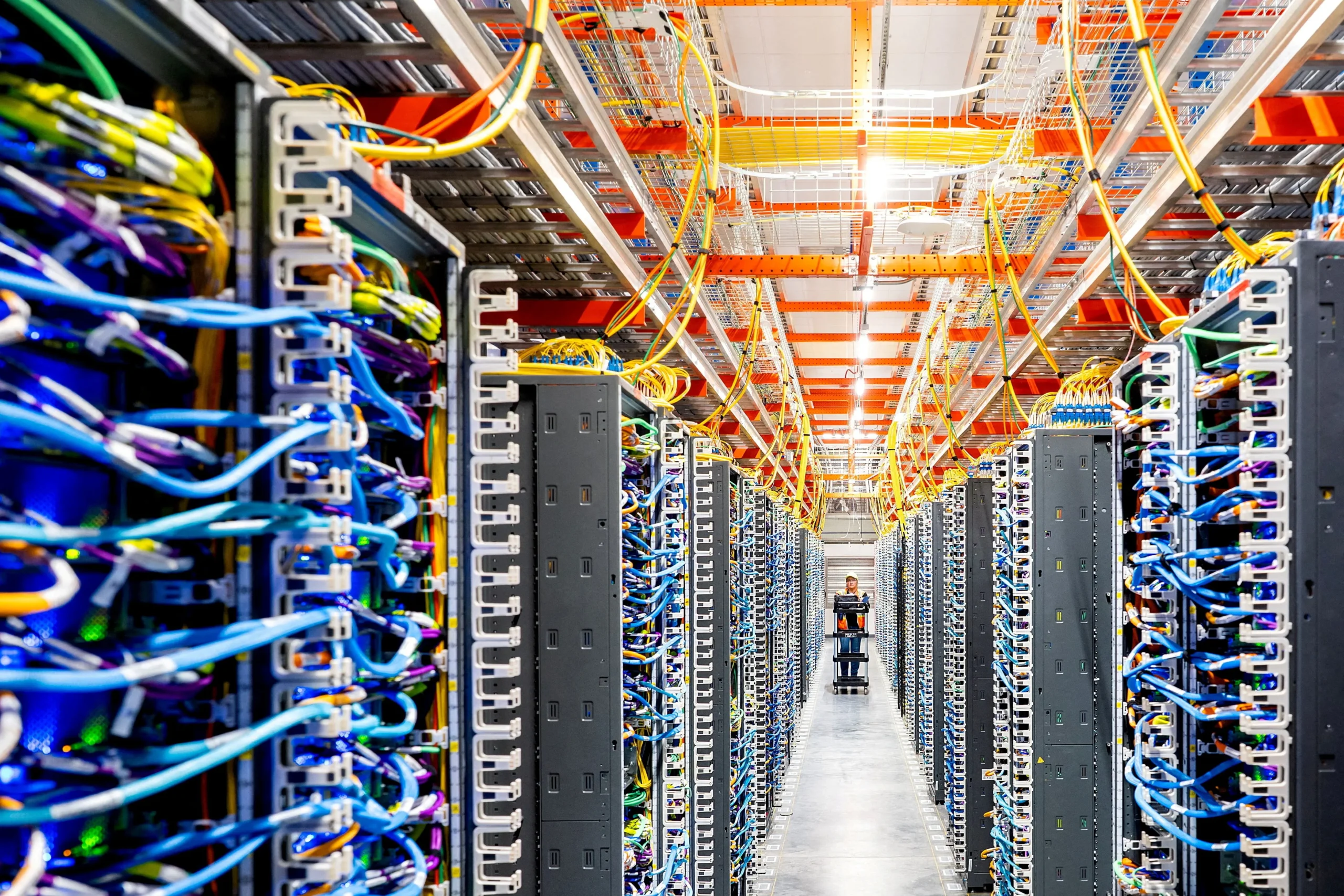
The United States is moving forward with new restrictions aimed at reducing the use of Chinese technology in important data centre networks. The Trump administration is supporting an effort by the Federal Communications Commission to block imports of certain new Chinese optical transceiver models. The proposal has drawn strong opposition from several major American technology companies, which warn that replacing the equipment could take years and create major costs.
The issue has become important because data centres support a growing share of the modern economy. They store and process information for cloud services, financial systems, artificial intelligence and government operations. Optical transceivers help transfer data between servers and networks. Without reliable equipment, companies may struggle to maintain the speed and capacity needed for large digital services.
China supplies around two-thirds of the global optical transceiver market. This gives Chinese manufacturers a major position in the international supply chain. American companies such as Amazon, Google, Meta, Microsoft, CoreWeave and Cisco have warned officials that replacing Chinese equipment would not be simple. They believe the process could take up to a decade in some cases.
The companies are concerned about the availability of alternative suppliers. American manufacturers Coherent and Lumentum could help fill some of the gap, but they do not currently have enough capacity to replace Chinese suppliers quickly. A sudden restriction could therefore create shortages and delay investment in new data centres. Companies may also face higher costs as they search for alternative equipment.
The government says security concerns are the main reason for the proposed restrictions. Officials worry that foreign equipment could be used to access sensitive information, install harmful software or disrupt important services. These risks are especially serious because data centres support systems used by businesses, government agencies and other essential organisations.
There is also concern that China could respond with restrictions of its own. American companies have warned that Beijing may limit exports of indium phosphide, a material needed to produce optical transceivers. Such a move could make the supply problem more serious and affect manufacturers outside the United States as well.
The dispute comes during a period of growing tension over technology between Washington and Beijing. Artificial intelligence has become a major area of competition, and both countries want to protect their access to advanced computing systems. The United States has already introduced restrictions on some advanced computer chips, while China has continued to develop its domestic technology industry.
The administration believes stronger controls will support American security and encourage domestic manufacturing. Technology companies, however, want officials to consider the economic effects before introducing restrictions. The final policy will need to balance those concerns while ensuring that critical digital infrastructure remains secure and reliable.
