


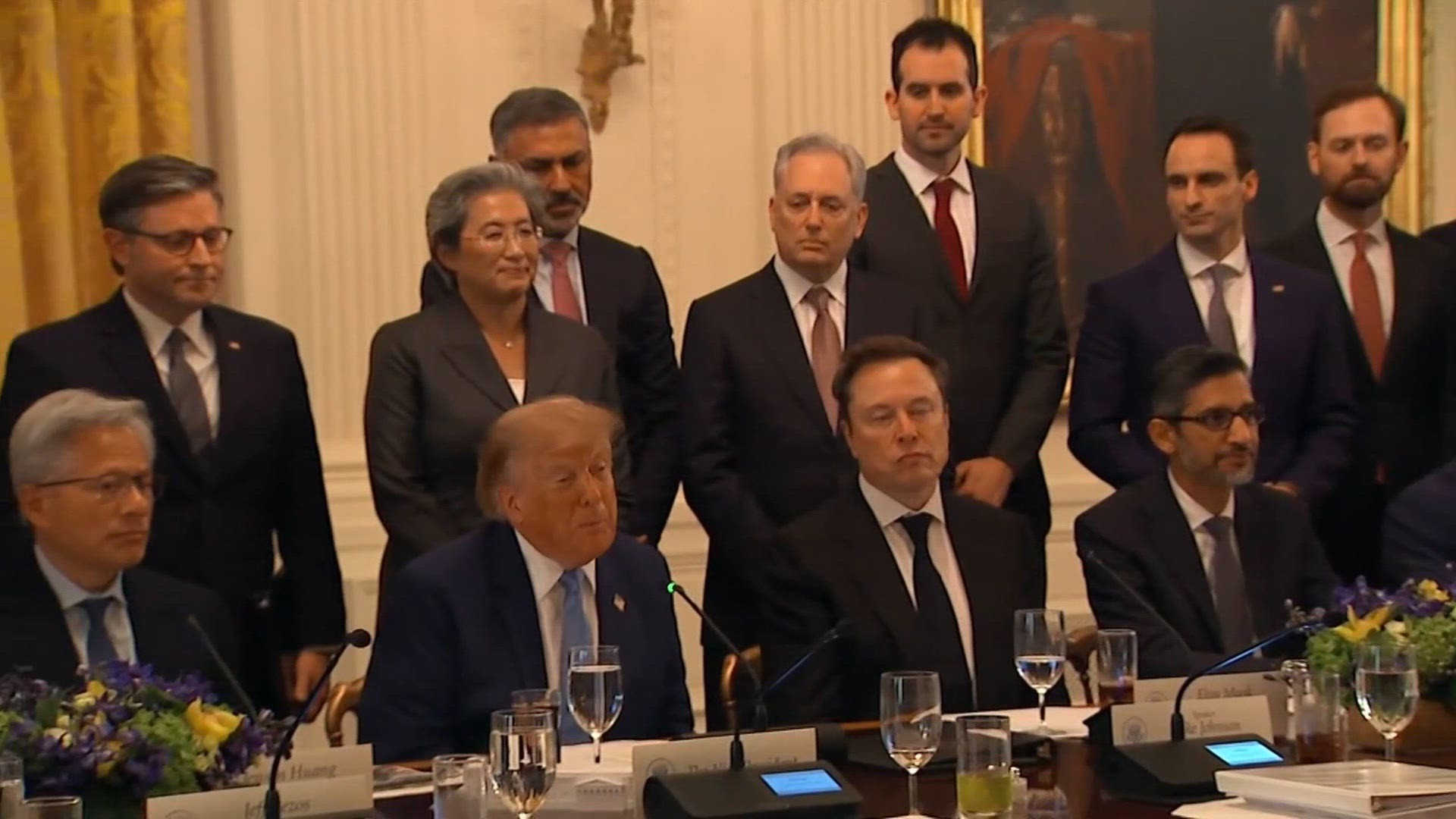
President Donald Trump and several of the biggest names in technology have announced a voluntary agreement designed to strengthen oversight of artificial intelligence as the industry continues its rapid expansion.
The new Artificial Intelligence Safety Agreement was unveiled during a White House meeting attended by leaders from major AI and technology companies. The initiative aims to address growing public concerns about advanced AI systems while allowing innovation to continue at a fast pace.
The agreement was signed by Trump and executives from several leading firms. Participants included Anthropic Chief Executive Dario Amodei, Google Chief Executive Sundar Pichai, Meta Chief Executive Mark Zuckerberg, OpenAI President Greg Brockman, Nvidia Chief Executive Jensen Huang, and Elon Musk, whose AI company xAI is now part of SpaceX.
According to the agreement, participating companies will adopt a series of voluntary measures focused on oversight, accountability, and safety. The framework is intended to encourage responsible development of artificial intelligence technologies as they become more powerful and widely used.
One of the key commitments involves the creation of stronger internal control systems. Companies will be expected to monitor their AI programs through formal review processes and safety procedures.
The agreement also calls for independent external audits. These reviews will examine whether company safeguards are operating as intended and whether internal oversight systems are effective.
In addition, technology firms will establish committees within their boards of directors to evaluate reports from internal teams and outside auditors. Supporters of the agreement say these steps will increase transparency and improve decision-making.
The document leaves open the possibility of future regulation. It notes that some of the voluntary measures could eventually be incorporated into laws or formal government rules if policymakers decide additional oversight is necessary.
Trump described the accord as evidence that the industry is willing to take responsibility for managing risks. Speaking at the White House, he said technology leaders recognize the importance of monitoring AI development as the technology becomes more influential.
The president also praised the economic impact of artificial intelligence. He said investment in AI infrastructure, including data centers and advanced computing systems, is contributing to economic growth and creating new opportunities across the country.
Large technology companies have committed hundreds of billions of dollars to expand AI capabilities. Much of that spending has focused on building data centers that support increasingly complex AI models and services.
However, rapid growth has also raised concerns. Communities in several states have questioned the impact of new data centers on energy supplies, land use, and local resources. Some residents and advocacy groups have called for stronger oversight before additional projects move forward.
During the White House event, Trump suggested that technology companies could work more closely with local communities to address those concerns. He said businesses may invest in schools, infrastructure, and other community projects as part of their expansion efforts.
While many industry leaders support continued AI growth, some experts continue to warn about potential risks. Amodei, who has frequently called for greater attention to AI safety, said the technology presents serious challenges that must be addressed carefully.
Researchers have raised concerns about cybersecurity threats, misinformation, system misuse, and the broader social effects of increasingly capable AI models. The debate over how to manage those risks remains active among policymakers, academics, and industry leaders.
Some experts welcomed the agreement as a practical first step. They argue that voluntary oversight can help improve safety while preserving the flexibility needed for innovation.
Others remain skeptical. Critics have questioned whether self-regulation alone can provide enough protection and have called for stronger legal frameworks to ensure accountability.
The White House gathering also featured the introduction of America.gov, an AI-powered chatbot designed to help people access government services. Officials said the tool could eventually assist users with tasks such as obtaining information and completing government-related processes online.
Trump used the event to emphasize the importance of maintaining American leadership in artificial intelligence. He described AI as a major global competition and said the United States should continue advancing the technology while remaining aware of potential risks.
The Artificial Intelligence Safety Agreement marks a significant effort by government and industry leaders to establish common standards. As AI development accelerates, the effectiveness of these voluntary measures will likely remain a key topic in discussions about the future of technology, regulation, and innovation.
