


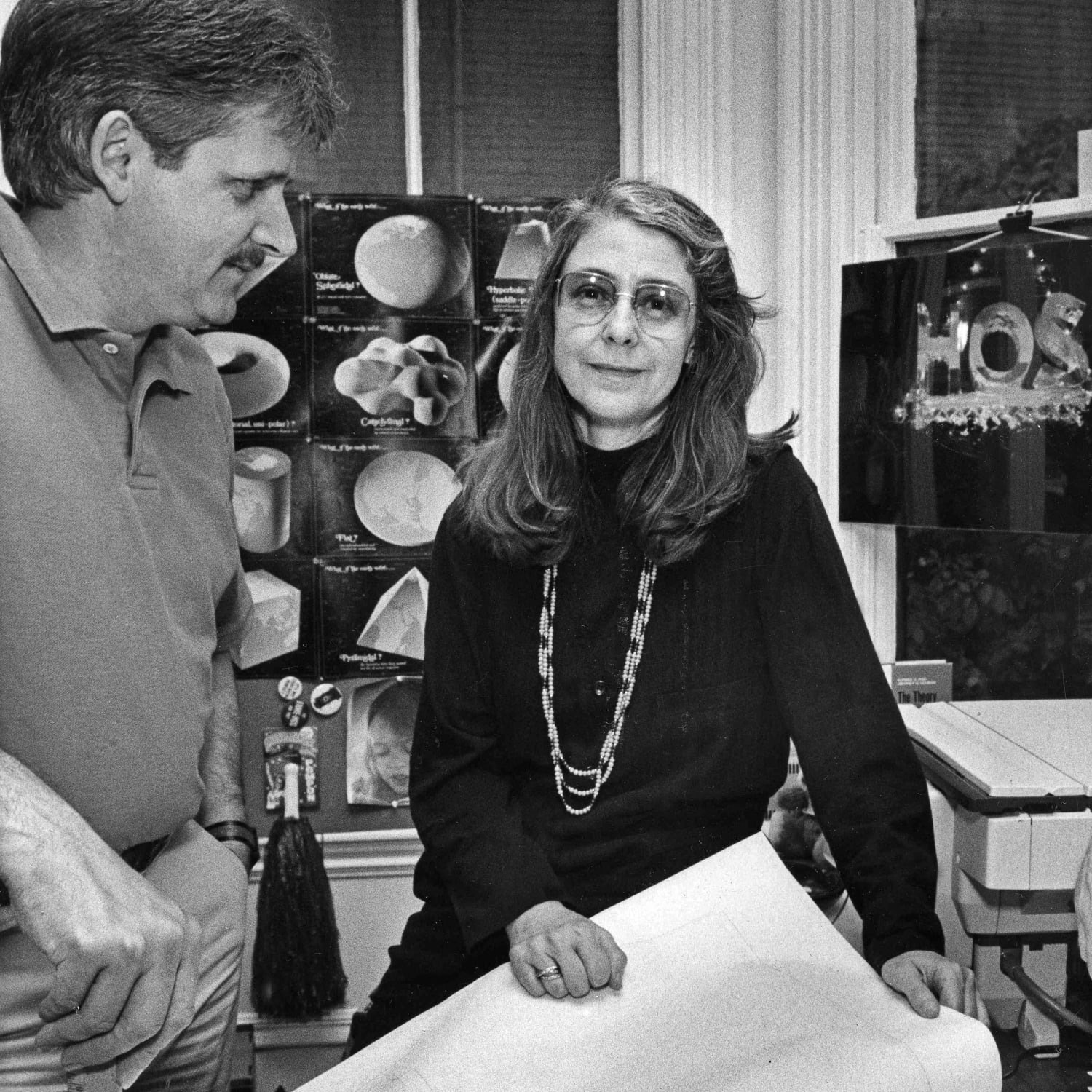
Margaret Hamilton, the computer scientist who helped guide NASA’s Apollo missions to the Moon, has died at age 90. She led the team that built key flight software for the historic space program. Her work helped make human Moon landings possible and shaped the future of software engineering.
Hamilton died on September 30 at a hospital in Cambridge, Massachusetts. Her daughter, Lauren Hamilton, confirmed the news. NASA Administrator Jared Isaacman later praised her work, saying it helped make humanity’s first journeys to the Moon possible.
Hamilton became a leading figure in computer science when software engineering was still a young field. She helped build computer systems that had to work under great pressure. Her team faced the task of making sure spacecraft software could support astronauts during complex missions.
Olivier de Weck, an Apollo program professor at the Massachusetts Institute of Technology, praised Hamilton’s role in the space program. He said she was ahead of her time. She not only wrote advanced code but also led a team that built one of the most complex systems of its era.
Hamilton graduated from Earlham College in Indiana in 1958 with a degree in mathematics. She joined MIT the next year. Her first projects included work on software used to predict the weather.
In the mid-1960s, she joined MIT’s Instrumentation Laboratory. The lab had a contract with NASA to develop systems for the Apollo program. The goal was to send astronauts to the Moon and return them safely to Earth.
Hamilton first worked on software for missions without astronauts. She later led the team responsible for flight software used in crewed missions. By 1968, she was an assistant director in charge of the command and service module team.
The software was vital to the Apollo missions. It helped spacecraft systems respond to commands and manage tasks during flight. The code also had to handle unexpected events while working within the limits of early computers.
Building such systems was difficult because software engineering had few accepted methods at the time. Hamilton and her team had to create new ways to solve problems. Their work helped establish software as a key part of major technical projects.
In a 2009 interview with MIT News, Hamilton recalled the freedom her team received from senior leaders. Software was still a mystery to many people, she said, so the team had room to test ideas and find solutions. She described the work as an adventure.
Hamilton stayed at the Instrumentation Laboratory into the 1970s. She later founded two software companies. Her work continued to focus on the way complex ideas could be turned into reliable computer systems.
Her daughter said Hamilton loved mathematics and abstract thought. She enjoyed exploring how ideas could become software. Lauren Hamilton also described her mother as an unusual and playful person who collected vintage clothing and had a strong sense of humor.
For many years, Hamilton was not widely known outside the space and computing fields. That changed as more people learned about the people behind the Apollo missions.
A photograph of Hamilton standing beside a tall stack of computer code became popular online. The image showed the amount of work needed to build the software for the Moon missions.
In 2017, Hamilton was also honored in a Lego set celebrating women who had worked at NASA. The 50th anniversary of the Apollo 11 Moon landing in 2019 brought more public attention to her achievements.
Her daughter said Hamilton was happy to receive recognition for her work, although she was not naturally drawn to public attention. She also faced sexism during her career. According to her daughter, Hamilton often used humor and quiet confidence to deal with unfair treatment.
Hamilton was born on August 17, 1936, in Indiana. She spent much of her childhood in Michigan’s Upper Peninsula and lived in Cambridge from her early 20s until her death.
In 2016, President Barack Obama awarded her the Presidential Medal of Freedom. It is the highest civilian honor in the United States. The award recognized her contribution to computer science and the Apollo program.
Hamilton’s legacy reaches far beyond the first Moon landings. Her work helped show that software could guide complex missions where errors carried serious risks. She also helped open the way for future generations of software engineers, including women entering technology.
