


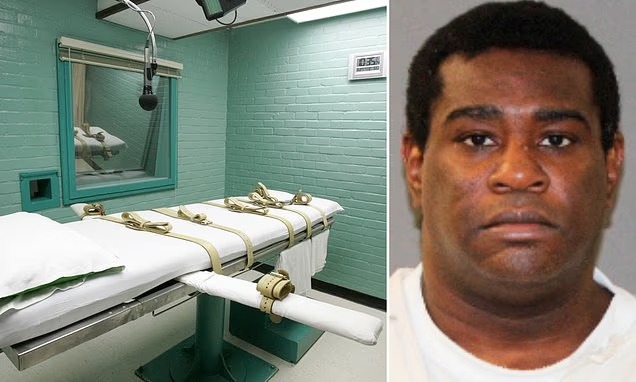
Texas carried out the execution of death row inmate Jamaal Howard on Wednesday night after state and federal courts rejected multiple efforts to delay the procedure.
Howard, 46, was pronounced dead at 8:03 p.m. at the Huntsville Unit after receiving a lethal injection of pentobarbital. His execution became the 30th carried out in the United States this year and the sixth in Texas during 2026.
The execution took place only days after a failed execution attempt in Tennessee drew national attention and renewed debate about lethal injection procedures.
Before the execution, Howard addressed relatives of his victim who watched from a nearby witness room. Prison officials said he apologized several times to the family during his final statement.
Howard was convicted of capital murder for the killing of Vickie Swartout during a convenience store robbery in 2000.
Court records showed that Swartout, 42, was working at a store in Silsbee, a small Texas town northeast of Houston, when she was shot in the chest. Prosecutors said Howard stole $114 and a carton of cigarettes before leaving the scene.
A surveillance camera inside the store recorded the shooting. The video later became a central piece of evidence during his trial and helped secure his conviction.
In the final hours before the execution, Howard’s attorneys pursued several legal challenges aimed at stopping the procedure.
One appeal argued that Howard was intellectually disabled and therefore could not legally be executed. The United States Supreme Court has ruled that executing people with intellectual disabilities violates constitutional protections.
However, Texas officials maintained that Howard had not presented sufficient evidence to support such a finding. Courts agreed with the state’s position and denied the request.
Howard’s lawyers also raised concerns about the lethal injection drug used in Texas executions.
The argument focused on pentobarbital, the same drug involved in the recent Tennessee execution attempt that failed to result in death.
In Tennessee, death row inmate Christa Pike survived after receiving two doses of pentobarbital. The incident triggered ongoing investigations and legal action as attorneys sought answers about what happened.
Pike was hospitalized after the procedure and later regained consciousness. Her legal team has continued to seek evidence related to the failed execution and has questioned the condition of the drugs used.
Howard’s attorneys argued that Texas should pause executions until more information becomes available about the Tennessee case.
They claimed there was a possibility that execution drugs could deteriorate over time and suggested similar risks might exist in Texas.
The legal team also sought information about the pentobarbital scheduled to be used in Howard’s execution. According to court filings, they wanted details regarding the drug’s condition and handling before the procedure.
The Texas Court of Criminal Appeals denied those requests. The court also rejected a separate motion seeking a stay of execution.
Later on Wednesday, the United States Supreme Court declined to intervene. The decision cleared the way for Texas officials to move forward with the execution.
Prison staff said Howard remained calm throughout the day.
Officials described him as talkative during the trip from the state’s death row facility to Huntsville. The journey covered about 45 miles and lasted less than an hour.
According to prison representatives, Howard spoke frequently with correctional officers and appeared engaged in conversation during the ride.
After arriving at the prison, he was placed in a holding cell near the execution chamber. Officials said he continued asking questions and remained attentive to the process.
The execution added to a growing number of death penalty cases carried out across the United States this year.
Florida has recorded the highest number of executions in 2026, while Texas continues to rank among the most active states in carrying out death sentences.
Two additional executions are scheduled in Texas before the end of the year.
The case also comes at a time when lethal injection methods are receiving increased scrutiny. Legal challenges in several states have raised questions about drug sources, storage practices and execution procedures.
Despite those concerns, courts ruled that there was no legal basis to stop Howard’s execution.
With the sentence carried out, attention is likely to remain focused on broader debates surrounding capital punishment and the future of lethal injection protocols in the United States.
