


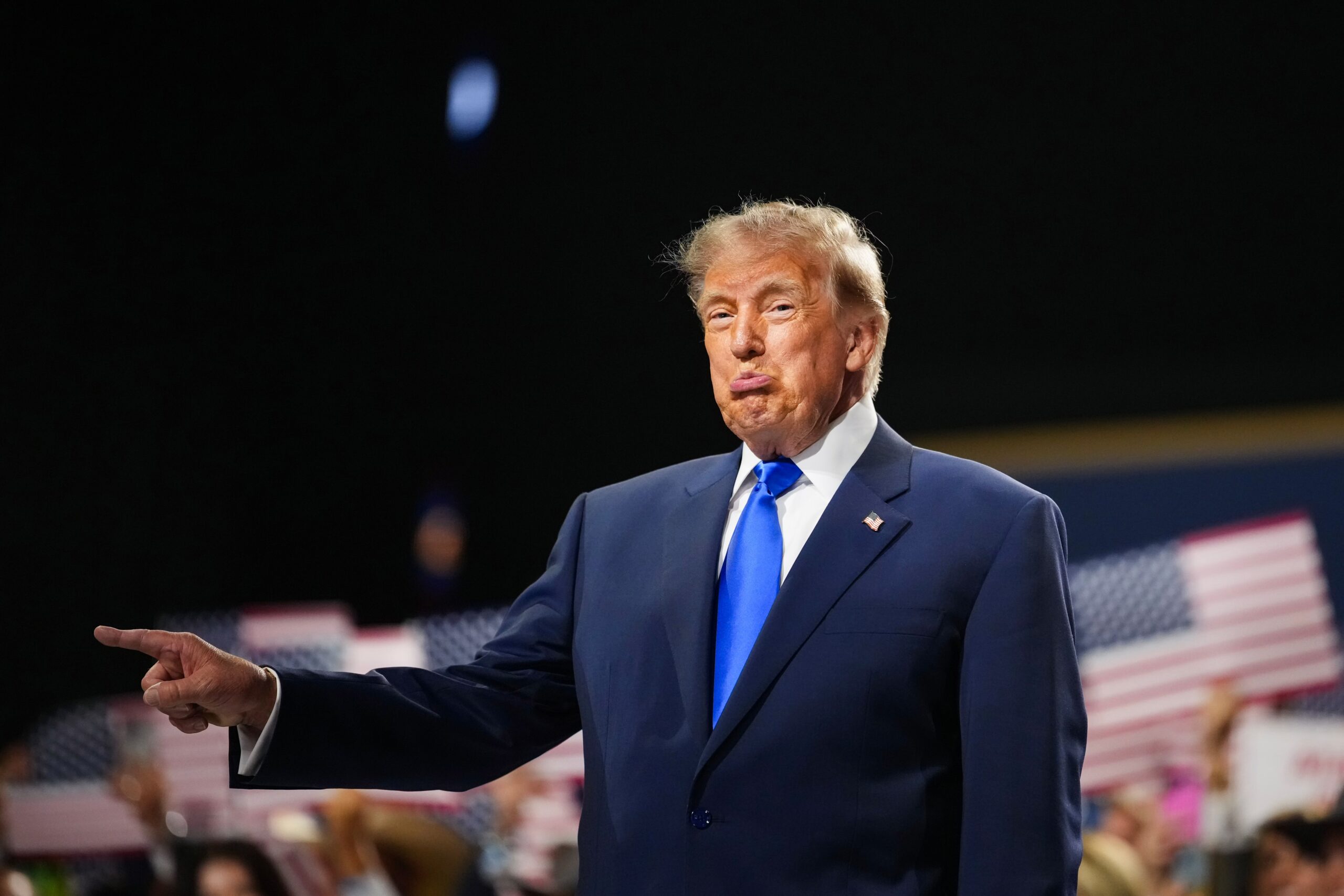
President Donald Trump is facing fresh political challenges after new polls showed his approval rating falling to a record low. The results come as Republicans prepare for crucial midterm elections that will decide which party controls Congress.
A national survey released on Monday found Trump’s approval rating at 32%. The figure marks the lowest rating recorded during his current term and signals growing dissatisfaction among several groups of voters.
The poll showed declining support among independent voters and Latino voters. Both groups played an important role in recent national elections and are expected to have a major impact on the upcoming midterm contests.
The latest numbers arrive at a sensitive time for Republicans. With Election Day approaching, party leaders are working to defend seats in both the House of Representatives and the Senate. Any significant shift in voter opinion could influence the balance of power in Washington.
Despite the survey results, Trump dismissed concerns about his popularity. Before leaving for a campaign event in Nebraska, he told reporters that he was performing well and brushed aside questions about declining support.
The president also criticized media coverage after being asked about polling that showed weaker support among Latino voters. However, several recent surveys suggest that voter attitudes have changed in important areas.
A poll released over the weekend highlighted growing Democratic support among Hispanic voters. According to the findings, 59% of Latino voters now prefer a Congress controlled by Democrats. The figure represents a sharp increase compared with recent years.
The same survey found that only 24% of Hispanic voters approve of Trump’s job performance. Political analysts say the numbers point to a significant challenge for Republicans as they seek support in competitive districts.
Latino voters represent one of the fastest-growing groups in the American electorate. Their influence continues to expand in states across the country. As a result, changes in voting preferences among Hispanic communities can affect local, state, and national elections.
Trump has spent the past several days traveling around the country to support Republican candidates. His campaign appearances are designed to energize supporters and increase voter turnout ahead of the midterms.
The president continues to promote his policy agenda while encouraging voters to back Republican candidates. Yet recent polling suggests that some Americans are becoming less satisfied with the direction of the country.
Economic concerns remain a major issue. Many voters continue to worry about household finances, prices, and overall economic stability. These concerns have become central topics in campaign discussions nationwide.
Foreign policy is also influencing public opinion. The ongoing conflict involving Iran has attracted attention from voters who are closely watching international events. Some Americans have expressed concerns about how the administration has managed developments abroad.
Political experts say dissatisfaction with economic conditions and foreign policy issues may be contributing to the president’s falling approval numbers. Midterm elections often serve as a way for voters to express approval or frustration with the White House.
At the same time, some Republican candidates have begun focusing more heavily on local issues. In several races, candidates are emphasizing concerns specific to their communities rather than national political debates.
Immigration has become another area where some Republicans are trying to create distance from the administration. While Trump remains strongly focused on border policies, some candidates have adjusted their messaging to appeal to local voters.
These efforts reflect growing concern about competitive races. Party strategists understand that even small shifts in public opinion could affect election outcomes in closely contested districts.
Democrats view the latest polling as a sign of opportunity. Party leaders believe voter frustration could help them gain seats and strengthen their position in Congress after the elections.
Republicans, however, argue that polls do not always predict final results. They continue to focus on voter outreach, campaign events, and turnout efforts in key states and districts.
Election analysts note that public opinion can still change before voting begins. Major campaign developments, economic news, and international events may influence voter decisions during the final weeks of the race.
Still, the latest data has intensified attention on the political environment heading into the midterms. The Trump approval rating crisis has become a major talking point as candidates from both parties make their final push toward Election Day.
The election results will not only determine control of Congress but also provide one of the clearest measures yet of how Americans view Trump’s leadership and the direction of his administration.
