


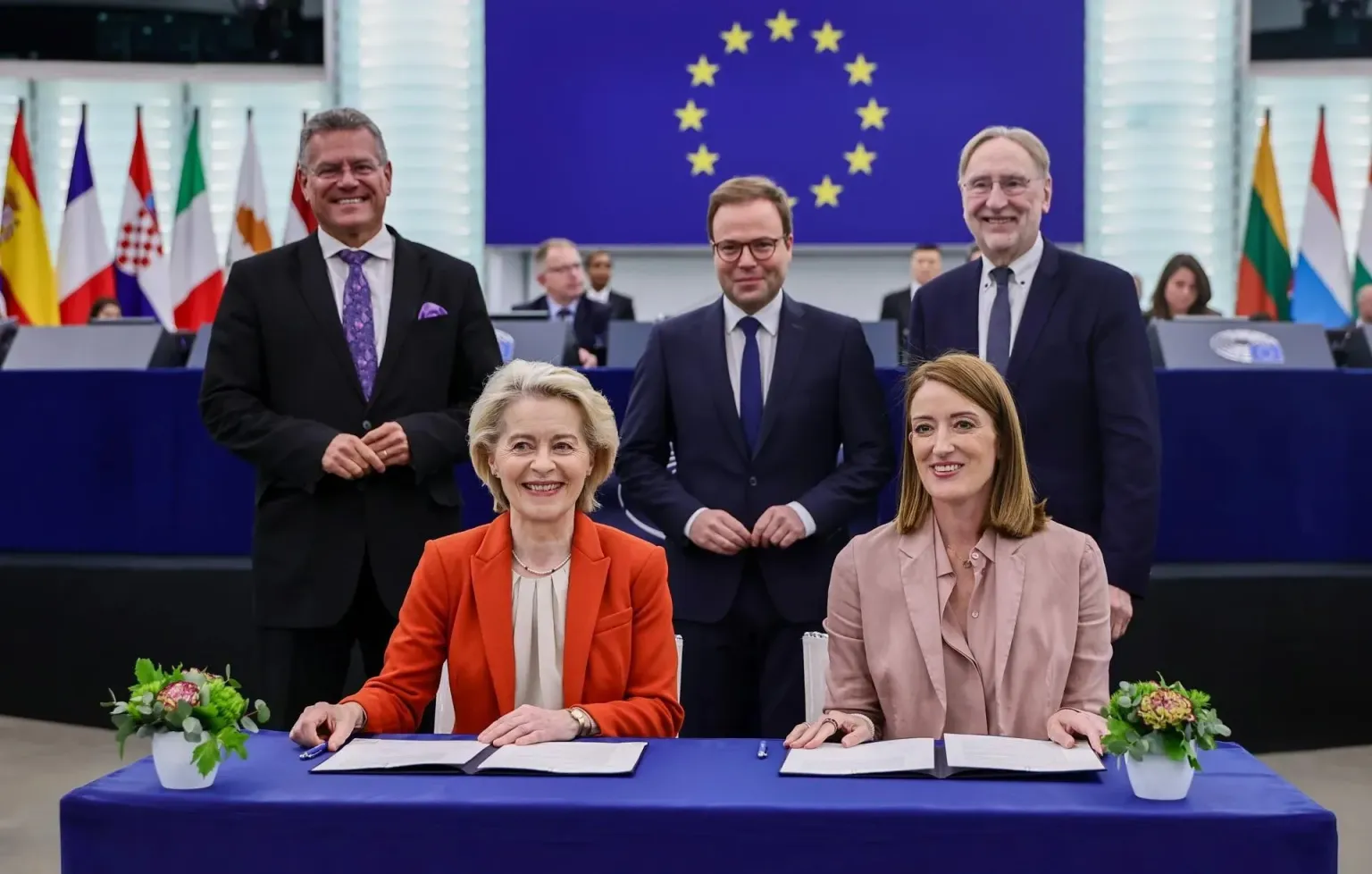
The EU US Tariff Deal has become a major point of tension between Brussels and Washington, as both sides clash over trade commitments and new tariff threats. European leaders are now urging the United States to honor the agreement they say was already reached.
At the center of the dispute is the agreement between the European Union and the United States. The deal was designed to set a 15% tariff level on certain goods, including European exports. However, recent actions have raised doubts about its implementation.
European Trade Commissioner Maroš Šefčovič met US Trade Representative James Greer in Paris. During the meeting, Šefčovič urged the US to apply the agreed tariff rate. He said the deal should be respected as it was already signed by both sides.
European Commission President Ursula von der Leyen also supported this position. She stressed that agreements must be followed and described the deal as a commitment to shared prosperity and stable trade rules.
The EU US Tariff Deal was originally signed in July 2025 at a meeting in Scotland. It was presented as a way to reduce trade tensions and create predictable rules for both sides. However, implementation has since become a challenge.
Tensions increased after US President Donald Trump announced plans to impose a 25% tariff on European cars and trucks. This move came after frustration in Washington over delays in the agreement’s approval process within EU institutions.
The US argues that Europe has not fully followed through on commitments linked to the deal. Officials in Washington say regulatory changes promised by the EU have been slow to take effect. They also claim that parts of the agreement are still under review in European institutions.
On the European side, officials say the agreement is still being finalized internally. The European Parliament and member states are discussing safeguards that could pause the deal if new tariffs are introduced. This has created political disagreement within the EU.
Some countries, including Germany, oppose adding strict conditions to the agreement. Others, including France, Spain, Finland, and Luxembourg, support stronger safeguards.
The EU is also considering its response if US tariffs move forward. Leaders have discussed using trade defense tools that could allow Brussels to impose large countermeasures on American goods. This shows how quickly the dispute could escalate.
French President Emmanuel Macron warned that US tariff threats could destabilize global trade. He suggested the EU may need to respond firmly if the situation worsens.
Meanwhile, US officials say the tariff dispute reflects broader differences in trade policy. Washington views trade decisions as part of its domestic economic strategy. It also argues that it is acting both independently and with supportive partners.
Despite the tension, both sides continue to hold talks. A key meeting involving EU institutions is expected to review the agreement’s progress. The outcome could determine whether the EU US Tariff Deal moves forward or faces further delays.
The dispute also comes at a sensitive time for global trade. Supply chain pressures and geopolitical tensions have already strained international markets. A breakdown in US-EU trade cooperation could add further uncertainty.
For now, both sides remain in discussion, but no final agreement has been reached on how to resolve the tariff issue. The next steps in Brussels and Washington will be critical in shaping the future of transatlantic trade relations.
