


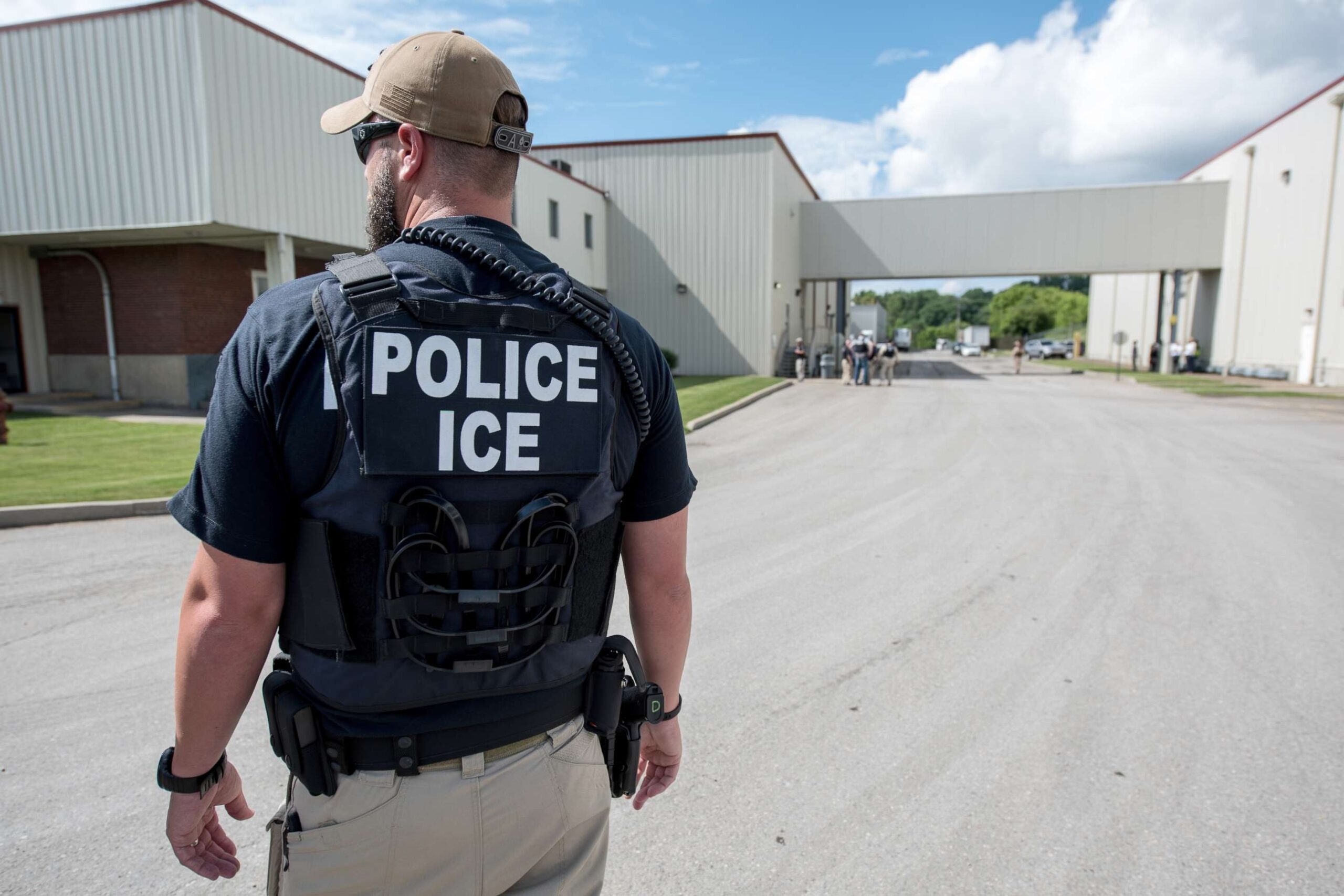
A federal immigration officer is facing criminal charges after prosecutors accused him of giving false information during an investigation into a shooting that took place during a major immigration enforcement operation in Minnesota.
Christian Castro, an officer with U.S. Immigration and Customs Enforcement, appeared before a federal judge in Texas after turning himself in to authorities. The charges stem from statements he allegedly made to investigators following a January shooting that left a Venezuelan man injured.
During the court hearing, Castro was ordered released from custody under specific conditions. The judge approved a $75,000 unsecured bond and required Castro to wear a GPS ankle monitor while awaiting future court proceedings.
His attorneys told the court that Castro intends to plead not guilty. He is expected to appear next in federal court in Minnesota, where the case will continue.
Federal prosecutors allege that Castro provided a misleading account of the events surrounding the shooting. According to the indictment, he falsely described the actions of individuals involved in the confrontation and the circumstances that led him to fire his weapon.
Investigators say the incident occurred outside a residence in Minneapolis during a federal immigration operation. The shooting injured Julio Cesar Sosa-Celis, who survived and later became a central figure in the investigation.
According to court documents, Castro told investigators that he was attacked while attempting to detain a person outside the home. He reportedly claimed that one individual struck him with a red broom taken from a nearby porch.
He also allegedly stated that another person used a snow shovel during the encounter. Castro told investigators that he fired his weapon after being attacked and while the individuals were moving away from him.
Federal authorities now argue that those statements were false. Prosecutors claim evidence collected during the investigation does not support Castro’s description of the events.
The federal indictment focuses on the alleged false statements rather than the act of firing the weapon itself. Prosecutors contend that providing inaccurate information during a federal investigation is a serious offense because it can affect the integrity of the fact-finding process.
The case has attracted attention because it is believed to be the first federal prosecution involving an officer connected to Operation Metro Surge, a large immigration enforcement effort conducted earlier this year.
The operation brought thousands of federal agents into the Minneapolis-St. Paul area. It resulted in numerous arrests and sparked demonstrations from community groups and activists who criticized the scale of the enforcement effort.
Several incidents connected to the operation drew public scrutiny and prompted calls for greater oversight. The shooting involving Sosa-Celis became one of the most closely watched events linked to the operation.
The federal charges mirror accusations already brought by Minnesota authorities. State prosecutors have separately charged Castro with assault and false reporting related to the same incident.
Those state charges remain active and will proceed independently from the federal case. Legal experts note that it is possible for both state and federal authorities to pursue separate cases when different laws are involved.
Prosecutors are expected to rely on witness testimony, physical evidence, and investigative records as the case moves forward. To secure a conviction, they must prove that Castro knowingly and intentionally provided false information.
Defense attorneys have indicated they will challenge the allegations and argue that Castro’s account was truthful. They maintain that he acted appropriately during a difficult and fast-moving situation.
The outcome of the case could have broader implications for how law enforcement actions are reviewed during large federal operations. Cases involving federal officers often receive heightened attention because of the public responsibilities attached to those positions.
For now, Castro remains free under court supervision while preparing for the next stage of the legal process. No verdict has been reached, and the charges remain allegations.
As the proceedings continue, both prosecutors and defense attorneys are expected to present competing versions of the events that led to the shooting. The court will ultimately determine whether the evidence supports the claims made in the federal agent shooting charges case.
