


Florida’s Supreme Court has allowed new Republican-drawn US House districts to be used in the upcoming midterm elections, giving the GOP a major legal and political win in an ongoing national battle over redistricting.
In a 6–1 decision on Wednesday, the court rejected a request from voter groups seeking to block the new map. The challengers argued that the districts violate Florida’s constitutional ban on partisan gerrymandering and asked the court to keep the previous district boundaries in place for the election cycle.
However, the court ruled that it did not have jurisdiction to intervene at this stage of the case. The judges said the lawsuit must continue in lower courts and refused to issue a temporary injunction that would have halted the new map’s use.
The ruling means the Florida House Districts GOP map will remain in place for the upcoming elections. The decision brings immediate clarity for candidates, who are facing a fast-approaching deadline to qualify for the state’s August primary elections.
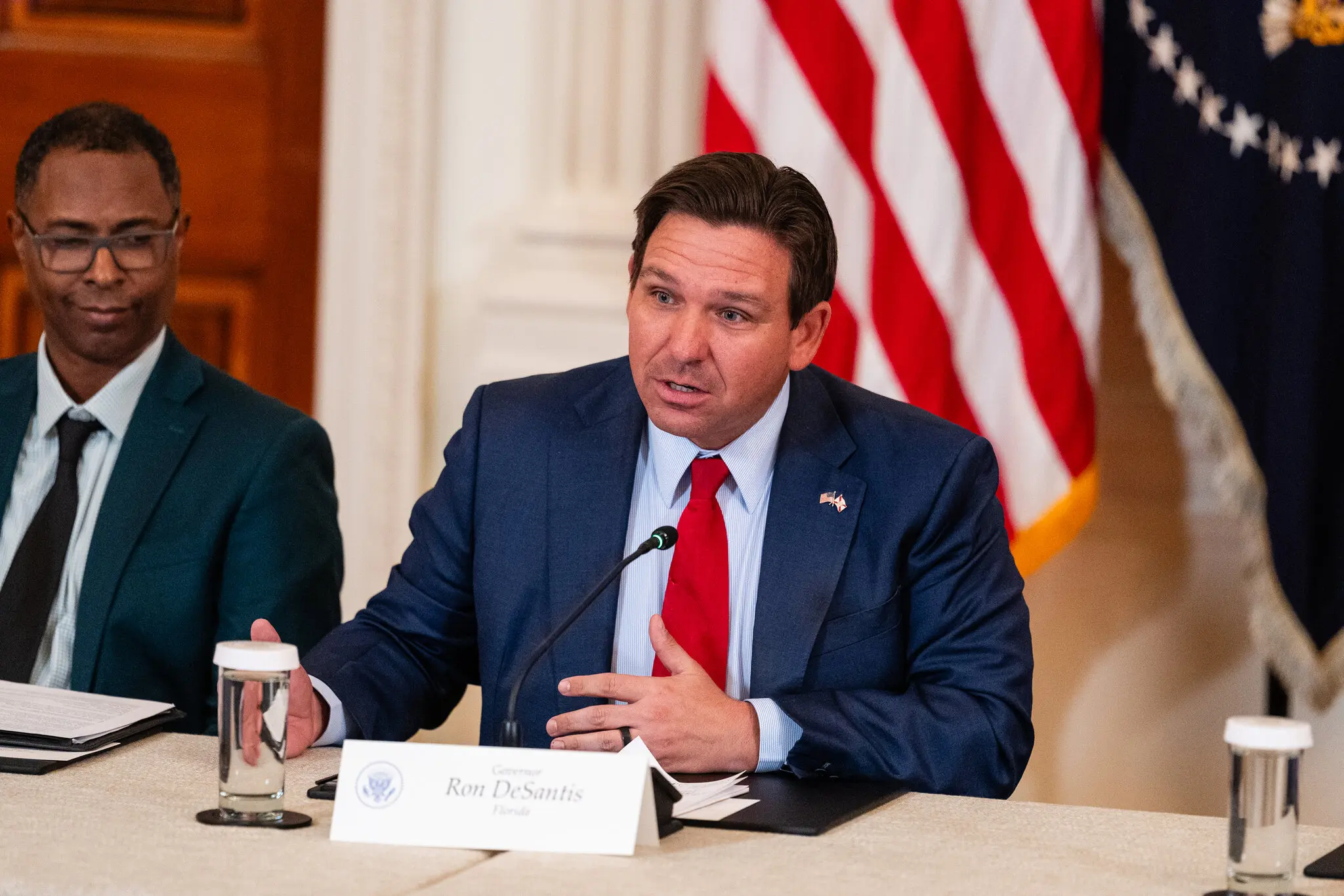
Florida already has a strong Republican advantage in its congressional delegation, with the party holding 20 of the state’s 28 US House seats. The new district boundaries, signed into law by Governor Ron DeSantis after a short special legislative session, are widely seen as potentially increasing Republican chances of winning additional seats.
Supporters of the map, including state Attorney General James Uthmeier, welcomed the court decision. He described it as a “complete and total victory” for the state in a public statement shared after the ruling.
Opponents of the redistricting plan reacted strongly and said they would continue challenging the map in court. Advocacy groups argued that the decision allows what they call unfair political manipulation of district boundaries to continue into future elections.
Genesis Robinson, executive director of Equal Ground, said the ruling represents a failure to protect democratic fairness. He argued that the court’s decision allows what he described as an extreme partisan advantage to remain in place.
Amy Keith, executive director of Common Cause Florida, also criticized the map, calling it a clear example of partisan redistricting. She said advocacy groups will continue efforts to stop the new boundaries from shaping future elections.
Redistricting in the United States typically happens once every ten years after the census. However, Florida is among several Republican-led states that have pursued mid-decade redistricting efforts, which critics say are designed to strengthen party control ahead of key elections.
The changes in Florida are part of a wider political strategy linked to efforts to maintain a narrow Republican majority in the US House of Representatives. The new map was passed on April 29 after a rapid legislative session called by Governor DeSantis.
The timing of the legislation came the same day the US Supreme Court issued a ruling that weakened certain federal protections under the Voting Rights Act. That decision has since influenced legal and political debates in several southern states, where lawmakers have moved to redraw district lines affecting minority representation.
DeSantis’ office has said that no racial data was used in drawing the new map. Officials also said one revised district in southeastern Florida was designed to comply with federal requirements by ensuring representation opportunities for Black voters.
Florida voters approved a constitutional amendment in 2010 that restricts partisan gerrymandering and requires districts to be compact and respect existing geographic boundaries where possible. That amendment is central to the ongoing legal challenge, which is expected to continue as lower courts review the case.
For now, the Florida House Districts GOP map will remain in effect, setting the stage for a closely watched election cycle. With candidate filing deadlines approaching, the ruling ensures the new boundaries will shape campaign strategies and voter outreach efforts in the coming months.
The case remains part of a broader national debate over redistricting, political fairness, and the balance of power in the US Congress as parties prepare for a highly competitive midterm election season.
