


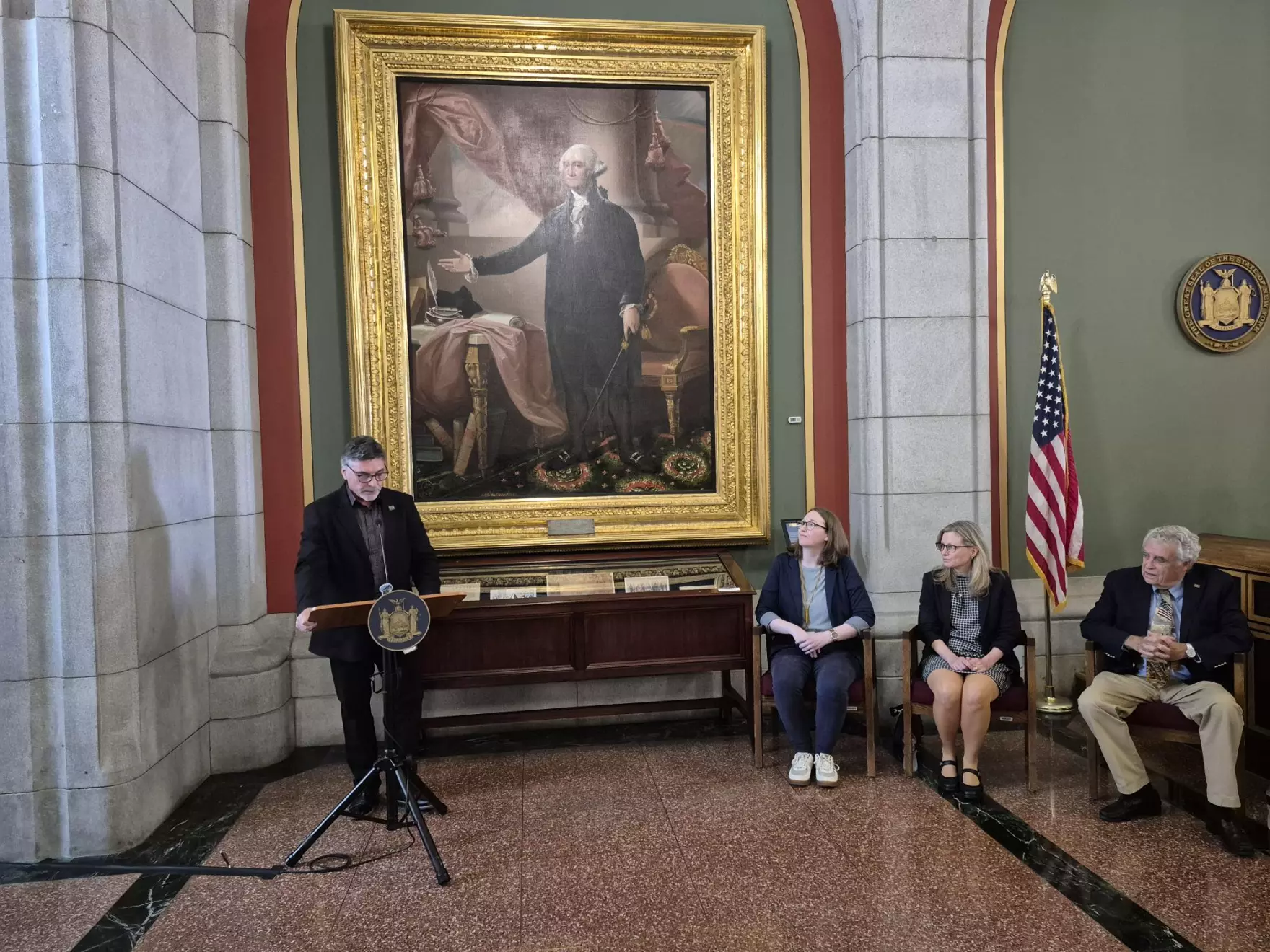
A historic portrait of George Washington has returned to public display at the New York State Capitol after completing an extensive restoration project. The painting is back in its place as the United States prepares to mark the 250th anniversary of the nation’s founding.
The portrait was painted in 1813 by artist Ezra Ames and has been displayed in Albany for more than two centuries. Conservation experts spent more than a year restoring the artwork to protect it from damage caused by age and changing environmental conditions.
The painting is now once again hanging in the State Street lobby of the Capitol, where visitors can view one of the state’s most important historical artworks.
According to officials, the restoration focused on preserving both the painting and its large decorative frame. Experts repaired signs of aging, improved the artwork’s overall condition, and added modern ultraviolet protection to help reduce future damage caused by light exposure.
Joseph Madeira, director of Curatorial and Visitor Services for the New York State Office of General Services, said changing temperatures and humidity inside the Capitol can gradually affect the condition of the canvas.
He explained that conservation teams closely monitor the artwork and carry out restoration work whenever necessary to ensure that future generations can continue to enjoy the historic portrait.
The restoration was completed by specialists at the Williamstown and Atlanta Art Conservation Centers. The team carefully cleaned the painting, strengthened areas showing signs of wear, and restored the large gold-colored frame surrounding the artwork.
Briann Greenfield, executive director of the conservation centers, said seeing the portrait return to the Capitol after months of work was a rewarding moment. She compared artworks in conservation laboratories to patients receiving careful treatment before returning home.
The George Washington Portrait has occupied several locations inside New York’s government buildings over the years. It has been displayed in the State Street lobby since 2012. Before that, it hung outside the governor’s office and later in the Education Building beginning in the 1980s.
The artwork was inspired by the famous Lansdowne Portrait painted by Gilbert Stuart in 1796. That iconic painting remains on display in Washington, D.C., and is considered one of the best-known portraits of the first president of the United States.
Ezra Ames created his version nearly two decades later, producing a work that has become an important part of New York’s public art collection. The portrait has remained accessible to visitors for generations and continues to hold historical and cultural significance.
The return of the painting comes as communities across the United States prepare events to commemorate the country’s 250th anniversary, also known as the semiquincentennial. Historians hope the restored portrait will encourage visitors to reflect on the nation’s founding and the people who shaped its history.
The timing also coincides with a new exhibition opening at the nearby New York State Museum. The exhibition, titled “Revolutionary New York,” highlights the contributions of New Yorkers during the American Revolutionary War and explores the continuing effort to expand the ideals established during the nation’s founding.
Museum officials say the exhibition will examine both military history and the experiences of individuals who worked to strengthen the promises of freedom and equality throughout American history.
Historic preservation experts note that restoring important artworks helps protect cultural heritage while allowing the public to continue learning from original historical objects. Regular conservation also reduces the risk of permanent damage caused by natural aging and environmental changes.
With restoration complete, the George Washington Portrait is once again welcoming visitors to the New York State Capitol. Officials say the carefully preserved artwork will remain an important symbol of American history as the country approaches one of its most significant national anniversaries and continues efforts to preserve historic treasures for future generations.
