


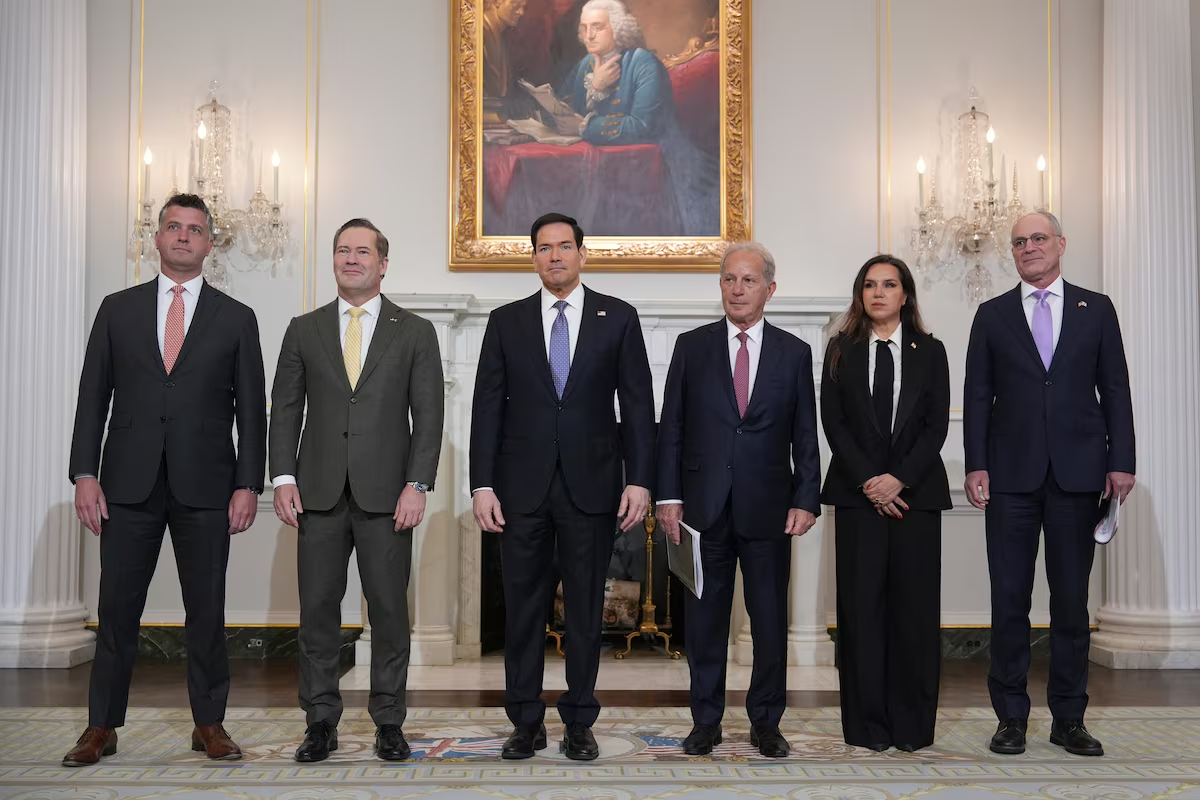
Israel Lebanon Diplomacy efforts have resumed as Washington facilitates renewed discussions between Israel and Lebanon aimed at reducing border tensions and improving regional stability in the Middle East.
U.S. officials are acting as mediators to encourage dialogue between both sides. The renewed diplomatic engagement focuses on preventing escalation along the border and creating channels for peaceful communication.
The talks come amid ongoing concerns over security incidents in border regions. Both countries have experienced heightened tensions in recent periods, prompting international efforts to encourage restraint and negotiation.
Washington’s role in the Israel Lebanon Diplomacy process is centered on supporting indirect and direct communication between the parties. U.S. diplomats are working to create a structured framework for continued dialogue.
Officials say the primary goal is to reduce the risk of conflict escalation. Even small border incidents have the potential to develop into wider instability, making diplomatic coordination essential.
The discussions also focus on long-term stability measures. These include improved border monitoring, clearer communication channels, and mechanisms to prevent misunderstandings between military forces.
International observers say renewed talks are an important step toward de-escalation. Diplomatic engagement is seen as a key tool for managing complex regional tensions.
Israel Lebanon Diplomacy has historically faced challenges due to political differences and security concerns. However, continued dialogue is viewed as essential for preventing further conflict.
The United States has previously played a mediating role in similar negotiations. Its involvement is intended to provide neutral support and encourage constructive engagement.
Officials involved in the process say the current talks are still in early stages. Confidence-building measures are being prioritized before any broader agreements can be considered.
Security along the border remains a sensitive issue. Both sides have expressed concerns over incidents that could disrupt fragile stability in the region.
Diplomats say that maintaining open communication channels is critical. Even limited dialogue can help reduce misunderstandings and prevent rapid escalation.
Israel Lebanon Diplomacy efforts are also linked to broader regional stability goals. The Middle East continues to face multiple overlapping security challenges, making diplomatic coordination more important.
Experts say that sustained mediation is often required in such complex conflicts. Progress may be gradual, but continued engagement can help reduce risks over time.
The renewed discussions are being closely monitored by international partners. Many global actors support efforts to stabilize the region and avoid further conflict escalation.
While no final agreements have been reached, the reopening of diplomatic channels is seen as a positive development. It reflects willingness from all sides to engage in dialogue under international facilitation.
As talks continue, the focus remains on reducing border tensions and building a foundation for long-term stability through sustained diplomatic engagement.
