


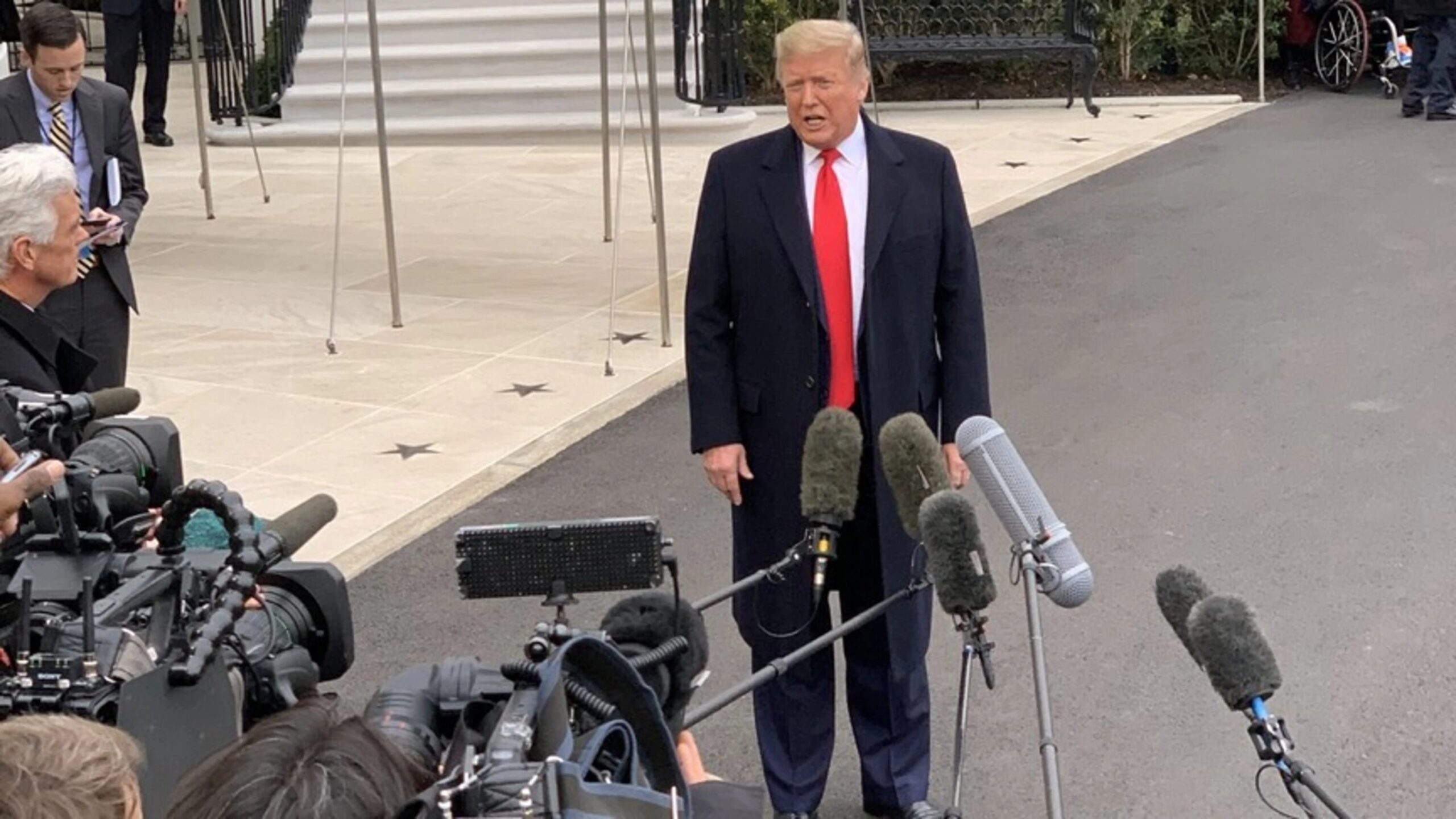
President Donald Trump announced on Friday that CNN, MS NOW, and Politico would be barred from the White House, setting off a new dispute over press access and media freedom in the United States.
The announcement came through a post on Truth Social, where Trump criticized the three news organizations and accused them of publishing inaccurate reports. He described the outlets as providers of false information and suggested that other media organizations could face similar action in the future.
The White House did not release additional details following the president’s statement. As a result, uncertainty remained about how the restrictions would be applied and which areas or events could be affected.
Soon after the announcement, reports indicated that journalists from CNN continued working at the White House. That raised questions about whether the policy had officially taken effect or whether further guidance would be issued in the coming days.
CNN responded by defending its reporting and its role in covering the presidency. The network said its journalists have a constitutional right to gather and report news without government interference. CNN also stated that any attempt to block access because of editorial coverage would conflict with First Amendment protections.
Politico issued a similar response. The publication said it would continue reporting on the administration while defending the rights guaranteed under the Constitution. Editors at the outlet emphasized their commitment to independent journalism and public accountability.
MS NOW did not immediately release a public statement following the announcement. The White House Correspondents’ Association also had not responded publicly at the time of reporting.
The controversy has renewed discussion about the relationship between government officials and the press. Media organizations play a major role in informing the public about government actions, policies, and decisions. Access to official events and facilities is often considered important for carrying out that role.
Legal experts pointed to previous court decisions involving White House press access. Federal courts have ruled in past cases that access to general press facilities cannot be denied without proper procedures. Those decisions emphasized that restrictions should not be imposed arbitrarily.
At the same time, courts have also recognized that administrations may have broader authority when determining who enters limited-access spaces. Areas such as the Oval Office, Air Force One, and certain private meetings have often been treated differently under legal standards.
The issue is not new for Trump. During his first term in office, the White House revoked the press credentials of CNN correspondent Jim Acosta after a public dispute. The decision led to a court challenge, and a federal judge later ordered that the credentials be restored.
Additional conflicts between the administration and media organizations have occurred in recent years. Last year, disputes involving access for Associated Press journalists resulted in legal action that remains unresolved. The case continues to draw attention from media advocates and constitutional experts.
Changes have also been made to the presidential press pool system. The White House took a larger role in selecting journalists who participate in the rotating group responsible for covering the president during official events and travel.
Beyond the White House, other federal agencies have faced legal challenges over media access policies. Court cases involving restrictions at government departments have highlighted ongoing debates about transparency, security, and constitutional rights.
Press freedom groups quickly criticized Trump’s announcement. Several organizations warned that limiting access based on coverage could create concerns about government interference with journalism.
Seth Stern of the Freedom of the Press Foundation said news organizations should challenge any restrictions that target reporting. Jameel Jaffer of the Knight First Amendment Institute also questioned the legality of such a move, noting that similar issues have been addressed in previous court rulings.
The National Press Club expressed concern as well, stating that restrictions on media access could have significant implications for press freedom. Political leaders also joined the debate, with some arguing that a free and independent press is essential to democratic governance.
As questions remain about the scope of the proposed restrictions, attention is now focused on whether formal actions will follow. The dispute has become the latest chapter in a broader debate over media access, constitutional protections, and the role of journalism in covering the federal government.
