


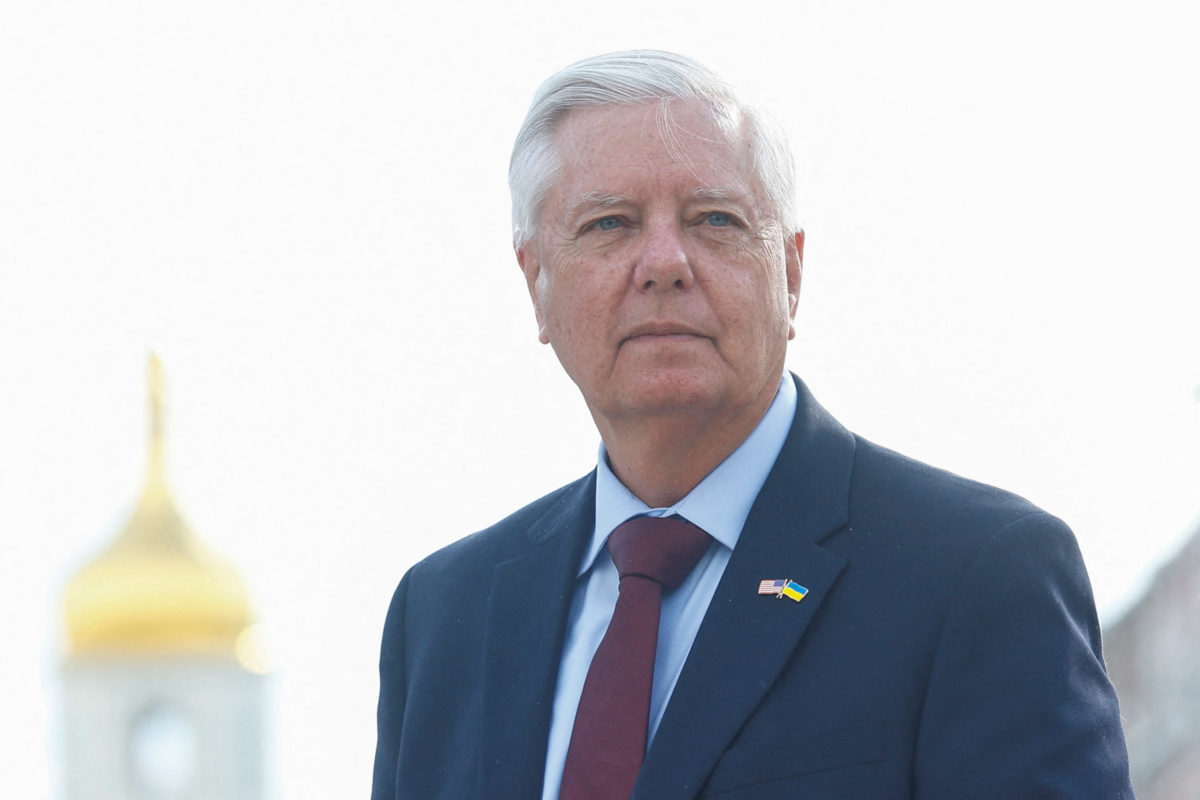
The death of Lindsey Graham has renewed debate about the future of American foreign policy. Graham, who died unexpectedly at the age of 71, spent more than three decades in Congress promoting a strong U.S. role in global affairs. His passing comes at a time when many leaders in Washington are moving toward a more limited approach to overseas involvement.
Throughout his career, Graham argued that the United States should work closely with its allies and use its military strength when needed to defend democracy and national security. He strongly supported long-standing partnerships with Europe, Israel, and NATO while also backing military action in several international conflicts.
Graham remained one of the Republican Party’s strongest supporters of Ukraine after Russia launched its full-scale invasion in 2022. Even as opinions within his party changed, he continued to call for military and financial support for Kyiv. Shortly before his death, Graham announced that the Trump administration had agreed to move forward with a new package of sanctions targeting Russia.
Volodymyr Zelenskyy praised Graham for his continued support. Zelenskyy said the senator visited Ukraine ten times since the war began and stood with the Ukrainian people during some of their most difficult moments. He described Graham as a defender of freedom and democratic values.
Leaders from across Europe also honored Graham’s work. Mark Rutte called him a strong supporter of the NATO alliance and someone who worked to help Ukraine defend itself. Former NATO Secretary General Jens Stoltenberg also praised Graham’s commitment to trans-Atlantic cooperation and international security.
Officials from Estonia and Latvia thanked Graham for his long support of NATO’s eastern members. They said he remained a reliable partner as countries near Russia continued to strengthen their defense and security.
Graham’s relationship with President Donald Trump changed over the years. He first criticized Trump before becoming one of his closest Republican allies. Political observers said Graham believed working with Trump allowed him to influence important foreign policy decisions from inside the administration’s political circle.
Supporters argue that Graham helped keep U.S. backing for Ukraine on the national agenda while encouraging firm policies toward Iran and Venezuela. Critics, however, said he became too willing to accept Trump’s changing positions in order to remain politically effective.
Graham was also one of Washington’s strongest supporters of Israel. He consistently defended the U.S.-Israel alliance and backed continued military assistance following the October 2023 Hamas attack. His support earned praise from Benjamin Netanyahu, who described Graham as a loyal friend of both Israel and the United States.
At the same time, Graham’s views on the Gaza conflict drew criticism from many international leaders and human rights advocates. Some argued that greater diplomatic efforts were needed, while Graham continued to support Israel’s military operations and emphasized the country’s right to defend itself.
Iran strongly opposed Graham throughout his political career because of his repeated calls for tougher action against Tehran. He supported sanctions, pressure on Iran’s nuclear program, and military action targeting Iranian interests. Iranian state television responded to news of his death with openly hostile comments, reflecting years of political tension between Graham and the Iranian government.
Before entering the Senate, Graham served in the U.S. House of Representatives. He was first elected to the Senate in 2002 and became one of the Republican Party’s leading voices on national security, defense, and international affairs. His influence stretched across multiple presidential administrations and major global conflicts.
Many analysts believe Graham represented one of the last major Republican leaders who consistently supported a strong American role in global security through military alliances and international partnerships. As political priorities continue to shift in Washington, his death marks the end of an era for a style of foreign policy that shaped U.S. decisions for decades.
Tributes from world leaders, lawmakers, and diplomatic partners reflect the lasting impact Graham had on international affairs. While opinions about many of his policies remain divided, his influence on American foreign policy and global alliances will continue to be part of the political debate for years to come.
