


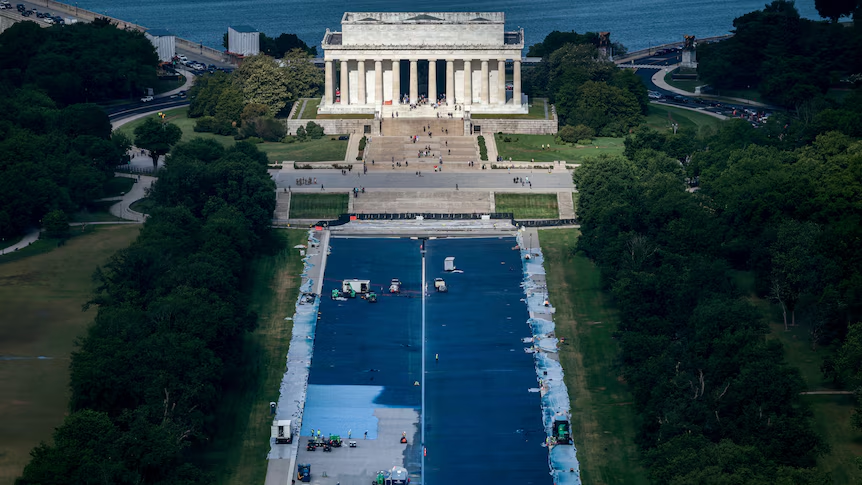
Donald Trump has triggered widespread controversy after ordering changes to the Lincoln Memorial Reflecting Pool in Washington, D.C., with critics raising concerns about design choices, rising costs, and how the project was awarded.
The plan to repaint the historic reflecting pool in a shade described by Trump as “American flag blue” has drawn strong reactions from preservation groups and local residents. The pool, located between the Lincoln Memorial and the Washington Monument, is designed to reflect the sky and surrounding monuments, and many argue that changing its colour would damage its historic purpose and visual effect.
Trump said he initially considered a turquoise tone “like in the Bahamas” but later opted for a deeper blue suggested by a contractor. Critics say the change turns a carefully designed national landmark into something more artificial, with some locals describing the idea as resembling a swimming pool rather than a historic monument. A preservation group, the Cultural Landscape Foundation, has filed a lawsuit to stop the project, arguing that proper procedures were not followed and that the redesign threatens the site’s historic integrity. Officials involved in the project have responded that the final shade would be a darker tone intended to remain consistent with the pool’s traditional character, but opposition remains strong.
The way the project contract was awarded has also raised questions. Trump said he used his experience as a developer to help identify a contractor capable of completing the work efficiently and at lower cost. He described contacting a specialist firm he believed could handle the job quickly. However, reports later indicated that the project was awarded under a “no-bid” exemption, allowing the government to bypass standard competitive bidding rules due to urgency. The contractor has been identified as Atlantic Industrial Coatings. The White House has said the contract was handled by the Interior Department, and Trump stated he does not know the contractor personally and has never worked with them before. Despite these explanations, watchdog groups and legal challengers argue that the process lacks transparency and raises concerns about procurement standards.
The cost of the project has also escalated significantly. Trump initially said the work would cost less than $2 million, but official documents later placed the contract at around $6.9 million. That figure has since risen to approximately $13.1 million, more than six times the original estimate. Government officials say the increase reflects the need to accelerate construction ahead of major national celebrations marking the United States’ 250th anniversary. They argue that the higher cost covers additional labour, materials, equipment, and extended working hours required to meet deadlines. Critics, however, say the rising budget highlights poor planning and raises concerns about how public funds are being spent on high-profile projects.
The reflecting pool itself is one of Washington’s most symbolic landmarks and has been the site of major historical events, including Martin Luther King Jr.’s “I Have a Dream” speech in 1963. Preservation experts say any alteration to the site must be handled with caution because of its cultural importance and national symbolism. Supporters of the renovation argue that the pool has long suffered from leaks and structural issues and that restoration work is necessary to preserve it for future generations. Trump has also said the pool is in poor condition and “leaked like a sieve,” justifying the need for repairs.
The controversy has become part of a broader political debate over Trump’s approach to public works and national monuments. Critics say the project reflects a preference for highly visible, dramatic changes that lack historical sensitivity, while supporters argue it shows a business-minded approach focused on efficiency and cost control. A Washington court has ordered the government to respond to the lawsuit challenging the project, and legal proceedings are ongoing. As the dispute continues, the reflecting pool has become a focal point for wider disagreements over heritage, government spending, and the future of America’s most iconic public spaces.
