


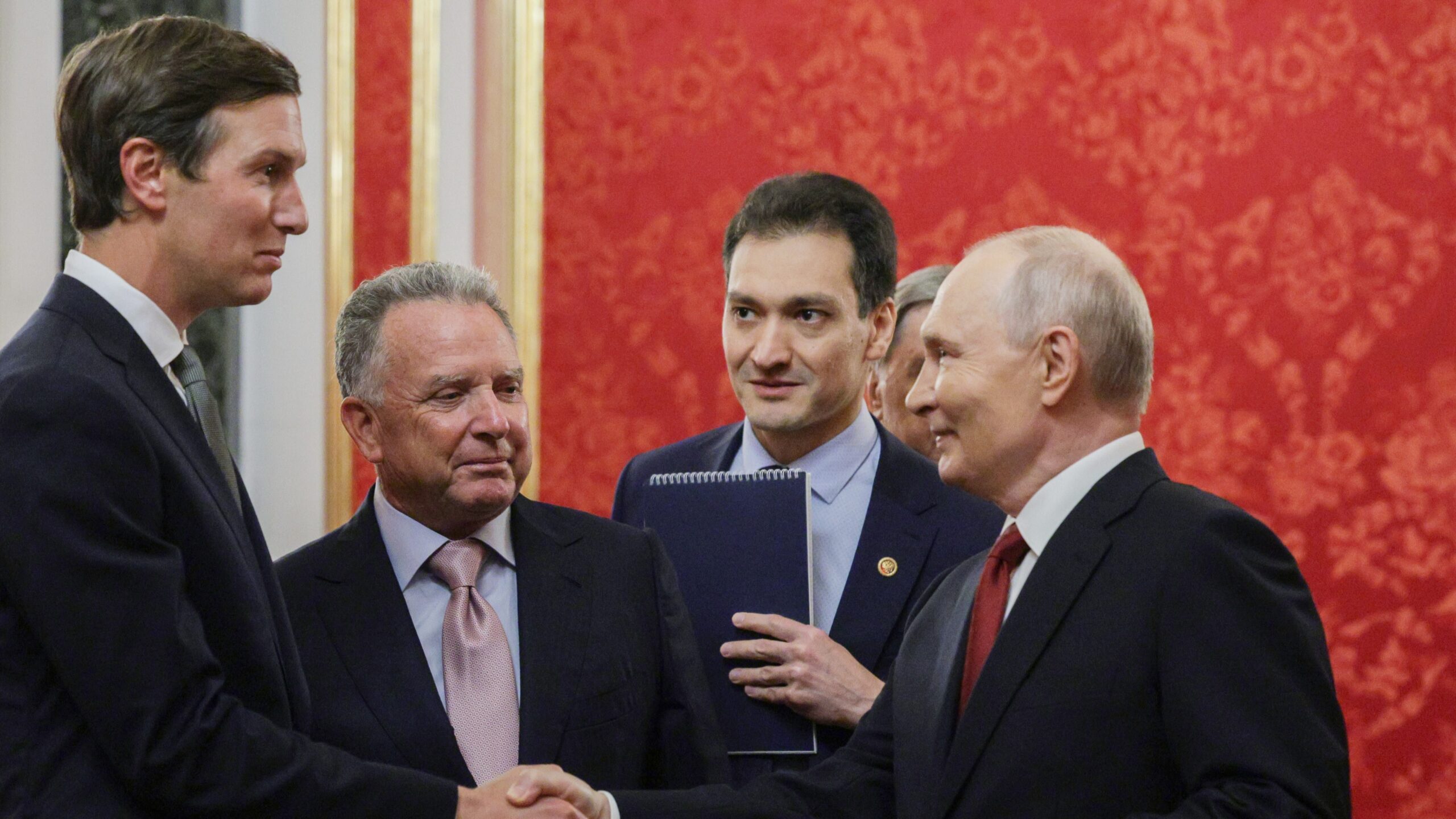
Efforts to find a diplomatic solution to the war in Ukraine received renewed attention on Saturday as Russian President Vladimir Putin held extensive talks with senior United States envoys at the Kremlin. The meeting marked a new stage in international attempts to reduce tensions and explore possible paths toward ending the conflict that has continued for more than four years.
Putin met with U.S. representatives Steve Witkoff and Jared Kushner during discussions that lasted over three hours. The talks took place behind closed doors and ended without any immediate announcements regarding a ceasefire or peace agreement. However, officials from Moscow described the discussions as productive and useful.
Russian foreign policy adviser Yuri Ushakov said the meeting was conducted in a constructive atmosphere and featured open exchanges between both sides. He noted that a broad range of issues was discussed, including the situation on the battlefield and future relations between Russia and the United States.
The diplomatic meeting comes at a critical moment in the conflict. Russia and Ukraine have continued to exchange aerial attacks in recent weeks, with drones and missiles playing an increasingly important role in military operations. Despite the ongoing fighting, both governments agreed to temporarily suspend attacks on each other’s capitals during the diplomatic talks.
Russian officials announced that no strikes would be carried out against Kyiv for three days. Shortly afterward, Ukrainian President Volodymyr Zelenskyy confirmed that Ukraine would also refrain from targeting Moscow through Monday, provided Russia honored the arrangement.
The temporary halt in attacks is not a formal ceasefire, but analysts view it as a symbolic step that could help create a more favorable environment for negotiations. Even limited confidence-building measures are considered important in a conflict where direct dialogue has often been difficult.
The United States has been seeking ways to encourage diplomatic engagement between both sides. However, efforts to advance peace discussions slowed during recent months as international attention shifted toward other global security challenges. The latest mission signals a renewed focus on the war and possible options for reducing hostilities.
Following their meetings in Moscow, the American envoys are expected to travel to Kyiv for further discussions with Ukrainian leaders. Ukrainian officials confirmed that the visit is scheduled for Sunday and will mark the first time the two U.S. representatives have visited the Ukrainian capital as part of the current peace initiative.
The trip is viewed as an important effort to maintain communication with both governments. Diplomatic observers say direct engagement with leaders in Moscow and Kyiv could help Washington better understand the positions of each side and identify areas where compromise may be possible.
At the opening of the Kremlin talks, Putin reportedly asked the American delegation to convey his appreciation and warm wishes to President Donald Trump. He also acknowledged the complexity of the conflict, describing the situation in Ukraine as challenging and difficult.
The war began in February 2022 when Russian forces launched a large-scale invasion of Ukraine. Since then, the conflict has caused significant military and civilian losses while creating one of the most serious security crises in Europe in decades.
According to Russian officials, the discussions extended beyond military matters. Ushakov said economic cooperation and future projects between Russia and the United States were also part of the conversation. He noted that both sides explored possibilities for mutually beneficial initiatives if conditions improve in the future.
While no specific details were released, the comments suggest that broader relations between Moscow and Washington remain connected to discussions about the war.
Experts remain cautious about the likelihood of a major breakthrough. Previous diplomatic efforts have struggled to bridge differences between the two sides, particularly on issues related to territory, security guarantees, and long-term political arrangements.
Still, many observers believe that continued dialogue remains essential. The decision by both countries to pause attacks on their capitals and engage in high-level talks has created a small opening for further diplomatic progress.
Attention will now shift to Kyiv, where the American delegation is expected to continue discussions with Ukrainian officials. Those meetings may provide additional insight into whether the latest diplomatic initiative can build momentum toward a broader peace process.
For now, the renewed talks represent a rare moment of engagement between key players in the conflict. While major challenges remain, the discussions have reopened diplomatic channels and offered a fresh opportunity to pursue a negotiated path forward.
