


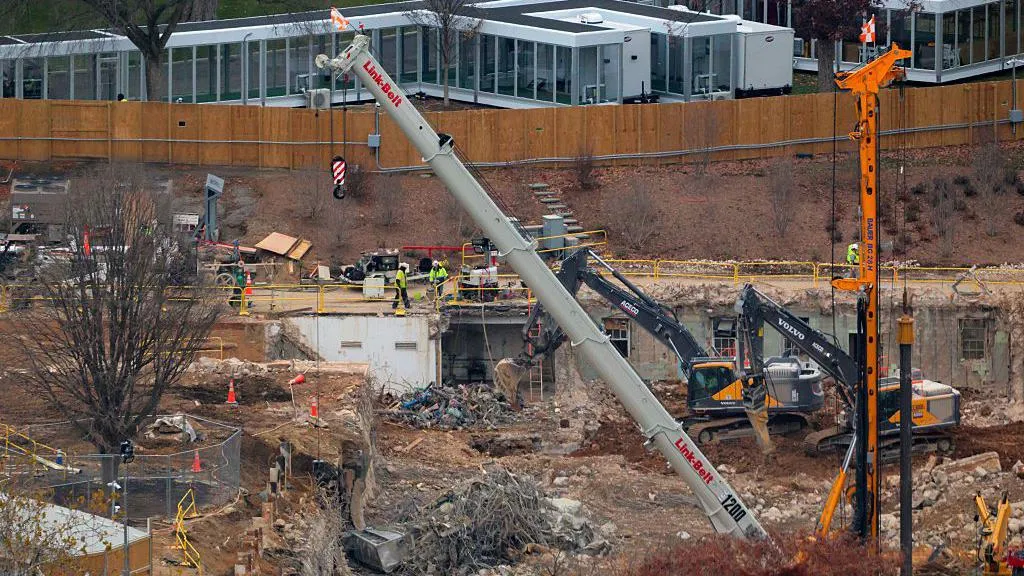
The White House ballroom lawsuit has intensified after the US Department of Justice asked a federal judge to lift a pause on construction of President Donald Trump’s planned White House ballroom. The request comes shortly after a shooting incident at a major Washington event, which officials say highlights the need for improved security at large gatherings.
The $400 million project has already faced legal and political challenges. A federal judge previously ordered a halt to construction after preservation groups filed a lawsuit. They argue that the project should not proceed without proper approval from Congress and relevant federal agencies.
The National Trust for Historic Preservation is one of the key groups behind the legal challenge. It says the administration did not have the legal authority to begin major changes to the White House site. The group also argues that parts of the historic East Wing were demolished without proper review. The East Wing, built in 1902, was originally considered part of the protected White House structure.
Initially, the administration said the ballroom would be built near the East Wing without major changes to it. However, plans later shifted, and the East Wing was eventually demolished to make space for the new structure. This change became a central issue in the lawsuit.
In its latest court filing, the Justice Department argued that the project should continue. Officials said the new ballroom is needed to provide secure space for large official events. They linked their argument to recent security concerns following a shooting at a crowded Washington hotel during the White House Correspondents’ Dinner weekend.
The DOJ said that presidents require safe venues for large gatherings, which are currently limited in Washington. The filing also stated that delaying construction could affect future administrations, staff, and government operations. Officials urged the court to remove the pause and allow the project to move forward.
The legal filing used strong language in defense of the project. It also criticized the preservation group, accusing it of bias against the president. Legal observers note that the tone of the filing is unusual for a court submission and may not influence the judge’s decision.
The case is being heard by Judge Richard Leon, who was appointed during the Bush administration. He previously ordered that above-ground construction work on the ballroom must stop while the legal case continues. Experts believe the judge is unlikely to change his ruling based solely on the new arguments.
The preservation group has responded by refusing to withdraw its lawsuit. Its leadership says the case is about ensuring that federal rules are followed, not about blocking security improvements. They argue that the administration must respect legal procedures before making major changes to historic government property.
The shooting referenced in the DOJ filing took place at a high-profile Washington event attended by more than 2,300 people, including government officials and lawmakers. The incident caused panic and led to the evacuation of the venue. President Trump and other officials were quickly moved to safety after shots were heard.
Following the incident, Trump said the ballroom project would improve safety at major events. He argued that a secure venue is necessary for large official gatherings. He also described the White House grounds as one of the safest locations in the country.
However, questions remain about how a new ballroom would change security outcomes in situations like the recent shooting. The Correspondents’ Dinner is hosted at a separate location, not inside the White House. This has led to debate over whether the project directly addresses the type of security risks highlighted by the incident.
The White House ballroom lawsuit continues to raise legal, historical, and political questions. At the center of the case is a dispute over authority, preservation rules, and the future use of one of the most symbolic government sites in the United States. The court’s next decisions are expected to determine whether construction can move forward or remain on hold.
