


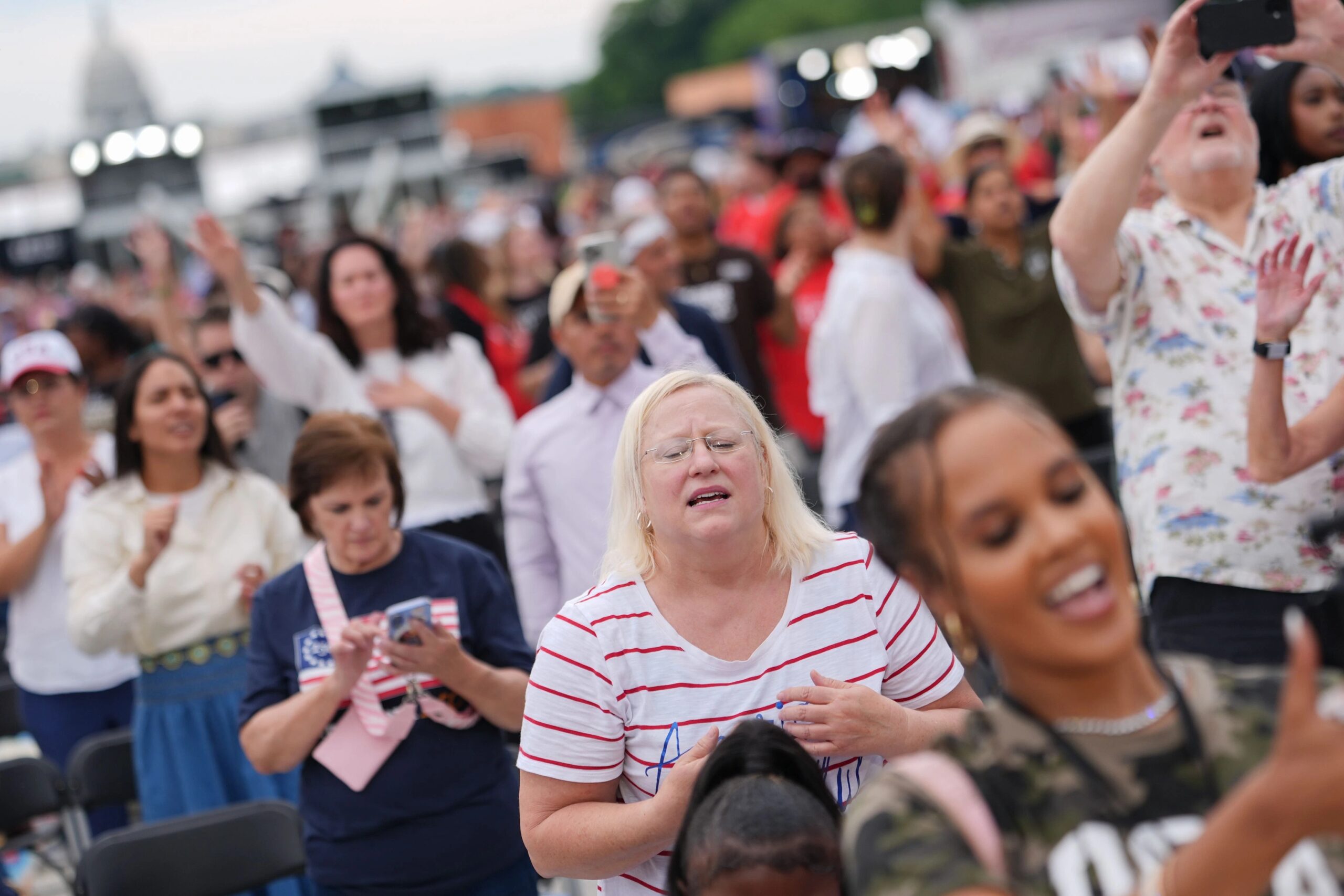
Thousands of people gathered at the National Mall in Washington, D.C., for a large prayer rally that focused on religion, national identity, and the future of the United States. The event was promoted as a “rededication of our country as One Nation under God.”
The gathering took place with the Washington Monument as a backdrop. Worship music played from a central stage, and the setup included large decorative elements designed to resemble a classical government building, with stained-glass-style imagery featuring American founders and a white cross.
The event highlighted strong Christian themes throughout the program. Speakers discussed the role of Christianity in American history and its influence on national identity. Some critics have described the event as promoting Christian nationalism, a claim that sparked debate even before it began.
One of the speakers, Rev. Robert Jeffress, openly supported the term. He said that if Christian nationalism means loving Jesus Christ and America, then he fully supports it. His remarks drew attention from both supporters and critics of the movement.
The rally was part of broader celebrations connected to the upcoming 250th anniversary of US independence. Several high-profile political figures were scheduled to participate through recorded messages and appearances.
Among them was US President Donald Trump, who was expected to address the event in a video message. Other political leaders, including senior Republican figures, were also linked to the program.
Organizers said the event aimed to encourage national unity through shared faith and prayer. They described it as a moment of spiritual reflection tied to America’s founding values.
However, the event also sparked criticism from religious and civil rights groups. Some faith leaders argued that the rally focused too heavily on one religious tradition and did not reflect the diversity of beliefs in the United States.
The Rev. Adam Russell Taylor of Sojourners said the gathering risked promoting a narrow version of Christianity that could undermine religious freedom. He emphasized the importance of protecting space for all faiths and non-religious citizens.
Other religious voices also responded. Rabbi Jonah Dov Pesner highlighted that early American society included people of many different religions, including Jews, Muslims, and Indigenous communities. He said the country’s strength lies in its religious diversity and freedom.
The program included mostly Christian speakers, many of whom are known supporters of conservative religious movements. One of the few non-Christian participants listed was Orthodox Rabbi Meir Soloveichik, who also serves on a religious liberty commission.
Several members of the US administration were connected to the event, including Defense Secretary Pete Hegseth and Secretary of State Marco Rubio, both of whom were listed as participants in scheduled remarks.
In a video message, Hegseth called on attendees to pray for the nation and referenced historical figures in American history. His remarks emphasized faith and national unity through prayer.
The event was organized by a group called Freedom 250, a public-private initiative connected to broader plans for the country’s 250th independence anniversary. Some lawmakers have raised questions about its structure and funding.
At the same time, progressive organizations staged counter-events and protests nearby. These groups argued that the separation of religion and government should be protected and warned against mixing political power with religious messaging.
One protest message projected near the National Gallery of Art read “Democracy not theocracy,” reflecting concerns about the role of religion in public institutions.
Supporters of the rally said it was a celebration of faith and national heritage. Critics said it risked blurring the line between religious belief and political identity.
The event highlighted ongoing divisions in the United States over religion, identity, and the meaning of national unity.
